
U.S. Fiscal 2026 Deficit Reaches $1.99 Trillion, Marking 25th Consecutive Year of Deficit
The U.S. federal budget deficit for fiscal year 2026 reached $1.992 trillion, a 12% increase from the previous year. This marks the 25th consecutive year of deficit, with the last surplus occurring in 2001. Record spending on Social Security, Medicare, and net interest exceeded $3.8 trillion combined, while revenue rose to $5.4 trillion. The deficit is the third-highest in U.S. history, trailing only the pandemic years of 2020 and 2021.
Key points
- The Treasury Department reported a fiscal 2026 deficit of $1.992 trillion, up from $1.775 trillion in fiscal 2025.
- This is the third-largest annual deficit in U.S. history, behind only 2020 and 2021.
- The U.S. has now recorded 25 consecutive fiscal years with a deficit; the last surplus was in 2001.
- Social Security spending reached nearly $1.7 trillion, and Medicare spending neared $1.1 trillion.
- Net interest on the national debt exceeded $1 trillion, up from $970 billion in fiscal 2025.
- Total federal revenue reached $5.4 trillion, but spending reached $7.4 trillion, a 6% increase.
Background
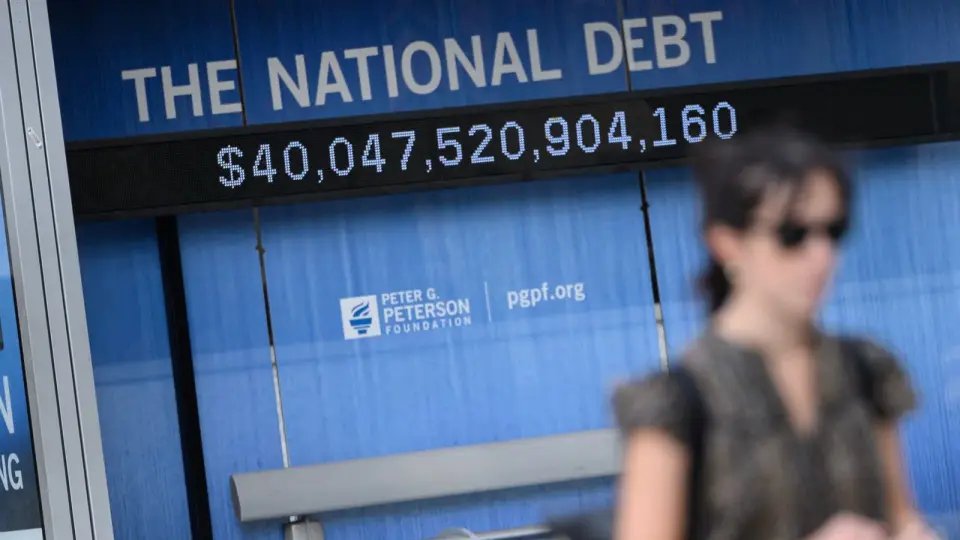
The national debt surpassed $40 trillion earlier in 2026, doubling over the past decade. In September 2026, concerns grew that the 2025 Republican tax cuts would add $4.7 trillion to the debt over the next decade, contradicting claims of self-funding. Additionally, a September 2026 report suggested true military spending exceeds official figures by over $1 trillion when hidden agency funds are included.
How outlets are covering it
CNBC emphasizes the deficit as a sign of financial stress, noting that 10- and 30-year Treasury yields hit 24-year highs. Treasury Secretary Scott Bessent argued the U.S. can 'grow our way out' of the debt, while President Trump maintained that tariffs would boost revenue, despite a Supreme Court ruling striking down many tariffs and forcing refunds. Reason Magazine argues that tariffs are irrelevant to the deficit, noting that even the $130 billion in illegal levies would cover less than 10% of the gap. Reason highlights that entitlement and defense spending grew faster than revenue, and warns that rising interest rates will burden homebuyers and small businesses, urging reforms to Social Security and Medicare.
Why it matters
The persistent deficit and rising debt are driving up interest rates, which affect mortgage rates, business borrowing costs, and overall economic growth. The 25-year streak of deficits signals a structural imbalance where spending outpaces revenue, raising concerns about long-term fiscal sustainability and potential future tax hikes or benefit cuts.
What to watch
Congress faces pressure to address entitlement spending and debt levels. Treasury Secretary Bessent's strategy relies on global growth to manage debt, while critics push for immediate reforms to Social Security, Medicare, and Medicaid. The impact of the Supreme Court's tariff ruling on future revenue and the trajectory of interest rates will be key factors in the coming fiscal year.
- U.S. budget deficit swells to almost $2 trillion for fiscal 2026, up 12% in a single year CNBC
- U.S. Budget Deficit Nears $2 Trillion, a Reality Check for Trump’s Cost Cutting The New York Times
- US Posts $1.99 Trillion Budget Gap for 2026 as Spending Climbs Bloomberg.com
- The Federal Government Collected $5.4 Trillion. It Still Can't Pay Its Bills. Reason Magazine
- The U.S. budget deficit just hit almost $2 trillion — and Washington isn’t doing much about it MarketWatch
Want the full story? Read the original reporting
Read on CNBC