
US Top General Warns Air Strikes Alone Cannot End Iran War, Pushes for Diplomatic Exit
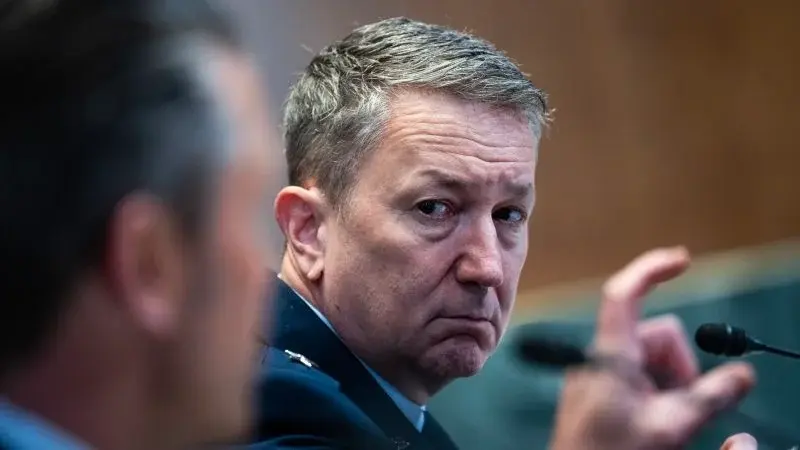
Chairman of the Joint Chiefs Gen. Dan Caine is privately urging the Trump administration to find a diplomatic exit from the Iran conflict, warning that airpower alone cannot achieve US objectives and that escalation risks backfiring. While Trump favors continued bombing to force a deal, Caine and other senior officials believe this is unlikely. The debate centers on dwindling munitions, the refusal to deploy ground troops, and the need for a 'symbolic' win that preserves diplomatic options.
Key points
- Gen. Dan Caine has privately told aides, including CIA Director John Ratcliffe, Secretary of State Marco Rubio, and VP JD Vance, that the US needs an 'off-ramp' from the war.
- Caine argues that air strikes alone are insufficient to force Iran into a deal and that further escalation could trigger negative second-order effects.
- Trump remains opposed to deploying ground troops, believing air bombing will force Tehran to agree to terms, a view Caine and others privately dispute.
- US munitions stockpiles are described as 'dangerously low,' a concern raised by Caine and Gulf allies who fear their own air defenses are compromised.
- Caine has balanced his private warnings with public assurances to Trump that the military can 'absolutely wreck' Iran if ordered, maintaining a delicate relationship with the President.
Background
The conflict, which began roughly six months ago, has been defined by Trump’s pledge to prevent Iran from obtaining a nuclear weapon. Earlier reports indicated that pre-war warnings about weapon shortages were ignored, and recent strikes in Kuwait highlighted vulnerabilities in US bases. Economists have noted that the conflict, alongside tariffs, limits the administration’s ability to ease inflation before the upcoming election.
How outlets are covering it
CNN and The Jerusalem Post emphasize the internal friction between Caine’s caution and Trump’s aggressive posture, noting that Caine is 'pulling punches' to maintain his position. The Times of India highlights the regional fallout, including a new defense pact between Saudi Arabia, Turkey, and Pakistan, and notes Trump’s recent comments on progress in Strait of Hormuz negotiations. All sources agree that while CENTCOM elements favored recent strikes, the broader national security team views escalation as counterproductive due to depleted munitions and the risk of alienating the Iranian population.
Why it matters
The conflict’s trajectory affects global energy markets and US military readiness. If the US cannot achieve a decisive victory through airpower and refuses ground troops, the war may prolong, straining alliances and depleting critical defense resources needed for other theaters like Ukraine and Israel.
What to watch
The administration is likely to continue seeking a diplomatic breakthrough, potentially focusing on reopening the Strait of Hormuz as a 'symbolic' win. Trump has not ruled out future strikes but has paused recent escalatory plans after consulting Middle East allies. The outcome will depend on whether Caine can persuade Trump to accept a negotiated end that avoids the pitfalls of further military escalation.
- Trump’s top general is ‘looking for an off-ramp’ from Iran war as US military options remain limited, sources say CNN
- Top US general reportedly looking for ‘off-ramp’ from Iran war The Times of Israel
- 'Airpower has its limits': Top US General looking for a way out from Iran The Times of India
- US Gen. Dan Caine looking for 'off-ramp' to avoid further escalation in Iran war - report The Jerusalem Post
- Live updates • Report: U.S. general urges Trump officials to seek 'off-ramp' from Iran war Haaretz
Want the full story? Read the original reporting
Read on CNN