
Yemen Declares Total War to Reclaim Houthi-Held Territory Amid Saudi Backing
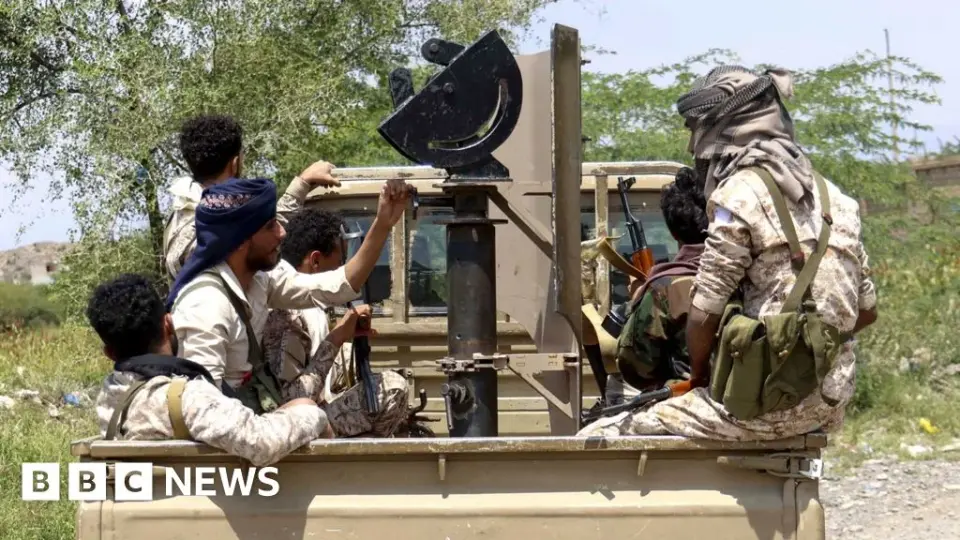
Yemen’s internationally recognized government has launched a full-scale military offensive to retake all territory held by the Iran-backed Houthis, including the capital Sanaa and the Bab al-Mandeb Strait. The move follows a recent Houthi seizure of the Red Sea coastline and escalating strikes on Saudi oil infrastructure. While the Saudi-led coalition pledges full operational support, the Houthis have cut supply lines to the government-held city of Taiz and claimed successful attacks on Aramco facilities in Riyadh, though Saudi authorities have not confirmed damage.
Key points
- Yemeni President Rashad al-Alimi announced the start of military operations to restore state authority across the entire national territory, targeting Houthi-held areas including Sanaa and the Red Sea coast.
- The Saudi-led coalition pledged 'full operational support' for the offensive, describing it as an effort to end the 'Houthi coup' and protect international shipping lanes in the Bab al-Mandeb Strait.
- Houthi forces have severed the vital supply route linking Taiz with the interim capital Aden, effectively encircling government troops in the third-largest city in Yemen.
- The Houthis claimed ballistic missile and drone strikes on Aramco facilities in Riyadh and the Khurais area, causing large fires, but Saudi Arabia has not confirmed the attacks and has previously dismissed similar claims as misleading.
- The conflict has displaced tens of thousands of people, with the World Food Program reporting that three out of four families in affected areas are facing hunger due to the surge in fighting.
Background
The current escalation follows the collapse of a 2022 UN-brokered truce, with violence surging again in August 2026. The Houthis seized the Red Sea coastline in September, blocking Saudi Arabia from using it as an alternative oil export route to the Strait of Hormuz. This move benefited their main sponsor, Iran, but forced Saudi Arabia back into direct military confrontation. The broader conflict, which began in 2015, has already killed over 377,000 people, including those dying from hunger and disease.
How outlets are covering it
BBC and CNN both report the official announcement of the offensive by Yemeni President Rashad al-Alimi and the Saudi coalition's pledge of support. However, they differ in emphasis regarding the Houthi counter-attacks. BBC highlights the Houthi success in isolating Taiz from Aden, citing security sources and Chatham House analysts, while CNN focuses on the humanitarian impact and the Saudi coalition's dismissal of Houthi claims regarding strikes on Riyadh. Al Jazeera provides a broader regional context, linking the Yemeni offensive to the ongoing US-Israel war on Iran and noting that the Saudi-led coalition dismissed Houthi claims of missile strikes near Riyadh as misleading. All sources agree on the scale of the offensive but differ on the immediate tactical success of the Houthis in the south versus their claimed strategic impact on Saudi energy infrastructure.
Why it matters
The escalation threatens to destabilize global energy markets and international shipping routes. The Bab al-Mandeb Strait is a critical chokepoint for commercial shipping, and any disruption could impact global trade and oil prices. The conflict also exacerbates a severe humanitarian crisis in Yemen, one of the world's poorest countries, where millions are already facing hunger and displacement. The involvement of Saudi Arabia and Iran-backed Houthis adds a regional dimension to the conflict, potentially drawing in other Middle Eastern powers and affecting broader geopolitical dynamics in the region.
What to watch
The Saudi-led coalition is expected to continue providing air support and intelligence to Yemeni government forces. The Houthis are likely to continue targeting Saudi oil infrastructure and international shipping in the Red Sea. The outcome of the offensive around Taiz will be crucial in determining the balance of power in Yemen. International observers will watch for any signs of direct US involvement, although the US has so far declined direct combat involvement, focusing instead on intelligence support. The humanitarian situation is expected to worsen as the conflict escalates, with more people displaced and facing hunger.
- Yemen government announces major operation to retake Houthi territory BBC
- Houthis Claim Attack on Aramco as Yemen Conflict Escalates The New York Times
- Yemeni government launches offensive to seize all areas from Iran-backed Houthis Reuters
- Iran war live: Yemen leader announces operations to seize Houthi-held areas Al Jazeera
- Saudi-led coalition pledges support for Yemeni offensive against Iran-backed Houthis CNN
Want the full story? Read the original reporting
Read on BBC