Aramco Posts 25% Q1 Profit Jump as Pipeline Exports Gain Ground
Saudi Aramco reported a 25% rise in first-quarter profit as it increasingly routes crude exports through its pipeline network, shifting away from traditional tanker shipments.
All articles tagged with #aramco

Saudi Aramco reported a 25% rise in first-quarter profit as it increasingly routes crude exports through its pipeline network, shifting away from traditional tanker shipments.

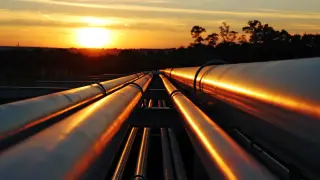
Saudi Aramco posted a 26% rise in Q1 net profit to $33.6 billion on revenue of $115.5 billion, aided by its east–west pipeline that can move up to 7 million barrels per day and bypass disruptions through the Strait of Hormuz. The conflict has kept oil prices elevated near $100 a barrel, while Aramco maintained a quarterly dividend of $21.9 billion. Company CEO Amin Nasser warned that even if Hormuz reopens, it could take months for markets to rebalance, with a risk of longer disruption potentially pushing normalization to 2027.

Exclusive analysis shows the world’s top 100 oil and gas companies earned about $30 million per hour in March as oil prices averaged $100 a barrel amid Iran-related conflict, yielding an estimated $23 billion in windfall profits for the month and potentially $234 billion more this year if prices stay elevated, with Aramco, Gazprom and ExxonMobil among the biggest beneficiaries. The findings fuel EU discussions of windfall taxes to ease consumer bills and fund relief, while critics warn that ongoing fossil fuel dependence remains a national security and affordability risk.

Saudi Arabia says its East-West oil pipeline has been returned to full capacity, pumping about 7 million barrels per day after attacks tied to the US-Israel war on Iran; Manifa is back to 300,000 bpd, while Khurais remains down by 300,000 bpd. The ministry credits Aramco and the energy sector’s resilience, amid broader disruption to Strait of Hormuz shipping and ongoing US-Iran tensions.

Aramco warned of catastrophic consequences for global oil markets if the Hormuz Strait disruption continues, saying it can supply about 70% of normal crude by routing via Yanbu while about 5 million barrels per day would reach international buyers and 2 million stay for domestic refineries. The blockade has tightened supply and helped push Brent toward $119 a barrel, prompting G7 and IEA discussions on emergency stockpiles, though no release has been approved; authorities note large remaining inventories could cushion a longer disruption.

Saudi Aramco reported a 0.9% increase in third-quarter net profit to $27.98 billion, surpassing expectations due to higher production despite declining oil prices. The company also announced a dividend and made strategic acquisitions, including a stake in Petro Rabigh and an AI firm, amid OPEC+ production adjustments and Western sanctions on Russia.

Saudi Arabia's Aramco is maintaining its $31 billion dividend payout to support state finances, despite rising debt and a challenging oil market outlook.

Saudi Arabia is testing international investor interest with a $13.1 billion share sale in its energy giant Aramco, offering up to 0.7% of the company. The sale, part of the kingdom's economic diversification efforts, will gauge foreign interest amid environmental and governance concerns. Most buyers are expected to be Saudis, indirectly funding the Vision 2030 projects. The sale coincides with an OPEC+ meeting on production policies.

ExxonMobil and Aramco CEOs expressed skepticism about the affordability of green hydrogen as a replacement for fossil fuels, citing high costs and a lack of willingness to pay for emissions reduction. They emphasized the need for significant government incentives and long-term offtake agreements to make renewable hydrogen financially viable, and criticized the current energy transition strategy as failing. Additionally, Exxon stated it would not produce blue hydrogen without changes to proposed guidelines for accessing hydrogen production tax credits, raising questions about the eligibility of blue hydrogen for subsidies.

Saudi oil giant Aramco reported a $121 billion profit in 2023, its second highest on record, attributing the decrease from 2022 to lower energy prices and production volumes. Despite the dip, the company increased dividends to over $31 billion in the fourth quarter. Aramco's overall revenue was $440 billion, down from $535 billion in 2022, with plans to discuss its results in a conference call. The company's output remains at 12.8 million barrels of oil a day, as it adheres to Saudi government orders to maintain production levels. Saudi Arabia, a key OPEC member, continues to collaborate with Russia and others to limit production and bolster global oil prices. Crown Prince Mohammed bin Salman aims to diversify the kingdom's economy away from oil sales through ambitious projects like the futuristic city Neom, while activists criticize the profits amid climate change concerns.

Despite a 24.7% drop in net profit to $121.3 billion in 2023, Saudi Arabia's state-owned oil giant Aramco increased its dividend by 30% to $97.8 billion, showing the state's continued reliance on oil revenue as it seeks to diversify. The company's profit, although lower than in 2022, was still its second-highest on record. Aramco's capital investments are forecasted to be between $48 billion and $58 billion in 2024, with a focus on upstream investments including gas. The Saudi government, which directly holds about 82.2% of Aramco, relies heavily on the oil giant's generous payouts, and is considering selling more shares of Aramco.

Saudi oil giant Aramco reported a 25% decline in profit to $121.3 billion in 2023, down from $161.1 billion in 2022, but still representing its second-highest net income on record. Despite the earnings decline, Aramco raised its dividend payout to $31 billion, with the Saudi government receiving a significant portion. The company also transferred an additional 8% of shares to Saudi Arabia's Public Investment Fund, strengthening the fund's financial position and boosting its ability to invest on behalf of the Saudi state. Aramco confirmed it would halt plans to raise its oil production capacity and instead focus on increasing gas production and growing its liquids-to-chemicals business.

Saudi oil giant Aramco announced a $121 billion profit for last year, down from its 2022 record, due to lower energy prices. Despite the decrease, it marked the company’s second highest ever result, and it boosted dividends to over $31 billion in the fourth quarter. The company's overall revenue was $440 billion, down from $535 billion in 2022. Saudi Arabia, a leader in the OPEC cartel, has allied with Russia and others outside of the group to keep production down to boost global oil prices. Crown Prince Mohammed bin Salman aims to pivot the kingdom off oil sales with ambitious projects, while activists criticize the profits amid global concerns about climate change.

Nvidia surpassed a $2 trillion market cap, making it the world's third most valuable company, overtaking Saudi Aramco. The chipmaker's success is attributed to beating analysts' expectations and the booming AI industry. Despite concerns about competition and a potential tech bubble, Nvidia's revenues soared by 270% from the previous year, driven by strong demand for its chips from major tech companies.

Saudi's state-controlled oil giant Aramco suspended its capacity expansion plans due to the green transition, with Energy Minister Abdulaziz bin Salman emphasizing the shift towards renewables for future energy security. The decision to halt the increase in crude production capacity was a result of continuous market review, reflecting the evolving energy landscape. Saudi Arabia aims to decarbonize by 2060, with Aramco targeting operational net-zero emissions by 2050, aligning with efforts to diversify the kingdom's economy away from fossil fuels.