
Army Reschedules Iowa Lead Azide Detonation to Wednesday Amid Court Dispute
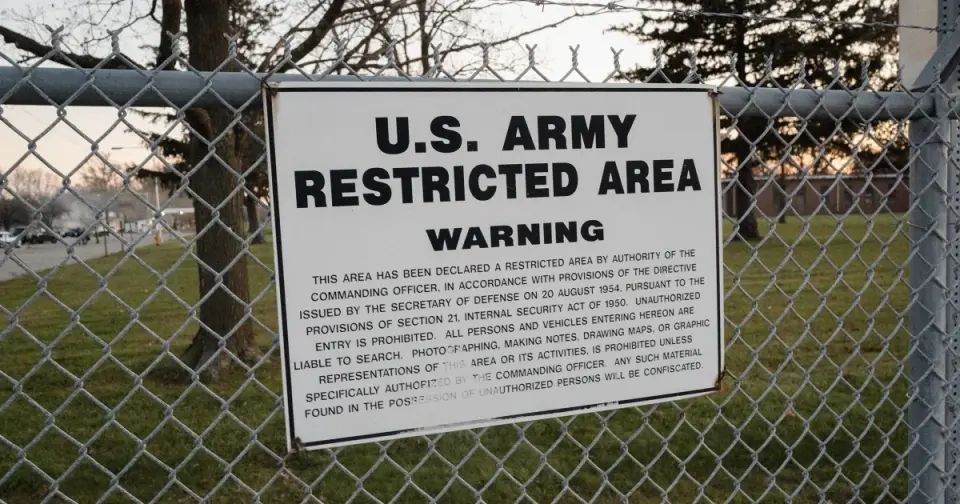
The U.S. Army has rescheduled a controlled detonation of nearly five tons of unstable lead azide at the Iowa Army Ammunition Plant in Middletown for Wednesday, November 25. The operation, originally planned for November 20, was delayed due to public outcry and a federal court stay. The Army is invoking emergency provisions to bypass the court order, citing risks of spontaneous explosion as temperatures drop below 30 degrees Fahrenheit. Environmental groups and local officials argue that safer alternatives were ignored and that the blast will release toxic lead dust affecting a 100-mile radius, including parts of Illinois. Residents are advised to stay indoors and seal windows to minimize exposure to hazardous particles.
Key points
- The U.S. Army plans to detonate nearly five tons of degraded lead azide at the Iowa Army Ammunition Plant in Middletown on Wednesday, November 25, to allow for optimal weather conditions.
- The Department of Justice filed with the 8th U.S. Circuit Court of Appeals, arguing the Army can proceed without an EPA permit under emergency statutes due to the risk of uncontrolled explosions in sub-freezing temperatures.
- The 8th Circuit Court of Appeals granted a temporary stay on the EPA’s emergency permit on Thursday, but the Army claims this does not prevent emergency action under the Resource Conservation and Recovery Act.
- Environmental groups, including the Iowa Environmental Council and Sierra Club, criticized the move as a maneuver to bypass judicial oversight and avoid transparency, arguing that chemical neutralization alternatives were not fully considered.
- The blast is expected to release a plume of toxic lead dust, potentially affecting a 100-mile radius, including parts of northwest Illinois; residents are advised to stay indoors, close windows, and wash surfaces to prevent lead exposure.
- Iowa Governor Kim Reynolds activated the State Emergency Operations Center, and health officials warned that lead exposure poses significant risks to children, pregnant women, and the elderly, though some experts classify the immediate risk as mild.
Background
The issue began in March 2026 when staff at the Iowa Army Ammunition Plant discovered several dozen barrels of degraded lead azide, a chemical used in munitions production. Routine checks in April revealed that water evaporation had caused the compound to crystallize, making it unstable and sensitive to shock. The Army determined that a controlled detonation was the safest option after deeming the material too dangerous to relocate. Previous archive coverage from November 22 and 23 highlighted the escalating legal battle between the Army and environmental groups, as well as the initial delays from November 20 to Monday and then Tuesday, before the final rescheduling to Wednesday.
How outlets are covering it
The U.S. Army and Department of Justice emphasize the immediate threat posed by the unstable lead azide, particularly as temperatures drop, and assert that emergency provisions allow them to bypass the court-ordered stay on the EPA permit. They argue that a controlled detonation is the lowest-risk option compared to handling the drums, which could trigger a fatal accidental explosion. In contrast, environmental groups like the Iowa Environmental Council, Sierra Club, and Earthjustice criticize the government’s actions as a deliberate attempt to sidestep judicial oversight and public demands for transparency. They argue that safer alternatives, such as chemical neutralization, were not adequately considered and that the public was not given sufficient notice. Local officials and health experts, including University of Illinois researchers, focus on the health risks of lead exposure, noting that while the immediate risk may be mild, lead is particularly harmful to children and pregnant women, and recommend strict precautions to minimize exposure.
Why it matters
The detonation highlights the tension between military emergency protocols and environmental regulations, as well as the potential health impacts on local communities. The release of toxic lead dust could affect a wide area, including parts of Illinois, raising concerns about long-term health risks, particularly for vulnerable populations. The legal dispute over the use of emergency exemptions to bypass court orders sets a precedent for how such situations are handled in the future, potentially impacting public trust in government transparency and environmental protection efforts.
What to watch
The Army is scheduled to conduct the controlled detonation on Wednesday, November 25, with updated exposure maps to be published 48 hours before and hourly in the six hours leading up to the blast. Residents in the affected area are advised to stay indoors, close windows, and wash surfaces after the detonation. The 8th Circuit Court of Appeals is expected to continue reviewing the environmental groups’ challenge to the emergency permit, and the outcome of this case could influence future military operations involving hazardous materials. Health officials will monitor for any immediate health impacts and provide guidance on testing for lead exposure if necessary.
- Army to proceed with detonation at Iowa plant housing bomb-making chemicals, bypassing court order NBC News
- Army update on Iowa Army Ammunition Plant Army.mil
- What to know about the Army’s planned Wednesday detonation of lead explosives in Iowa Capitol News Illinois
- Army reschedules southeast Iowa lead azide blasts for Wednesday Iowa Public Radio
- US Army reschedules detonation of toxic explosives at Iowa ammunition plant BBC
Want the full story? Read the original reporting
Read on NBC News