
New blood test results show early cancer detection gains, but debate over FDA approval standards continues
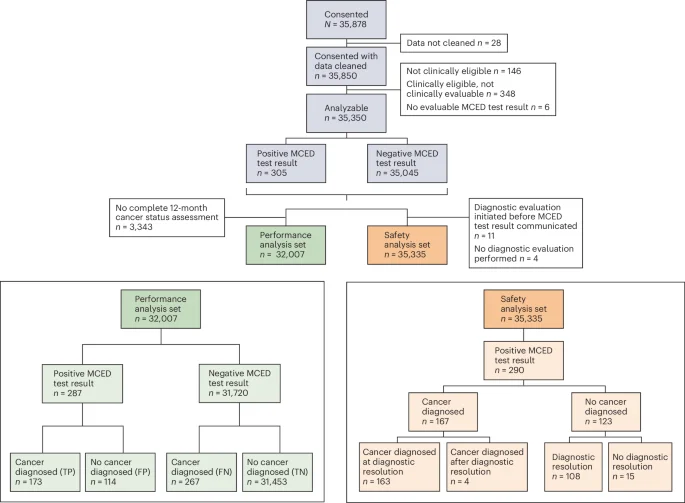
A large US study shows a blood test detects more cancers early, but a UK trial found no overall reduction in late-stage diagnoses, sparking debate over regulatory standards.
Key points
- The PATHFINDER 2 study found a 60.3% positive predictive value and 99.64% specificity for the Galleri test.
- Adding the test to standard screening increased cancer detection by 6.5-fold in the US trial.
- The UK NHS-Galleri trial found no significant reduction in combined stage 3 and 4 cancer diagnoses.
- Critics argue the FDA should not require mortality reduction data for diagnostic tests, while others demand rigorous proof of clinical utility.
Background
Multi-cancer early detection (MCED) tests aim to screen for multiple cancers via a single blood draw, addressing the gap where 70% of cancer deaths lack recommended screening. Recent developments include the PANXEON test for pancreatic cancer and a urine test for bladder cancer, highlighting a broader push for early detection technologies. The FDA is currently reviewing the Galleri test for approval, with Medicare coverage potentially beginning in 2029.
How outlets are covering it
Nature and News-Medical emphasize the high specificity and early-stage detection rates of the Galleri test in the PATHFINDER 2 study, highlighting its potential to complement standard screening. Mirage News reports on the NHS-Galleri trial, noting that while stage 4 diagnoses decreased, there was no significant reduction in combined stage 3 and 4 cancers, missing the primary endpoint. Fortune features a commentary by economist Tomas Philipson, arguing that the FDA should not require mortality reduction data for diagnostic tests, as this sets an unreasonably high bar compared to existing screening methods. The perspectives diverge on whether the test's performance metrics are sufficient for approval or if further randomized trials are needed to prove clinical utility.
Why it matters
The results of these trials will influence FDA decisions on MCED test approval and potential Medicare coverage, impacting access to early cancer detection for millions. The debate over regulatory standards could shape the future of cancer screening policies and the adoption of new diagnostic technologies in the US and UK.
What to watch
The FDA is expected to make a decision on the Galleri test following an advisory committee review. Further follow-up data from the PATHFINDER 2 and NHS-Galleri trials will be crucial in assessing the long-term clinical utility of MCED tests. Ongoing studies like REACH and INFORM will evaluate the test in Medicare beneficiaries and high-risk populations, respectively.
- Performance and safety of a multi-cancer early detection test: the PATHFINDER 2 study Nature
- Former White House economist: science has delivered a cancer detection revolution, now the FDA must keep pace Fortune
- Blood test detects more cancers when added to standard screening News-Medical
- NHS Cancer Blood Test Trial Publishes First Papers Mirage News
- Multicancer Blood Test Detects 17 Cancer Types in Large Prospective Study | Newswise Newswise
Want the full story? Read the original reporting
Read on Nature