
Supreme Court signals likely ruling for Catholic preschools in Colorado funding dispute
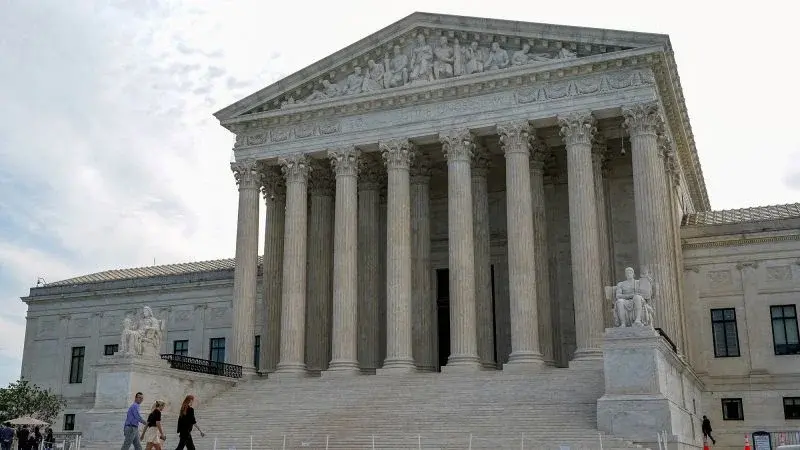
The Supreme Court’s conservative majority signaled on Tuesday that it will likely rule in favor of Catholic preschools in Colorado, allowing them to receive public funding despite refusing to admit children of same-sex couples. The case, St. Mary Catholic Parish v. Roy, challenges a 2020 state law requiring participating schools to adhere to nondiscrimination policies covering sexual orientation and gender identity. While the liberal justices argued the state was not excluding religious schools but merely enforcing neutral rules, conservative justices viewed the requirement as a pretext to bar faith-based institutions. A ruling is expected by June 2027.
Key points
- The Supreme Court heard arguments on November 3, 2026, in St. Mary Catholic Parish v. Roy, concerning Colorado’s Universal Preschool Program (UPK).
- Colorado’s UPK, established in 2020, provides approximately $6,300 per child for 15 hours of weekly preschool, requiring schools to sign nondiscrimination agreements covering sexual orientation and gender identity.
- The Archdiocese of Denver, which manages 34 Catholic preschools, refused to sign the agreement, citing religious objections to same-sex marriage and gender identity.
- Conservative justices, including Brett Kavanaugh and Amy Coney Barrett, suggested the state’s nondiscrimination clause was a 'would-be solution in search of a problem' designed to exclude religious schools.
- Liberal justices, including Sonia Sotomayor and Ketanji Brown Jackson, argued that the state was not discriminating against religious schools but rather enforcing a generally applicable law, and that the schools were seeking a special right to discriminate.
- The Trump administration supported the Catholic plaintiffs, while Colorado argued its policy was neutral and applied to all participating schools, including other religious institutions.
Background
This case follows a series of Supreme Court decisions in 2022 and 2023 that expanded the ability of religious schools to receive public funding in states like Maine and Montana. In those cases, the court ruled that states could not exclude religious schools from tuition assistance programs solely because of their religious nature. However, those decisions did not address whether states could impose nondiscrimination conditions on such funding. Colorado’s 2020 ballot measure created the UPK program, and its 2022 nondiscrimination provision was enacted after the Maine decision. The current case tests whether a state can require religious schools to comply with anti-discrimination laws as a condition of receiving public funds, a question that has not been directly addressed by the Supreme Court in recent years.
How outlets are covering it
CNN and the Los Angeles Times reported that the conservative majority appeared poised to rule in favor of the Catholic schools, with justices like Kavanaugh and Barrett questioning why Colorado created a conflict that could have been avoided. Fox News emphasized the conservative justices' support for religious liberty, framing the case as a defense of faith-based institutions against state overreach. AP News noted the potential impact on the 1990 Employment Division v. Smith precedent, which has long been a target of the conservative legal movement. All outlets agreed that the case represents a clash between First Amendment religious protections and laws intended to protect LGBTQ Americans from discrimination. The liberal justices, as reported by CNN and the LA Times, argued that the state was not excluding religious schools but enforcing a neutral rule, while the conservative justices viewed the nondiscrimination clause as a pretext to bar religious participation. The Trump administration supported the Catholic plaintiffs, while Colorado argued its policy was neutral and applied to all schools, including other religious institutions that continue to participate in the program.
Why it matters
The outcome of this case could significantly expand the ability of religious institutions to receive public funding while maintaining policies that exclude LGBTQ families. A ruling in favor of the Catholic schools could narrow the 1990 Employment Division v. Smith precedent, which has long limited religious exemptions from neutral laws. This could have broader implications for other areas of public life, including healthcare, social services, and education, where religious institutions may seek exemptions from nondiscrimination laws. The case also highlights the ongoing tension between religious freedom and anti-discrimination protections in the United States, a conflict that is likely to continue as more states and localities grapple with the intersection of these issues.
What to watch
The Supreme Court is expected to issue a decision in St. Mary Catholic Parish v. Roy by the end of June 2027. The ruling will likely clarify the limits of religious exemptions from state nondiscrimination laws and could set a precedent for future cases involving religious institutions and public funding. If the court rules in favor of the Catholic schools, it could lead to further challenges to nondiscrimination laws in other states and localities. If the court rules in favor of Colorado, it could reinforce the principle that religious institutions must comply with generally applicable laws as a condition of receiving public funds. The case will also likely influence ongoing debates about the balance between religious freedom and anti-discrimination protections in the United States.
- Supreme Court prepared to rule that publicly funded religious schools can reject children of same-sex couples CNN
- Supreme Court leans towards LGBTQ exclusion in Colorado Catholic pre-schools NPR
- Supreme Court offers support for Catholic preschools challenging state funding requirements Fox News
- Supreme Court hears challenge to Catholic preschools' exclusion from Colorado-funded program AP News
- Supreme Court considers whether a state’s preschool funding rules are discriminatory Los Angeles Times
Want the full story? Read the original reporting
Read on CNN