
Army Detonates Unstable Lead Azide Stockpile in Iowa After Legal Hurdles
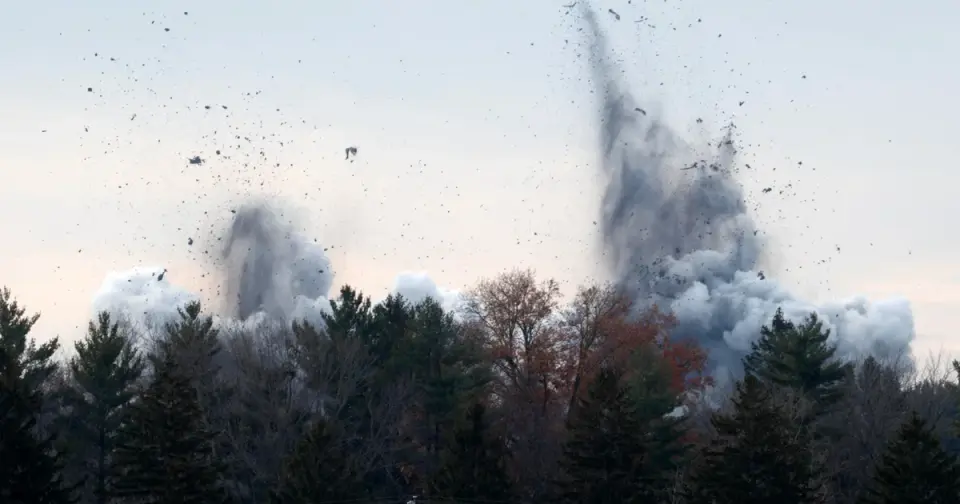
The U.S. Army successfully detonated approximately five tons of unstable lead azide at the Iowa Army Ammunition Plant in Middletown on Wednesday morning. The controlled blast, which had faced legal challenges and community opposition, was described by officials as a success with initial air quality tests showing zero lead detection.
Key points
- The detonation occurred at 9:00 a.m. local time on November 25, 2026, involving 68 barrels of degraded lead azide.
- The material had been stored for over 20 years and became unstable due to recrystallization, posing a risk of spontaneous explosion.
- The 8th Circuit Court of Appeals lifted a temporary stay on the Environmental Protection Agency's permit on Monday, allowing the blast to proceed.
- Officials reported that the blast was 'well-contained' and that initial air monitors detected zero lead in the atmosphere.
- FEMA and other agencies provided support for evacuations and shelter-in-place measures for residents within a 5-mile radius.
Background
The lead azide stockpile, moved to the Iowa plant in 2009, had been deteriorating since at least 2004. A March 2026 inspection found the stabilizing liquid had evaporated, causing the material to crystallize and become highly sensitive to friction and cold temperatures. Previous attempts to chemically neutralize the material were deemed too risky by the Army, leading to the decision for a controlled detonation.
How outlets are covering it
While the Army and federal officials like EPA Administrator Lee Zeldin emphasized the success of the mitigation efforts and the elimination of the spontaneous explosion threat, environmental groups and local residents had previously opposed the blast due to fears of toxic lead dust dispersing across the region. The 8th Circuit Court of Appeals acknowledged the risks but ultimately ruled that the danger of an uncontrolled explosion outweighed the potential health impacts of the controlled detonation.
Why it matters
The detonation addresses a significant public safety risk posed by the unstable explosives but raises ongoing concerns about environmental contamination and the adequacy of government safeguards for nearby communities. The outcome will influence future decisions on handling hazardous military materials and the balance between immediate safety and long-term environmental health.
What to watch
A team of over 150 officials will conduct post-detonation sampling and testing for contamination. Residents are advised to follow guidance from the Iowa Department of Health and Human Services for cleaning surfaces and minimizing lead exposure. The Army plans to share more detailed information at a news conference.
- Army detonates unstable lead explosives at Iowa munitions plant despite community concerns CBS News
- Latest maps provided by US Army show potential locations of lead exposure during Wednesday's controlled detonation WQAD
- Midwest on post-blast watch The Hill
- Army detonates lead azide stockpile at Iowa ammunition plant KCRG
- Public Safety Advisory: Controlled, Mitigated Detonation of Unstable Lead Azide at Iowa Army Ammunition Plant Army.mil
Want the full story? Read the original reporting
Read on CBS News