
Dolores Huerta, UFW Co-Founder and Civil Rights Icon, Dies at 96
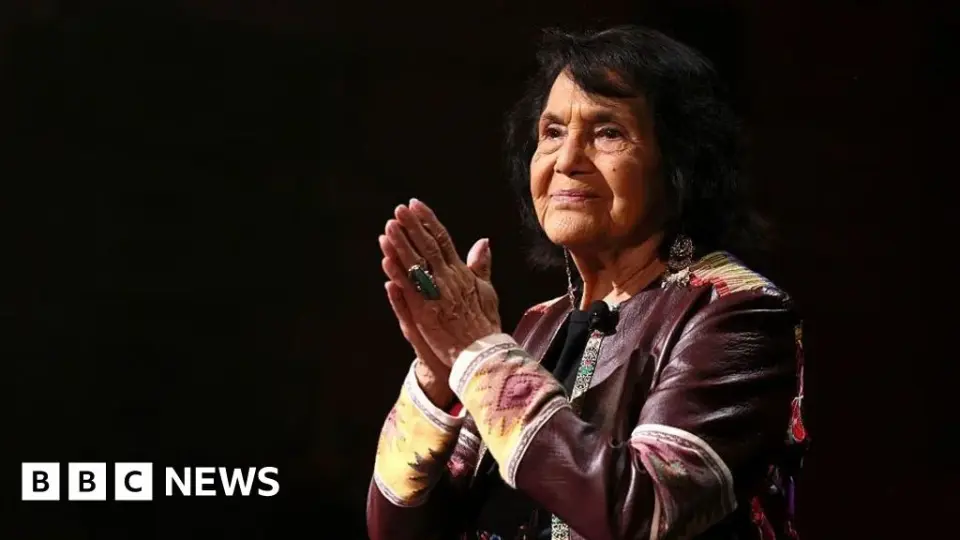
Dolores Huerta, the co-founder of the United Farm Workers and a pivotal civil rights leader, has died at age 96 from cancer. She passed away at her home in Bakersfield, California, on Wednesday. Huerta is remembered for her decades of organizing farmworkers, coining the slogan 'Si Se Puede', and negotiating key labor contracts. Her legacy is complex, marked by her recent revelations of sexual abuse by her partner, Cesar Chavez.
Key points
- Dolores Huerta died at age 96 from cancer at her home in Bakersfield, California, on Wednesday.
- She co-founded the United Farm Workers (UFW) with Cesar Chavez in 1962 and served as its vice president for nearly four decades.
- Huerta was a primary organizer and negotiator, leading strikes and boycotts that secured better wages and working conditions for migrant laborers.
- She coined the slogan 'Si Se Puede', which became a rallying cry for activists and was later adopted by Barack Obama for his 2008 campaign.
- In 2026, Huerta revealed that Chavez sexually abused her in the 1960s, resulting in two pregnancies she kept secret for 60 years.
- Her family asked for privacy as they grieve, stating that Huerta's life's work was to empower her community to face and overcome injustices.
Background
Dolores Huerta was a prominent figure in the US civil rights and labor movements, particularly in the 1960s and 1970s. She worked alongside Cesar Chavez to improve conditions for farmworkers, leading to the unionization of many California table-grape growers. Huerta was also involved in broader civil rights issues, including voting rights and immigration reform. Her legacy has been complicated by recent revelations of sexual abuse by Chavez, which have led to a re-evaluation of his role in the movement.
How outlets are covering it
BBC and The New York Times emphasize Huerta's role as a co-founder of the UFW and her contributions to labor rights, while also noting her recent revelations about Chavez's abuse. Axios highlights her impact on politics and her role as a 'kingmaker' for Democrats. NPR provides a comprehensive overview of her life, including her early activism, her involvement in the Delano Grape Strike, and her later work on women's rights and LGBTQ+ issues. All sources agree on the significance of her contributions to the labor movement and the complexity of her legacy due to the abuse allegations.
Why it matters
Dolores Huerta's death marks the end of an era in the US civil rights and labor movements. Her contributions to the UFW and her advocacy for farmworkers' rights have had a lasting impact on labor laws and working conditions. Her recent revelations about Chavez's abuse have also sparked a broader conversation about power dynamics and accountability in social movements. Huerta's legacy continues to influence activists and policymakers today.
What to watch
The family of Dolores Huerta has asked for privacy as they grieve. They plan to follow up with plans to recognize and celebrate her life and legacy. The UFW and other organizations are expected to hold tributes and events to honor her contributions. The conversation about Chavez's abuse and its impact on the labor movement will likely continue, with more women potentially coming forward with their own experiences.
- US civil rights leader Dolores Huerta dies aged 96 BBC
- Dolores Huerta, Who Founded United Farm Workers With Cesar Chavez, Dies The New York Times
- Dolores Huerta, pioneering labor activist, dies at 96 Axios
- Dolores Huerta, influential labor leader, feminist and civil rights icon, dies at 96 NPR
- ‘She turned no one away’: KCRA 3’s Leticia Ordaz recalls conversations with Dolores Huerta KCRA
Want the full story? Read the original reporting
Read on BBC