
2026 Midterms: Democrats Seize State Power, Ending Decade-Long GOP Dominance
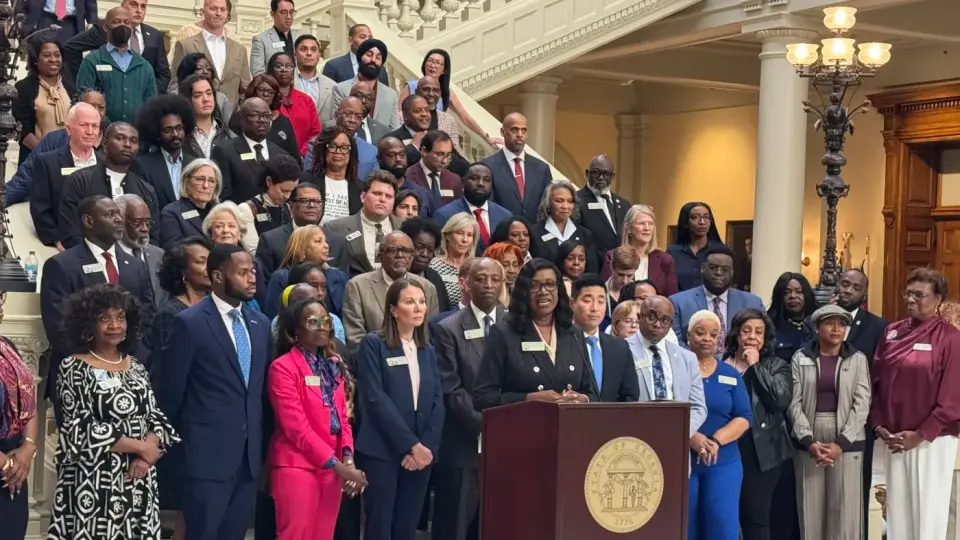
The 2026 midterm elections resulted in a historic shift in state-level power, with Democrats reversing a decade of Republican dominance. Democrats now control the majority of state legislative chambers and governorships, securing new 'trifectas' in six key battleground states. This shift promises significant policy changes in health care, education, and redistricting, while Republicans cite economic dissatisfaction and anti-incumbent sentiment as primary causes for their losses.
Key points
- Democrats now control 24 state legislatures compared to 22 for Republicans, reversing a trend that began in 2010.
- Six new Democratic 'trifectas' (control of governor and both legislative chambers) were established in Arizona, Michigan, Minnesota, Nevada, Pennsylvania, and Wisconsin.
- Democrats broke Republican supermajorities in 13 legislative bodies, granting them veto power and the ability to block GOP initiatives.
- Approximately 75% of Americans now live in states with Democratic governors, including 13 of the 14 most populous states.
- Key policy priorities for new Democratic leaders include expanding Medicaid, raising minimum wages, and reforming school voucher programs.
Background
This shift follows a period of solidified Republican control in state legislatures since 2010. Recent archive coverage noted that Democrats had already gained ground in the U.S. Senate and House, and successfully blocked a Republican mid-decade redistricting effort. The current state-level results extend these national gains, with Democrats flipping seats in reliably Republican states like Texas and Utah.
How outlets are covering it
NPR and The Washington Post emphasize the structural shift in power, noting that Democrats gained seats in nearly every state with legislative elections and secured control in 24 states. CNN highlights the demographic impact, stating that 75% of Americans will now be governed by Democrats, and notes the potential for policy changes in health care and infrastructure. Fox News frames the results as a reaction to economic dissatisfaction, citing a 79% hardship rating on inflation and negative views of President Trump's job performance. While Democrats attribute their success to a focused national strategy, the Republican State Legislative Committee blames the losses on a hostile national political environment and heavy Democratic spending.
Why it matters
State legislatures control critical areas such as taxes, reproductive rights, health care access, and school funding. The new Democratic control, particularly in battleground states, could lead to immediate policy changes, including Medicaid expansion and minimum wage increases. Additionally, Democratic control of state governments will influence future redistricting efforts and election administration rules, potentially impacting the 2028 presidential cycle.
What to watch
New Democratic leaders are expected to push for policy changes such as Medicaid expansion in Georgia and North Carolina, and minimum wage increases in Pennsylvania. In Arizona, Democrats aim to reform school voucher programs. Republicans will likely focus on defending their remaining majorities and preparing for the 2028 elections, while Democrats seek to leverage their new power to pass legislation and challenge existing maps.
- Midterm voters ended the long-running GOP dominance in state legislatures NPR
- After blue wave, three-quarters of Americans will be governed by Democrats CNN
- Democratic sweep opens the door for major policy changes at state level The Washington Post
- GOP wipeout goes from bad to worse as Dems quietly score another major win with big ramifications Fox News
- What Democrats’ Big State Gains Make Possible New York Magazine
Want the full story? Read the original reporting
Read on NPR