
Albania’s Rama Defies Resignation Demands as Student Unrest Escalates
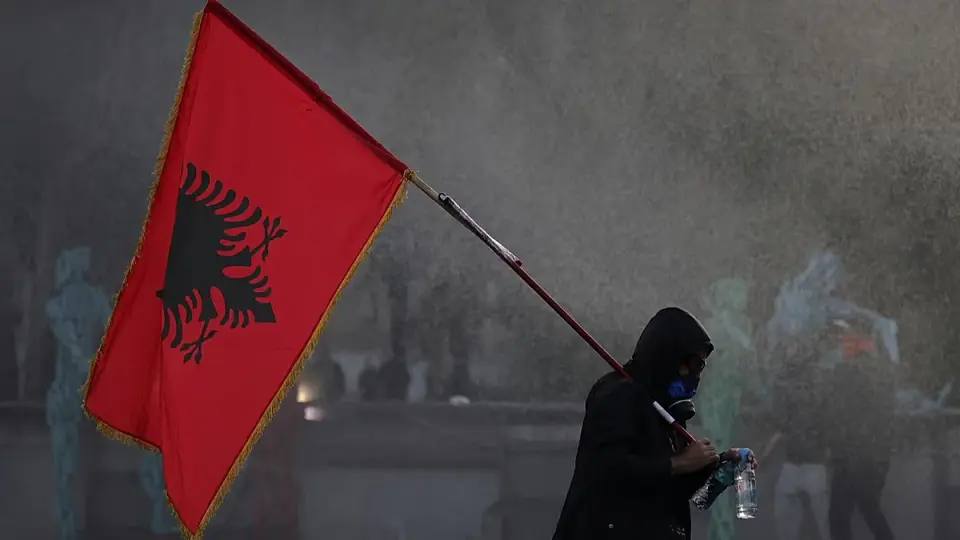
Albanian Prime Minister Edi Rama has refused to resign despite four days of violent, student-led protests in Tirana and other cities. Rama blamed 'foreign hands' for the unrest, while protesters cited corruption, high education costs, and a controversial luxury resort project linked to Jared Kushner. Police detained 160 people on Thursday, and the EU has called for a proportionate response.
Key points
- Prime Minister Edi Rama rejected calls to resign on Friday, stating his mandate to pursue EU membership must not be betrayed by violence.
- Protests began in early October, escalating from months of peaceful 'Flamingo' demonstrations against a luxury coastal development linked to Jared Kushner.
- Police detained 160 individuals following violent clashes on Thursday evening, where protesters threw stones and set fire to government buildings, including the education ministry.
- Rama attributed the unrest to 'foreign hands' and the opposition, while protesters demanded accountability for corruption and poor university conditions.
- The European Union delegation expressed concern over the violent escalation, urging authorities to maintain a proportionate response and constructive dialogue.
Background
The current unrest follows months of peaceful protests known as the 'Flamingo Revolution,' which began in July 2026 over a luxury tourism project on the Adriatic coast linked to US President Donald Trump's son-in-law, Jared Kushner. These earlier demonstrations, which involved holding pink flamingo images, were largely non-violent but failed to yield government concessions. The recent escalation marks a shift toward violent clashes, distinct from the previous summer's peaceful activism. This occurs as Albania, alongside Montenegro, leads the Balkan region in EU accession negotiations, with Rama’s government targeting membership by 2028.
How outlets are covering it
Euronews and Al Jazeera highlight Rama’s attribution of the unrest to 'foreign hands' and unnamed external actors, emphasizing his refusal to step down. BBC provides a broader historical context, noting the transition from the peaceful 'Flamingo' movement to a more radicalized student-led phase, and questions whether opposition leader Sali Berisha is behind the chaos, though it notes his supporters have been less active. NBC News focuses on the specific grievances of students, such as education costs and corruption, and notes the EU’s call for dialogue. All sources agree on the scale of the violence and the detention of 160 people, but differ in emphasis: Rama’s government views the protests as externally manipulated sabotage, while protesters and some analysts view them as a legitimate response to perceived corruption and inaction.
Why it matters
The unrest threatens Albania’s EU accession process, which Rama has made central to his fourth term. Violence in a country viewed as a top EU candidate could delay negotiations and tarnish the nation’s image. The protests also highlight deep-seated issues of corruption and inequality, potentially destabilizing the government before the 2029 elections.
What to watch
Rama has promised to address 'legitimate concerns' regarding education costs but has ruled out resignation. The EU is monitoring the situation closely, urging restraint. The next parliamentary elections are not until 2029, but the current unrest may force earlier political concessions or further escalation.
- Albanian PM blames 'foreign hands' for violent protests across country Euronews.com
- 'Our land, our Albania': young lawmaker demands new future as protests rage Reuters
- Albanian protests turn violent: What we know BBC
- Albania’s leader defies calls to resign as student protesters rampage in capital NBC News
- Albanian PM blames ‘foreign hands’ for unrest as student protests intensify Al Jazeera
Want the full story? Read the original reporting
Read on Euronews.com