
Albania’s ‘Flamingo’ Protests Turn Violent as Rama Blames Foreign Interference
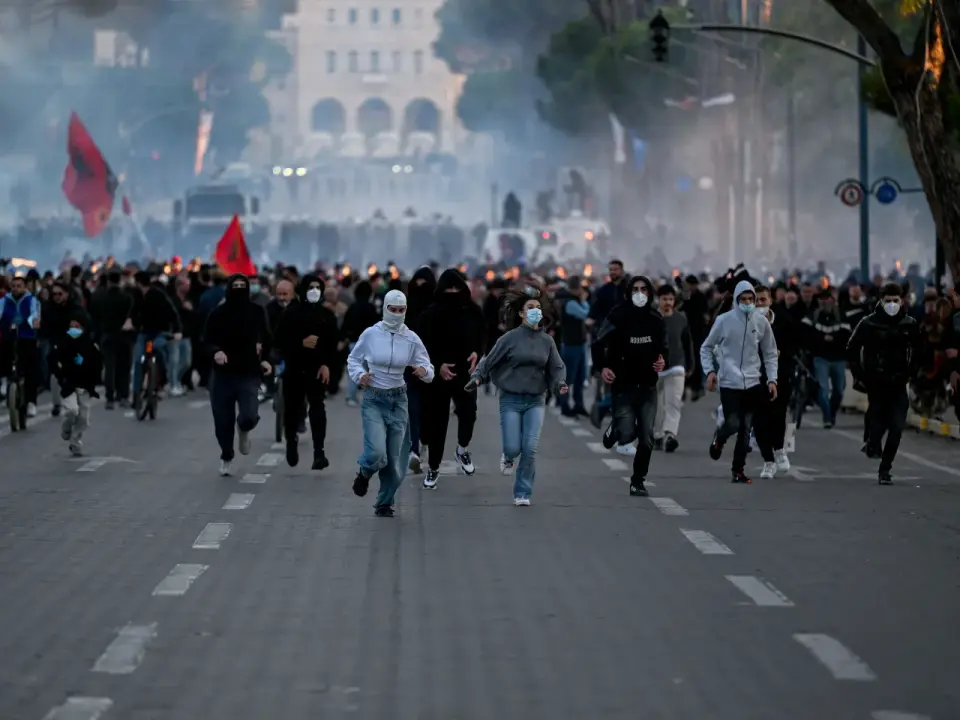
Albanian Prime Minister Edi Rama has rejected calls to resign as student-led protests turned violent for the fourth consecutive day in Tirana. Demonstrators, demanding action on corruption and education costs, clashed with riot police using tear gas and water cannons. Rama attributed the unrest to 'foreign hands' and opposition leader Sali Berisha, while protesters cited government indifference to their demands.
Key points
- Riot police clashed with protesters in Tirana for four days, using tear gas and water cannons against demonstrators who threw rocks and bricks.
- Protests spread to Elbasan, Shkodra, and Korca, where windows were broken and rubbish bins set on fire.
- Rama refused to resign, stating his mandate was to complete EU membership negotiations, and blamed 'foreign hands' and opposition leader Sali Berisha for the chaos.
- The unrest follows months of peaceful 'Flamingo Revolution' protests sparked by a luxury resort development linked to Jared Kushner and concerns over corruption.
- 160 people were detained on Thursday evening, and several government buildings, including the prime minister’s office, were set on fire.
Background
The current violence marks a radicalization of the 'Flamingo Revolution,' a leaderless movement that began in late May 2026. For 135 days, citizens held peaceful evening protests in Tirana, using pink flamingo imagery to oppose a coastal luxury resort project linked to US President Donald Trump’s son-in-law, Jared Kushner. The movement initially focused on environmental and corruption concerns but lost momentum due to perceived government indifference. The recent shift to violent, student-led demonstrations coincides with a broader wave of student activism in Europe, including recent unrest in France over school conditions, though the Albanian protests are distinct in their focus on political corruption and EU accession delays.
How outlets are covering it
Al Jazeera and NBC News report that Rama blamed 'foreign hands' and opposition leader Sali Berisha for the unrest, dismissing the protests as illegitimate. BBC notes that while Rama blamed Berisha, his supporters' numbers were low compared to the current protests, suggesting skepticism about his ability to mastermind the trouble. Le Monde emphasizes the shift from peaceful to violent tactics, attributing it to 'contempt' and 'indifference' from the government. All sources agree that the protests are driven by concerns over corruption, education costs, and the Kushner-linked resort, but differ in their assessment of the role of external actors versus domestic political opposition.
Why it matters
The unrest threatens Albania’s EU accession process, with Rama warning that violence could derail the country’s path to membership by 2028. The protests highlight deep-seated issues of corruption and public trust in the government, which could have broader implications for Balkan stability and EU integration efforts.
What to watch
Rama has indicated he will discuss rising education costs but has ruled out resigning. The EU has called for 'constructive dialogue,' and the UK government has advised visitors to avoid demonstrations. The situation remains volatile, with no clear resolution in sight.
- Albanian PM blames ‘foreign hands’ for unrest as student protests intensify Al Jazeera
- 'Our land, our Albania': young lawmaker demands new future as protests rage Reuters
- Albanian protests turn violent: What we know BBC
- Albania’s leader defies calls to resign as student protesters rampage in capital NBC News
- In Albania, the 'Flamingo Revolution' radicalizes in response to the prime minister's 'contempt' and 'indifference' Le Monde.fr
Want the full story? Read the original reporting
Read on Al Jazeera