
Supreme Court Blocks Trump Mail Ballot Restrictions Ahead of 2026 Midterms
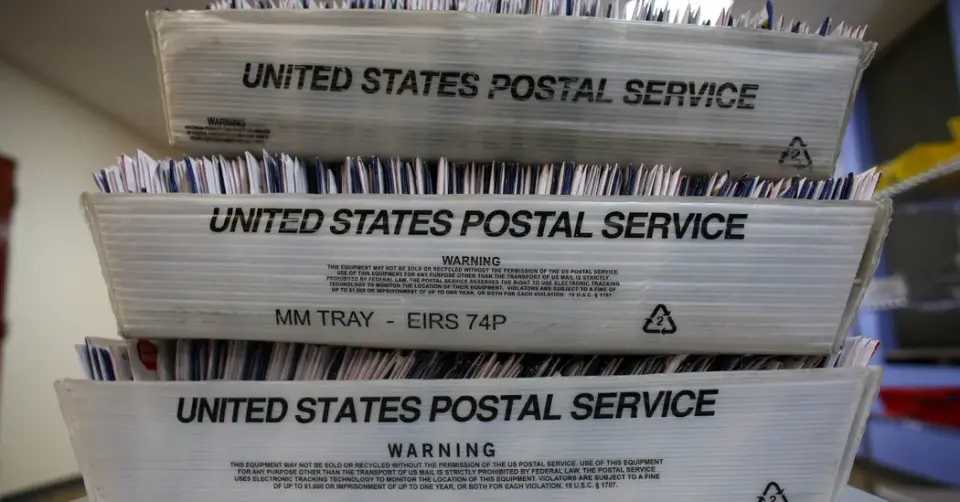
The Supreme Court blocked the Trump administration's plan to restrict mail-in ballots for the 2026 midterms, ruling the government unlikely to succeed on the merits. The decision preserves current voting procedures as states prepare for November, with Justices Alito and Thomas dissenting.
Key points
- The Supreme Court issued an unsigned order blocking the Trump administration's attempt to lift a lower-court injunction against new USPS mail ballot rules.
- The majority found the administration 'unlikely to succeed on the merits,' while Justice Kavanaugh concurred that implementing the rules so close to the election would be 'arbitrary and capricious.'
- Justices Samuel Alito and Clarence Thomas dissented, arguing the Postal Service has broad authority to regulate mail and that the challenges were a 'Hail Mary pass.'
- The blocked plan required states to submit voter lists to the USPS and use specific envelope barcodes, a move critics warned would cause mass confusion and disenfranchisement.
- Democratic and Republican election officials expressed relief, noting that many states had already mailed ballots or prepared contingency plans for the disruption.
Background
This ruling follows a series of legal battles since March 2026, when President Trump signed an executive order directing the USPS to create new guidelines for mail voting. In late August, the Supreme Court initially allowed the administration to proceed with planning, but lower courts subsequently blocked the rules from taking effect. The current decision is the third time the Court has weighed in on the issue, ultimately siding with Democratic-led states and voting rights groups who argued the changes violated the Constitution and threatened the democratic process.
How outlets are covering it
The New York Times and CNN emphasized the ruling as a major loss for the Trump administration, highlighting the potential for 'catastrophic harms' and mass confusion had the rules been implemented. The Washington Post focused on the unprecedented nature of the restrictions and the relief among election officials. CNBC noted the legal nuance, pointing out that the Court's decision only blocks the rule for the 2026 elections, leaving open the possibility of its use in future cycles. While Democratic officials celebrated the decision as a victory for democracy, some Republican election officials, such as Ricky Hatch of Utah, expressed relief due to the logistical impossibility of implementing the changes so close to Election Day. Trump responded on social media, criticizing the Court and labeling mail-in voting a 'scam.'
Why it matters
The decision preserves the integrity and accessibility of mail-in voting for millions of Americans in the 2026 midterms, preventing a potential disruption that could have disenfranchised voters or altered election outcomes. It also sets a precedent for the limits of federal power over state-run elections, reinforcing the constitutional principle that states and Congress, not the White House or the Postal Service, determine voting procedures.
What to watch
The Trump administration may continue to pursue other election-related initiatives, including efforts to access voter data and verify citizenship. The legal status of the USPS rules for future elections remains unresolved, and the administration could attempt to implement them in subsequent cycles. Election officials will likely focus on voter education to address confusion stemming from the legal back-and-forth, while the broader debate over federal interference in elections is expected to continue.
- Supreme Court Rejects Trump’s Restrictions on Mail-In Ballots: Live Updates The New York Times
- Supreme Court rejects Trump’s plan to limit mail-in voting in midterms CNN
- Two Conservative Justices Would Have Allowed Trump’s Mail-In Ballot Rules The New York Times
- Supreme Court rejects Trump bid to lift block on U.S. Postal Service mail-in ballots rule CNBC
- Supreme Court blocks sweeping mail ballot restrictions for midterm elections The Washington Post
Want the full story? Read the original reporting
Read on The New York Times