
Supreme Court allows White House ballroom construction to continue, sidestepping legality questions
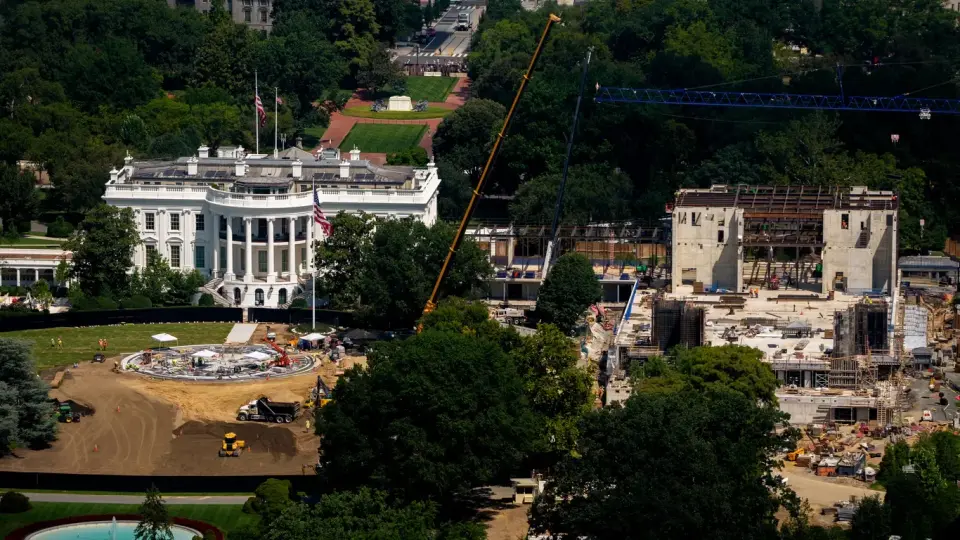
The U.S. Supreme Court ruled 5-4 to allow construction of a new White House ballroom to proceed, blocking lower court injunctions. The majority did not rule on the project's legality, instead finding the National Trust for Historic Preservation likely lacks standing to sue. Chief Justice John Roberts dissented, calling the construction 'likely unlawful' due to lack of congressional approval. The project, estimated at $600 million, is expected to be fully completed by August 2028.
Key points
- The Supreme Court issued a 5-4 decision allowing the Trump administration to continue building the White House ballroom, blocking lower court rulings that had halted above-ground construction.
- The majority ruled that the National Trust for Historic Preservation likely lacks standing to challenge the project, without deciding whether the construction is legal under federal law.
- Chief Justice John Roberts and Justices Sotomayor, Kagan, and Jackson dissented, with Roberts writing that the construction is 'likely unlawful' because Congress has not approved it.
- The ballroom project, which includes an underground bunker, is estimated to cost at least $600 million, up from an initial $400 million estimate, with about $352 million in taxpayer funds redirected to it.
- The National Trust for Historic Preservation expressed disappointment but vowed to continue pursuing the case, while Trump called the lawsuit 'baseless' and praised the project as part of America's 'Golden Age'.
Background
This ruling follows a series of legal challenges and temporary stays by the Supreme Court in August 2026. Earlier, a D.C. federal court had halted construction, but the Supreme Court granted an interim stay to allow work to continue while reviewing the case. The project involves demolishing the historic East Wing to build a 90,000 square foot ballroom, with construction approximately 65% complete as of late August 2026.
How outlets are covering it
Axios and BBC report the 5-4 decision as a procedural victory for the Trump administration, focusing on the standing issue and the lack of a ruling on legality. Vox frames the decision as effectively immunizing the ballroom from federal lawsuits, criticizing the Court's reasoning as incoherent and reflecting a reluctance to limit presidential power. All sources note Roberts' dissent, but Vox emphasizes the broader implications for separation of powers, while Axios and BBC focus more on the immediate impact on construction and the parties' reactions. BBC provides additional context on the project's scope, including a helipad and other Washington D.C. renovations, and notes the private funding model alongside taxpayer contributions for security upgrades.
Why it matters
The decision allows a major, costly, and legally contested construction project on a historic federal site to proceed without a definitive ruling on its legality. It highlights tensions between executive authority and congressional approval for federal projects, and raises questions about the role of standing in challenging presidential actions. The project's scale and cost, along with its impact on historic preservation, make it a significant issue for federal governance and public accountability.
What to watch
The National Trust for Historic Preservation will continue pursuing its case and has urged the Supreme Court to quickly consider the government's forthcoming petition. Construction is expected to be substantially finished by November 2026 and fully completed by August 2028. The legal battle over the project's legality may continue in lower courts or through further Supreme Court petitions.
- Supreme Court allows Trump's ballroom construction to proceed Axios
- Supreme Court Allows Trump’s White House Ballroom Construction The New York Times
- Supreme Court clears way for Trump to keep building White House ballroom BBC
- Supreme Court allows Trump to continue building White House ballroom cnn.com
- The Supreme Court just gave Trump his illegal ballroom vox.com
Want the full story? Read the original reporting
Read on Axios