Tag

Standing

All articles tagged with #standing

The White House ballroom showdown could upend environmental law
politics7 days ago

The White House ballroom showdown could upend environmental law

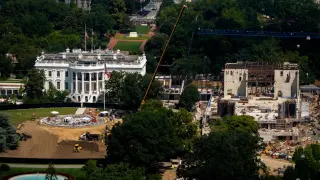
Vox explains that the Supreme Court is weighing National Park Service v. National Trust for Historic Preservation, a case that could determine whether Trump’s plan to demolish part of the White House to build a ballroom is legal and, more broadly, whether the Court will allow environmental and historic-preservation laws to be enforced. Lower courts have found the ballroom illegal under federal preservation law, and Trump argues two funding statutes could authorize it. If the Court narrows standing or blocks suits against such actions, it could gut decades of environmental protections and conservation laws regardless of the project’s legality.

Judge Tosses Consumer Antitrust Suit Challenging Paramount-WBD Merger, Allows Revision
business20 days ago

Judge Tosses Consumer Antitrust Suit Challenging Paramount-WBD Merger, Allows Revision

A federal judge dismissed the consumer antitrust challenge to the Paramount–Warner Bros. Discovery merger for lack of standing but allowed the plaintiffs to file a revised complaint, finding their injuries too generalized and noting only a single past Paramount+ price increase; a separate antitrust case brought by state attorneys general has a March trial date.

Courtroom Showdown Over White House Ballroom Authority
politics2 months ago

Courtroom Showdown Over White House Ballroom Authority

At the D.C. Circuit, judges hear the National Trust’s challenge to the White House East Wing ballroom, weighing whether Congress expressly authorized the project and whether funding and authority via the National Park Service and the Economy Act allow the Executive Residence to oversee construction; the panel interrogates standing and whether the government can proceed with construction despite potential APA review questions and congressional limits, highlighting tensions between presidential power, congressional control of federal property, and court review in a historic-preservation case.

Experts question legality and governance of Trump's $1.8B anti-weaponization fund
politics3 months ago

Experts question legality and governance of Trump's $1.8B anti-weaponization fund

The DOJ’s plan to pay nearly $1.8 billion from the Judgment Fund to those alleging weaponization of the legal system has triggered questions about its legality, eligibility criteria, and oversight. Some experts say the fund can be legally authorized under the Judgment Fund, while others warn it bypasses Congress and lacks transparent rules, risking abuse. Lawmakers from both parties are pushing for safeguards, and lawsuits question who has standing to challenge the arrangement.

5th Circuit lifts injunction, allowing Texas SB4 to take effect
courts4 months ago

5th Circuit lifts injunction, allowing Texas SB4 to take effect

The Fifth Circuit Court of Appeals lifted the injunction blocking Texas SB4, a 2023 immigration law that lets state police arrest people suspected of illegally entering the country, after ruling the plaintiffs lacked standing to sue; the ruling does not address the law’s merits, and it’s unclear when enforcement would begin. Texas officials celebrate the decision as a win for public safety, while opponents warn it could worsen profiling and conflict with federal immigration authority.

Court Dismisses Anti-Hemp Suit Over Medicare CBD Coverage for Lack of Standing
health4 months ago

Court Dismisses Anti-Hemp Suit Over Medicare CBD Coverage for Lack of Standing

Federal health officials asked a court to dismiss a lawsuit by anti-cannabis groups led by SAM and a Medicare patient challenging CMS’s voluntary hemp-derived products coverage under Medicare, arguing the plaintiffs lack Article III standing and that the BEI component is not a new entitlement. The policy allows hemp-derived products (CBD) with up to 0.3% delta-9 THC and up to 3 mg total THC per serving, and is funded by providers up to a $500 annual cap per beneficiary. Plaintiffs contend the program diverts resources and harms their goals, but the government says there is no injury and no rulemaking required for this voluntary model. The case may seek to add MMJ as plaintiffs, a TRO was previously denied, and the matter continues to hinge on federal hemp vs. marijuana policy.

Supreme Court revives GOP challenge to Illinois mail-in ballot rule
law7 months ago

Supreme Court revives GOP challenge to Illinois mail-in ballot rule

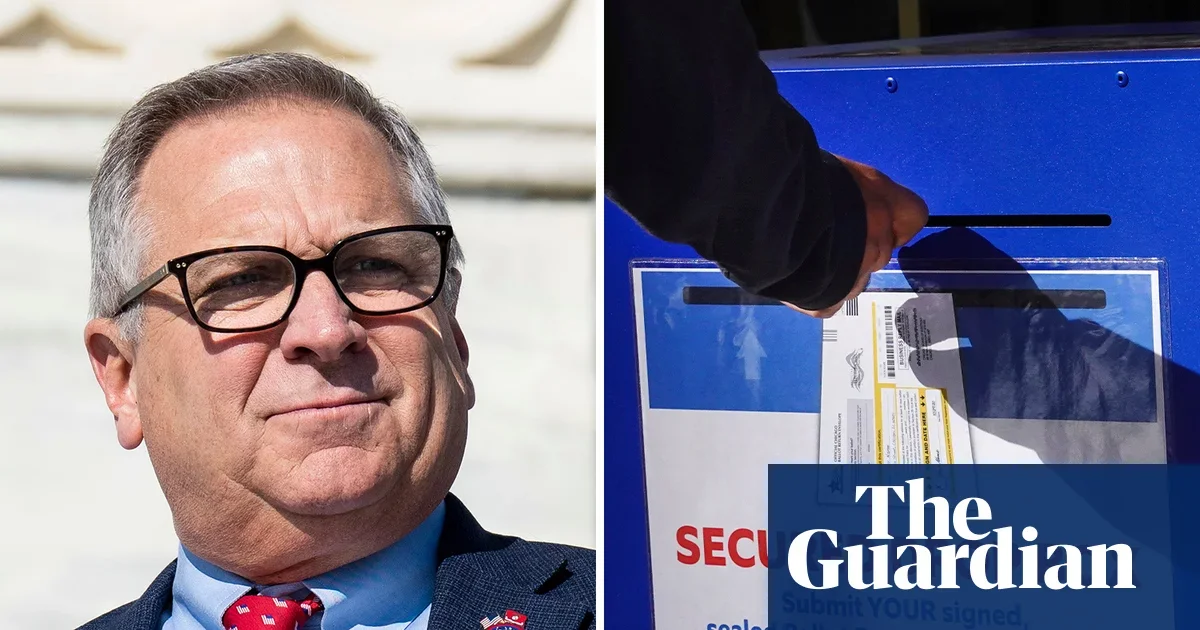
The Supreme Court revived Republican Rep. Mike Bost’s challenge to Illinois’s rule allowing mail-in ballots postmarked by Election Day to be counted if received within two weeks after the election, in a 7-2 decision that focused on standing rather than the constitutionality of the rule. Chief Justice Roberts said candidates have a concrete interest in counting rules and election integrity, while Justice Jackson, joined by Justice Sotomayor, dissented, arguing against granting candidates special standing. The case, which lower courts had dismissed for lack of injury, reflects ongoing partisan battles over mail‑in voting and late-arriving ballots.

Supreme Court Lets Challenge to Illinois’ Late-Ballot Rule Move Forward
politics7 months ago

Supreme Court Lets Challenge to Illinois’ Late-Ballot Rule Move Forward

SCOTUS, in a 7-2 ruling authored by Chief Justice Roberts, revived Rep. Michael Bost’s challenge to Illinois’ 14-day late-ballot rule, holding that a candidate has a concrete stake and standing to challenge the vote-counting rules. The case is sent back to lower courts for further proceedings; the court did not rule on the law’s legality. Justice Barrett concurred with the outcome but not the reasoning, while Justices Sotomayor and Jackson dissented, warning of broad implications for election litigation.

us-politics7 months ago

Court lets candidates challenge late-ballot counting

The Supreme Court ruled 7-2 that candidates can sue in advance over vote-counting practices, allowing Rep. Mike Bost to challenge Illinois’ rule that counts ballots postmarked by Election Day if they arrive within two weeks. The decision resolves standing for election disputes—being a candidate suffices—without deciding whether late-arriving ballots violate federal law; Justices Barrett and Kagan concurred, Jackson and Sotomayor dissented, and Mississippi mail-ballot cases remain on the docket.

Supreme Court opens door to more election challenges with absentee-ballot ruling
politics7 months ago

Supreme Court opens door to more election challenges with absentee-ballot ruling

The Supreme Court, in a 7-2 decision authored by Chief Justice Roberts, revived Republican Rep. Michael Bost’s challenge to Illinois’ rule allowing mail ballots postmarked by Election Day to be counted if received within two weeks. The court held that candidates have a concrete interest in how votes are counted, potentially broadening standing for election-rule challenges and signaling more post-election litigation; lower courts had dismissed the suit for lack of standing. Dissenters warned the ruling could destabilize elections by inviting chaos and more lawsuits after contested elections.

Supreme Court Allows Fuel Companies to Challenge California’s Emission Standards
law1 year ago

Supreme Court Allows Fuel Companies to Challenge California’s Emission Standards

The Supreme Court ruled 7-2 that fuel producers can challenge California's ability to set its own vehicle emissions standards under a federal waiver, focusing on whether they have standing to sue, without addressing the legality of the standards themselves. The decision emphasizes the potential harm to manufacturers from California's regulations, which aim to reduce greenhouse gases and combat climate change, but leaves the merits of the case open for future litigation.

"Supreme Court Justices Express Skepticism on FDA Accountability in Abortion Pill Arguments"
law-and-politics2 years ago

"Supreme Court Justices Express Skepticism on FDA Accountability in Abortion Pill Arguments"

The Supreme Court heard arguments challenging the FDA's relaxed regulations on the abortion pill, with legal experts suggesting the case may be dismissed due to lack of standing. Justices appeared skeptical of the FDA's lack of accountability for any harms caused by the pill, with Justice Alito questioning the FDA's infallibility and whether anyone can sue in such cases. The questioning may indicate the justices' thinking on who has standing in such matters, with implications for future legal challenges.