
Economic frustration and Iran war drive historic Democratic midterm sweep
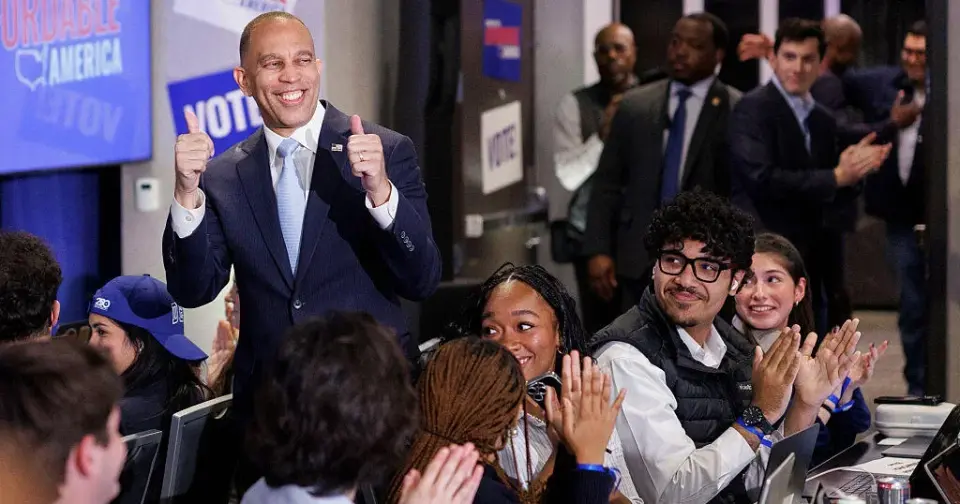
Democrats achieved a historic victory in the 2026 US midterm elections, seizing control of both the House and Senate. Exit polls indicate a massive shift in voter sentiment, with the economy, inflation, and the Iran conflict cited as primary drivers. Key demographic groups that supported President Trump in 2024, including young voters, Latinos, and women, swung decisively toward Democrats. The results represent a broad rejection of the current administration's policies, though overall party favorability remains low.
Key points
- Democrats won the House and Senate, flipping at least seven Republican-held Senate seats, including in Texas and Kansas, and taking at least 29 House seats from Republicans.
- Exit polls show a 15-point national swing toward Democrats from 2024, with major gains among voters under 30, first-time voters, and Latino voters.
- The economy was the top issue for 39% of voters, with many citing inflation and high costs of living as reasons for switching parties.
- Voters expressed significant dissatisfaction with the Iran military action and immigration policies, contributing to the Republican defeat.
- Despite the victory, only 47% of voters held a favorable view of the Democratic Party, indicating the win was largely a rejection of the incumbent administration.
Background
Prior to the election, polls indicated Democrats were leading in key Senate races, including Texas and Kansas, with President Trump's approval rating at 34%. Earlier reporting highlighted voter frustration over the economy and the Iran war as central issues. The 2026 results confirm a significant shift from the 2024 presidential election, where Trump had made inroads with young voters, Latinos, and women.
How outlets are covering it
CBS News emphasizes that economic frustration and negative views of the economy were the primary drivers of the Democratic victory, noting that groups Trump won in 2024 swung back to Democrats. KOMO highlights the shift among young and Latino voters, citing frustration over the Iran war, inflation, and gas prices. Central Oregon Daily provides detailed demographic data, showing a 22-point swing among Hispanic voters and a 36-point swing among voters under 30, and notes that even non-college educated voters, a core Republican base, shifted toward Democrats. UA.NEWS focuses on the specific margin for young voters (73% for Democrats) and cites the unpopular Iran war and declining approval ratings as key factors. All sources agree that the election was a referendum on the administration's policies, particularly regarding the economy and foreign affairs.
Why it matters
The 2026 midterms mark a significant realignment in US politics, with Democrats gaining control of both chambers of Congress. The results suggest that economic concerns and dissatisfaction with foreign policy, particularly the Iran conflict, are powerful drivers of voter behavior. The shift among key demographic groups indicates a potential long-term change in the political landscape, although the low favorability rating for the Democratic Party suggests that the party faces challenges in maintaining this momentum.
What to watch
Democrats will likely focus on implementing their agenda, particularly regarding economic issues and cost of living. The party may also seek to expand its Senate majority in states like Mississippi and Alaska, where votes are still being counted. Republicans will need to reassess their strategy, particularly regarding economic messaging and foreign policy, to regain support in future elections.
- CBS News exit polls show how Democrats won in the 2026 midterm elections CBS News
- VOTE: What was the biggest factor that drove the midterm results? KOMO
- Young voters led a sharp shift toward Democrats in the 2026 midterms, The AP Voter Poll finds CBS 17
- How major demographic shifts propelled Democrats to a midterm rout Central Oregon Daily
- 73% of young voters backed Democrats in House elections — The Hill UA.NEWS
Want the full story? Read the original reporting
Read on CBS News