
Eisenkot seeks Netanyahu’s support to form coalition amid US political shift
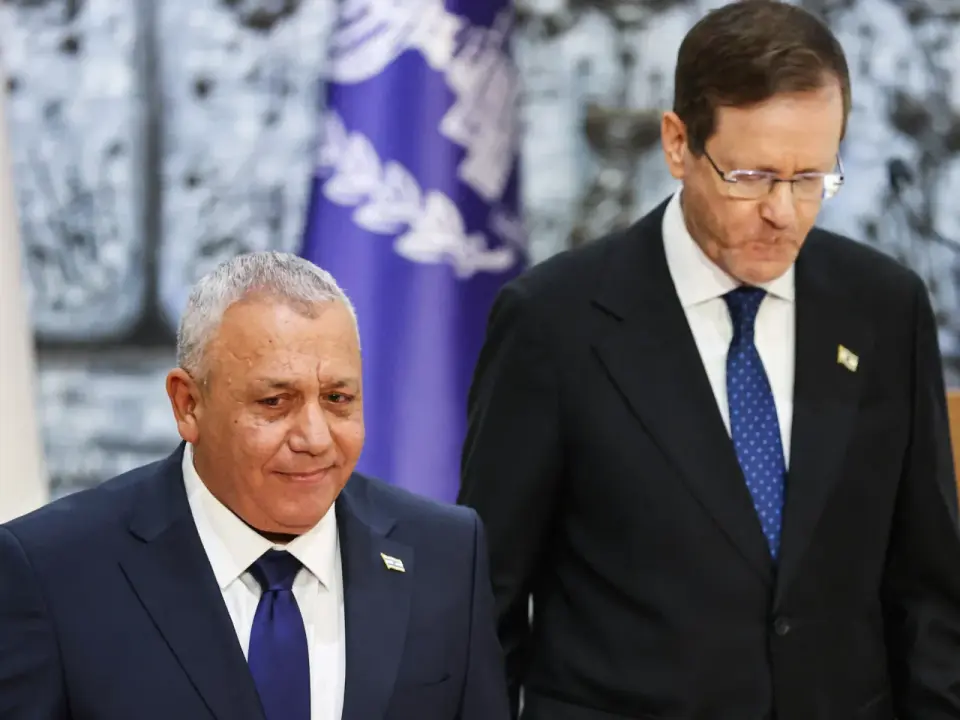
Gadi Eisenkot has been officially tasked by President Isaac Herzog with forming Israel’s next government following an inconclusive October election. Eisenkot has 28 days to build a majority, a challenge complicated by his refusal to ally with Arab-led parties despite their record 19 seats. He has expressed openness to including Prime Minister Benjamin Netanyahu and far-right figures in a national unity government, citing a diplomatic crisis and shifting US politics. If Eisenkot fails, the mandate may pass to Netanyahu, potentially prolonging his rule.
Key points
- President Isaac Herzog officially tasked opposition leader Gadi Eisenkot with forming a government on Sunday, giving him 28 days, extendable by 14, to secure a 61-seat majority.
- Eisenkot’s bloc holds 48 seats, while Netanyahu’s bloc holds 53; Arab-led parties won a record 19 seats, making them pivotal kingmakers.
- Eisenkot stated he is open to including Netanyahu and Finance Minister Bezalel Smotrich in a coalition, describing the situation as a 'state of emergency' requiring unconventional steps.
- Eisenkot has ruled out forming a government with Arab-led parties, citing conditions such as recognizing Israel as a Jewish state and labeling Hamas a terrorist group, which those parties reject.
- Herzog warned of uncertainties following US midterm elections, where Democrats critical of Israel’s military support won key positions, increasing pressure for a stable Israeli government.
Background
This development follows the October 27, 2026, Israeli elections, which resulted in a parliamentary deadlock with no bloc securing the 61 seats required for a majority. Previous coverage noted that Arab-led parties, including the Joint List and Raam, achieved historic gains, positioning them as potential kingmakers. Netanyahu’s bloc had accused Arab parties of electoral fraud, claims dismissed by the Central Elections Committee and President Herzog. Eisenkot, a former military chief, had previously received endorsements from Arab parties, though internal divisions within the opposition remain a significant hurdle.
How outlets are covering it
Al Jazeera emphasizes Eisenkot’s openness to including Netanyahu and Smotrich, highlighting the risk that Netanyahu could derail the process to remain caretaker prime minister. The New York Times focuses on the structural deadlock, detailing the seat distribution and the lack of an outright majority for any bloc. The Guardian underscores the diplomatic crisis and US political shifts, noting Eisenkot’s call for a 'national emergency government' and the fragility of potential power-sharing deals. AP News highlights the dilemma facing Arab parties, who are willing to support an anti-Netanyahu government without joining it, citing concerns over ongoing wars and settlement expansion. Outlets differ on the likelihood of success, with some noting the fragility of unity governments and others pointing to the strategic calculations of both Eisenkot and Netanyahu.
Why it matters
The outcome of these negotiations will determine whether Israel moves toward a new government or faces further instability and potential new elections. A successful coalition could shift Israel’s foreign policy, particularly regarding Gaza and international relations, while a failure may prolong Netanyahu’s rule and deepen domestic polarization. The involvement of Arab-led parties as kingmakers also signals a potential shift in Israeli political dynamics, challenging traditional coalition norms.
What to watch
Eisenkot must secure 61 votes within 28 days, potentially through a power-sharing deal with Netanyahu, support from ultra-Orthodox parties, or a confidence vote with fewer seats. If he fails, the mandate may pass to Netanyahu, or new elections could be called. The coming weeks will test the viability of a national unity government and the willingness of key parties to compromise on contentious issues like military service exemptions and Arab party inclusion.
- Eisenkot open to Netanyahu joining Israel’s next government Al Jazeera
- Who Is Gadi Eisenkot, the Israeli Tasked With Forming a Government? The New York Times
- Gadi Eisenkot reaches out to Netanyahu allies as he strives to form government The Guardian
- A veteran Arab lawmaker in Israel is willing to break with precedent to topple Netanyahu AP News
- Netanyahu rival Eisenkot tapped to form Israeli government Axios
Want the full story? Read the original reporting
Read on Al Jazeera