
Jeffries Vows Democratic Refusal to Engage With New Chief of Staff Miller
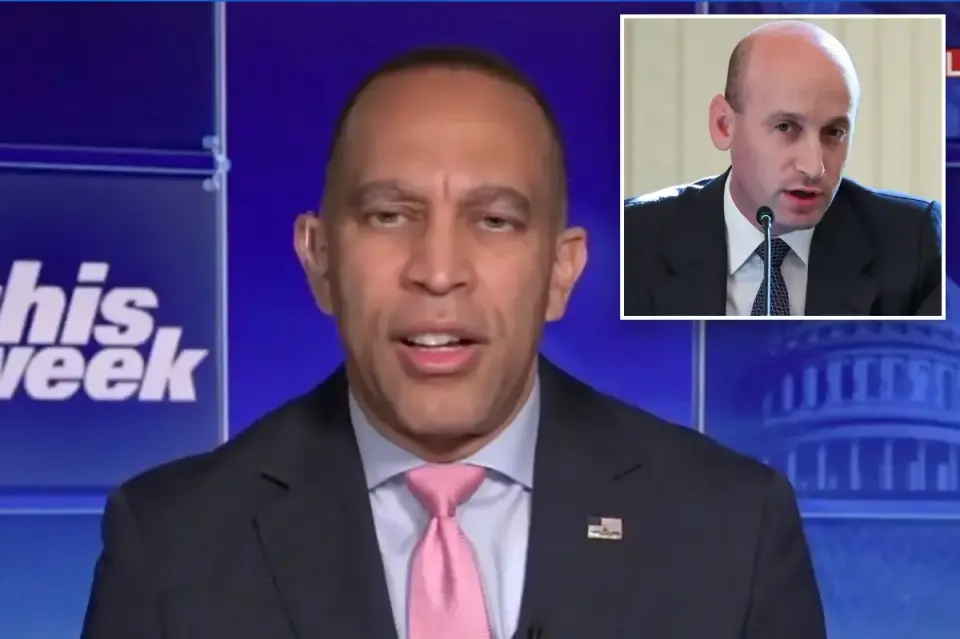
House Democratic Leader Hakeem Jeffries declared that Democrats will not collaborate with new White House Chief of Staff Stephen Miller, citing the official’s role in immigration enforcement. This stance follows the Democratic Party’s control of both congressional chambers after the 2026 midterms. Jeffries characterized Miller’s appointment as an irresponsible move that prioritizes executive power over bipartisan cooperation, signaling a period of intense legislative conflict.
Key points
- Hakeem Jeffries, the likely next Speaker of the House, stated that Democrats will refuse to work with Stephen Miller, who replaced Susie Wiles as chief of staff effective Monday.
- Jeffries described Miller as the architect of a violent mass deportation machine, alleging responsibility for policies that led to the deaths of Americans, including Alex Pretti and Renee Nicole Good.
- The Democratic leader emphasized that the party’s majority in Congress provides a firewall to oppose the administration’s extremism, describing the refusal to engage as a forced pushback against hardline policies.
- This confrontation occurs after the Republican Party’s historic losses in the 2026 midterm elections, where Democrats gained control of both chambers of Congress.
- Miller, a 41-year-old longtime aide, is viewed by critics as a hardliner who prioritizes executive authority over bipartisan cooperation, a stance that Trump’s allies argue is necessary to defend the presidential agenda.
Background
The appointment of Stephen Miller as White House chief of staff follows the resignation of Susie Wiles, a transition confirmed by President Trump during a brief press interaction on November 6, 2026. Our previous coverage noted that this move was interpreted as a signal of confrontation with the newly Democratic-controlled Congress. While supporters viewed Miller’s elevation as a defense of executive power against a hostile legislature, critics argued it ignored voter backlash against hardline immigration policies. The current friction represents the first major public sign of legislative resistance following the midterm upset.
How outlets are covering it
The New York Post highlights the sharp rhetorical divide, quoting Jeffries’s direct refusal to engage and his specific allegations regarding Miller’s responsibility for deaths in deportation policies. In contrast, the Axios source, while primarily focused on the transition from Susie Wiles, frames the appointment within the broader context of administrative changes following the midterm defeat. The Post emphasizes the ideological clash and the Democratic vow to oppose the administration, whereas the background context suggests a more structural view of the shift toward executive authority versus legislative oversight. No source reports on any immediate legislative action taken in response to Jeffries’s statement, focusing instead on the political rhetoric and the structural change in White House leadership.
Why it matters
This refusal to engage signals a potential breakdown in the traditional channels of communication between the executive and legislative branches. With Democrats controlling both houses, the administration’s ability to pass legislation or secure funding may be severely hampered if key figures like Miller are excluded from negotiations. The specific allegations regarding deaths in deportation policies could lead to immediate congressional investigations, as hinted in previous coverage, setting the stage for a highly contentious legislative session.
What to watch
The next likely step is the formal launch of congressional investigations into the administration’s immigration policies, as previously vowed by Democrats. The White House may attempt to bypass the House leadership by engaging with other Democratic members or through executive orders, though Jeffries’s statement suggests a unified front. The effectiveness of this 'firewall' will be tested in the coming weeks as the new Congress convenes and debates the administration’s budget and policy proposals.
- House leader Hakeem Jeffries says Dems will refuse to work with Trump’s new chief of staff Stephen Miller New York Post
- For Stephen Miller, Election Defeat Is No Reason to Back Down on Immigration Crackdown The New York Times
- Sanders on Stephen Miller becoming White House chief of staff: ‘I’m not worried’ The Hill
- Trump Signals Combative Next Two Years With Elevation of Stephen Miller WSJ
- Scoop: First major White House departure as Miller takes charge Axios
Want the full story? Read the original reporting
Read on New York Post