
Cook’s lawyers reject Trump’s renewed bid to fire her, citing 'inadvertent' mortgage errors
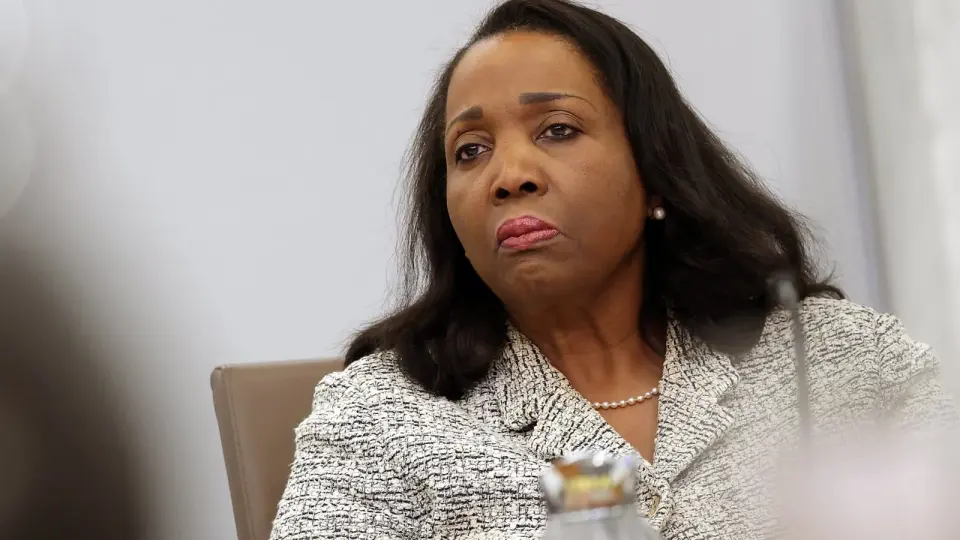
Federal Reserve Governor Lisa Cook’s legal team has formally rejected President Donald Trump’s renewed attempt to remove her from office. In a letter to the White House, Cook’s attorney Abbe Lowell stated that allegations of mortgage fraud are 'unfounded and untrue,' characterizing the errors as an 'inadvertent oversight' rather than intentional wrongdoing. The dispute follows a Supreme Court ruling that blocked a previous firing attempt, leaving the legal basis for removal unresolved. Cook’s team argues that the White House has failed to demonstrate that she received preferential interest rates or committed a crime, noting that similar primary residence claims have been made by Trump and other administration officials. The White House has not responded to the defense, but the legal battle is expected to continue as Trump seeks to assert control over the central bank.
Key points
- Attorney Abbe Lowell submitted a five-page letter to White House counsel David Warrington, stating that allegations of mortgage fraud against Lisa Cook are 'unfounded and untrue.'
- Lowell argued that Cook’s actions did not constitute 'intentional wrongdoing' or a crime under the Federal Reserve Act, describing the errors as an 'inadvertent oversight' in her private capacity.
- The White House, led by deputy chief of staff Dan Scavino, previously sent a letter demanding Cook respond to claims that she listed two properties as her primary residence, a move Cook’s team called 'grossly negligent' but not criminal.
- Lowell noted that President Trump, Treasury Secretary Scott Bessent, and Attorney General Todd Blanche have also reportedly listed multiple properties as primary residences, arguing that singling out Cook is selective.
- The Supreme Court blocked Trump’s initial attempt to fire Cook in June 2026 but did not define the precise legal criteria for 'cause' under the Federal Reserve Act, leaving the door open for further attempts.
Background
This dispute began in August 2025 when Trump first moved to fire Cook, a Biden appointee, after Federal Housing Finance Agency Director Bill Pulte sent a criminal referral to the Department of Justice. Cook denied the allegations and sued, leading to a Supreme Court ruling in June 2026 that allowed her to remain in her position while the case was adjudicated. The current exchange is the latest chapter in a broader conflict between the White House and the Federal Reserve, which has intensified amid Trump’s demands for lower interest rates and his previous clashes with Fed Chair Jay Powell.
How outlets are covering it
CNBC and the Financial Times emphasize the legal defense, highlighting that Cook’s team argues the allegations are baseless and that the White House has not proven she received preferential interest rates. Axios focuses on the procedural aspect, noting that Cook’s lawyers distributed their response to reporters and that the Supreme Court’s vague ruling on 'cause' has created a legal loophole. Vox, in contrast, criticizes the Supreme Court for its 'incompetent' ruling, arguing that the Court’s failure to clearly define the limits of presidential power has emboldened Trump to retry the firing. All sources agree that the White House has not responded to the latest letter, but they differ on whether the outcome will be determined by legal technicalities or by the broader political pressure on the Federal Reserve.
Why it matters
The outcome of this dispute will determine whether the White House can successfully remove a Federal Reserve governor without clear legal cause, potentially setting a precedent for future conflicts between the executive branch and the central bank. If Trump succeeds in firing Cook, it could undermine the independence of the Federal Reserve and influence monetary policy, including interest rate decisions, which have significant implications for the broader economy and financial markets.
What to watch
The next step is likely to be a legal challenge if Trump attempts to fire Cook again, with the courts expected to adjudicate the scope of presidential power over the Federal Reserve. The White House may also issue a formal response to Cook’s letter, potentially escalating the dispute into a full-blown legal battle. The outcome will depend on how the courts interpret the Supreme Court’s June ruling and the Federal Reserve Act’s provisions for 'cause' removal.
- Fed Gov Lisa Cook’s lawyer fires back at Trump's renewed threat to oust her CNBC
- Fed governor Lisa Cook: "No legitimate basis for removal" on Trump mortgage claims Axios
- Trump’s new attempt to seize control of the Federal Reserve, explained vox.com
- Fed’s Cook Denies Wrongdoing as Trump Revives Push to Fire Her Bloomberg
- Lisa Cook says Trump has no grounds to fire her over ‘inadvertent’ mortgage paperwork Financial Times
Want the full story? Read the original reporting
Read on CNBC