
France Grants Mayors Curfew Powers After Historic Sites Burned in Cost-of-Living Riots
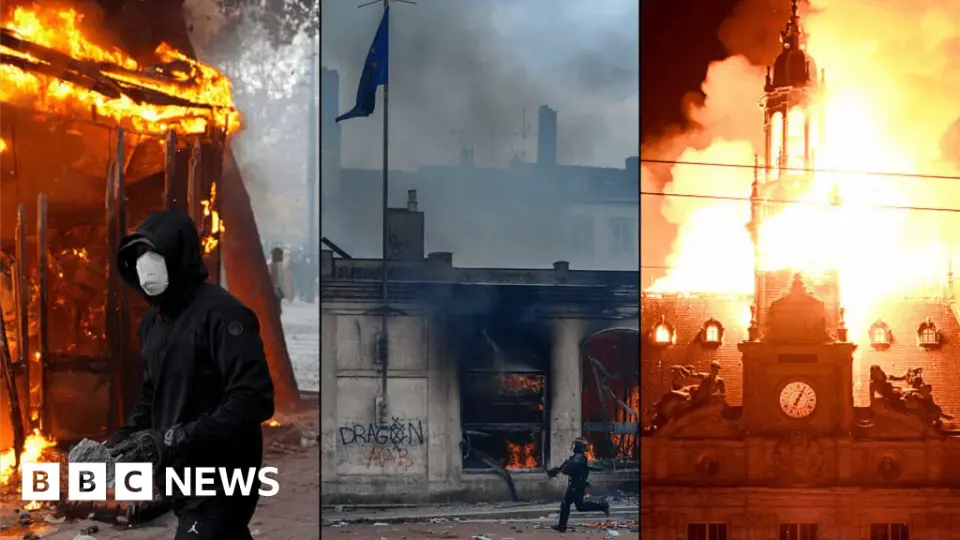
Violent protests in France have escalated, resulting in the destruction of historic landmarks and the resignation offer of Interior Minister Laurent Nuñez. Prime Minister Sébastien Lecornu has authorized local mayors to impose partial curfews to restore order, as thousands of arrests are reported following a weekend of widespread looting and arson.
Key points
- Prime Minister Sébastien Lecornu has granted local mayors the authority to implement partial curfews to protect citizens and businesses.
- Interior Minister Laurent Nuñez offered his resignation following the disorder, though the offer was rejected by the government.
- The Limoges town hall, a 143-year-old structure, was largely destroyed by fire, with officials describing the damage as a tragedy.
- In Marseille, rioters breached the city hall using a metal fence as a battering ram, damaging a bust of Marianne, a symbol of the French Republic.
- Paris experienced extensive damage, including looting and arson near the Place de la République and Champs-Elysees, with police struggling to contain small groups of masked rioters.
Background
This latest wave of violence follows a month of escalating unrest in France. On October 17, 2026, over 550,000 people protested, marking the largest turnout since the crisis began. Earlier in September, student protests turned violent, leading to 440 detentions amid budget strikes. The current events represent a significant escalation in the intensity of the public disorder.
How outlets are covering it
BBC emphasizes the visual scale of destruction, highlighting the vandalism of iconic landmarks like the Statue of the Republic in Paris and the collapse of the Limoges town hall. AP News focuses on the law enforcement response, noting that thousands have been arrested for rioting and looting. While BBC cites Mayor Benoît Payan’s criticism of the 'almost total lack of control' by security forces, AP highlights the government's attempt to regain authority through curfews. Both sources agree that while many protesters were peaceful, a violent minority caused significant damage, but they differ in emphasis: BBC on the cultural loss, AP on the criminal justice response.
Why it matters
The destruction of historic landmarks and the government's move to impose curfews signal a critical turning point in France's social stability. The resignation offer of the Interior Minister and the authorization of curfews indicate that the state is struggling to maintain order, potentially impacting public confidence and economic activity. The anticipation of further protests next Saturday suggests that the crisis is far from resolved, posing risks to national security and international reputation.
What to watch
Local mayors are expected to implement partial curfews in affected areas to prevent further violence. The government will likely face increased pressure to address the root causes of the unrest, including rising fuel prices and cost-of-living concerns. Another round of protests is anticipated next Saturday, which could lead to further clashes if tensions remain high.
- In pictures: French landmarks damaged and destroyed by violent protesters BBC
- Opinion | The French Kids Are All Right. It’s the Rest of Us I’m Worried About. The New York Times
- France in turmoil after riots and looting: What we know Reuters
- Louvre blocked as France grapples with unrest Yahoo
- Macron condemns those who 'sought to bring down the Republic' after rioting mars nationwide protests AP News
Want the full story? Read the original reporting
Read on BBC