
Icelanders reject EU accession talks in narrow referendum
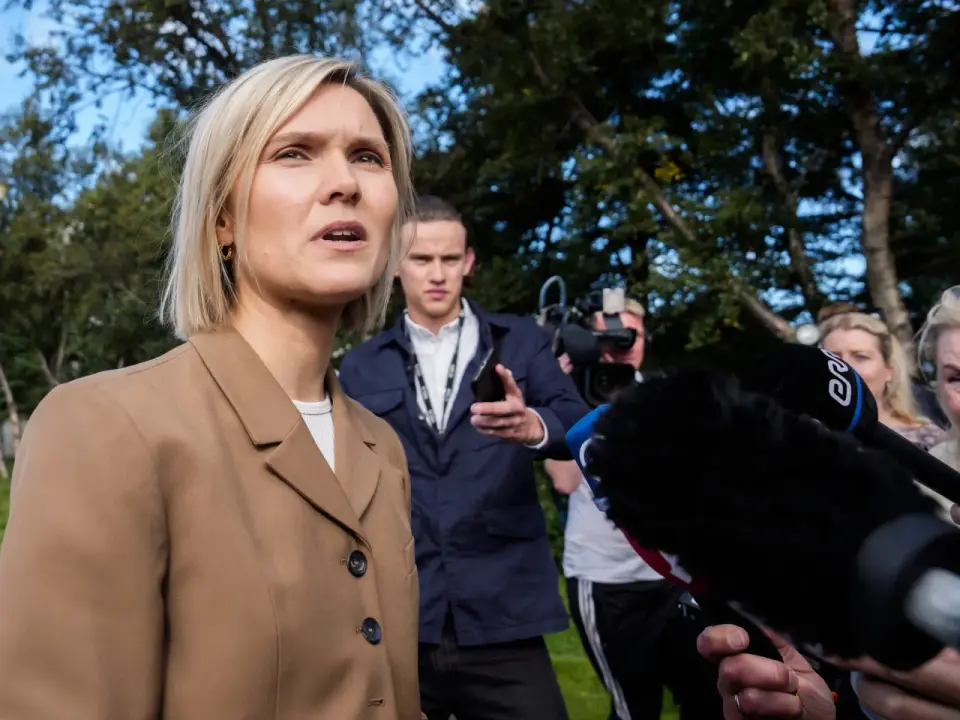
Icelandic voters rejected resuming European Union accession negotiations in a close referendum, with 52.8% voting 'no' against 47.2% 'yes'. The result, which was technically non-binding, is a setback for Prime Minister Kristrún Frostadóttir, who had framed the vote as a 'now or never' moment. The government has vowed to respect the outcome, likely ending the current bid for EU membership while Iceland maintains its existing ties through the European Economic Area and Schengen.
Key points
- The referendum asked whether to resume accession talks suspended in 2013, not whether to join the EU directly.
- The 'no' side won with 52.8% of the vote, with high turnout at 82.5%.
- Prime Minister Kristrún Frostadóttir acknowledged the result and stated the matter would not move forward under her government.
- The vote was influenced by concerns over fishing rights, sovereignty, and geopolitical security in the Arctic.
- Iceland will remain in the European Economic Area and Schengen zone, maintaining close ties with the EU without full membership.
Background
Iceland applied to join the EU in 2009 following a financial crisis but suspended negotiations in 2013 after a eurosceptic government took power. The current government, elected in 2024, had planned the referendum for 2027 but moved it up due to geopolitical tensions, including US President Donald Trump's threats regarding Greenland. Previous archive coverage highlighted the razor-thin nature of the vote and the central role of fisheries and sovereignty in the debate.
How outlets are covering it
Al Jazeera and The Guardian emphasized the narrow margin of the vote and the government's commitment to respect the result, noting the 'no' side's focus on sovereignty and fishing rights. Fox News highlighted the geopolitical context, particularly Trump's Greenland ambitions, and the division between urban and rural areas, with Reykjavik being the only area to support 'yes'. CNN focused on the security implications and the role of misinformation in the campaign. All sources agreed on the final result and the government's response, but differed in emphasis on the causes, with some focusing on economic and sovereignty issues, while others highlighted geopolitical and security concerns.
Why it matters
The result signals a shift in Iceland's foreign policy, prioritizing sovereignty and existing EU ties over full membership. It also reflects broader European skepticism towards EU integration, as noted by anti-EU leaders like Marine Le Pen and Nigel Farage. The outcome may influence future EU enlargement efforts and Iceland's role in Arctic security, given its NATO membership and reliance on US defense agreements.
What to watch
The government will likely refer to parliament the question of formally withdrawing Iceland's EU membership application. It is unlikely that accession negotiations will resume during the current government's term, which runs until 2028. Iceland will continue its relationship with the EU through the European Economic Area and Schengen, maintaining access to the single market and free travel.
- Iceland votes to reject EU accession talks: What happens next? Al Jazeera
- Iceland votes on resuming EU membership talks as Trump's push for neighboring Greenland looms over debate Fox News
- Iceland rejects EU accession talks after divisive referendum campaign The Guardian
- Icelanders vote 'no' to talks aimed at joining the EU in close referendum NPR
- Iceland rejects EU membership plan in referendum held under the shadow of Trump’s Greenland threats CNN
Want the full story? Read the original reporting
Read on Al Jazeera