
Senate approves BAAJA to fast-track energy permits despite Democratic split
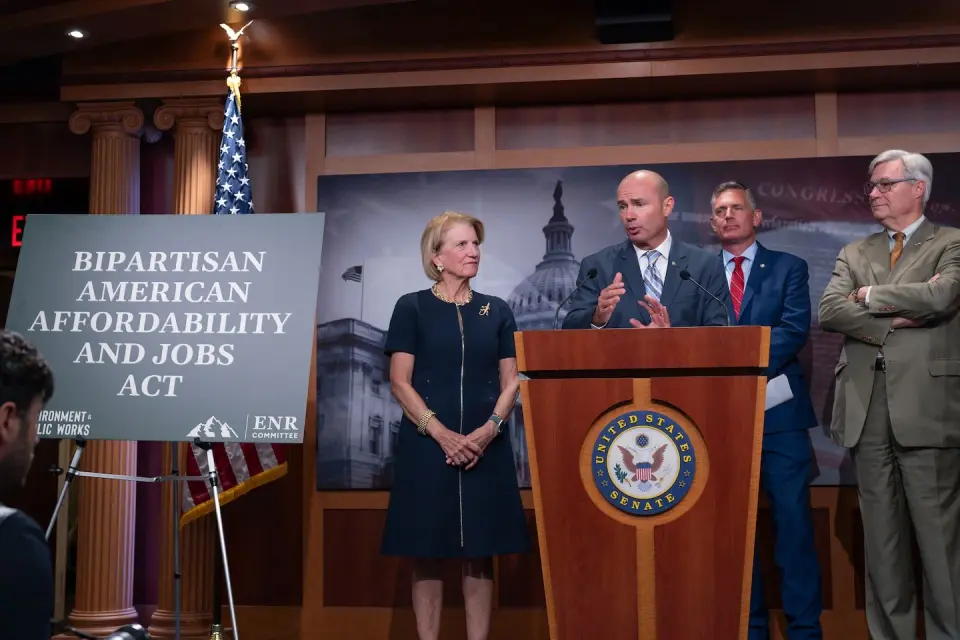
The US Senate passed the Bipartisan American Affordability and Jobs Act (BAAJA) 62-33 on Thursday, a measure designed to accelerate infrastructure and energy projects by shortening environmental review deadlines and expanding federal authority over interstate electricity transmission. The legislation, negotiated by Senators Shelley Moore Capito, Mike Lee, Martin Heinrich, and Sheldon Whitehouse, now moves to the House, where Republican leaders aim to pass it before the lame-duck session ends. While supporters argue the bill will lower electricity costs and address surging AI-driven power demand, critics warn it weakens bedrock environmental protections and grants excessive authority to fossil fuel and data center developers. The vote exposed deep divisions within the Democratic caucus, with 15 members supporting the measure and 31 opposing it, even as Senate Minority Leader Chuck Schumer voted in favor.
Key points
- The Senate approved S. 5653, known as the BAAJA, with a 62-33 vote, marking the first major energy legislation to clear the chamber since the 2022 Inflation Reduction Act.
- The bill streamlines permitting for energy, housing, and roads by imposing tighter deadlines on environmental reviews and limiting judicial challenges to projects.
- It expands federal authority over interstate electricity transmission, a key bottleneck for integrating renewable energy into the grid.
- The legislation requires hyperscale data centers to pay for grid upgrades, a provision aimed at addressing AI-driven power demand.
- The bill now faces a pivotal test in the House, where Democratic leadership is divided between those supporting affordability measures and those opposing environmental rollbacks.
Background
This vote occurred just weeks after Democrats won majorities in both chambers of Congress in the 2026 midterm elections, setting the stage for a lame-duck session before the new Congress convenes in January. Previous coverage highlighted growing tensions between environmental groups, Native American tribes, and industry supporters over the bill's impact on the Clean Water Act and Endangered Species Act. The measure was negotiated over more than a year, with amendments added in the final weeks to address tribal participation concerns in the permitting process.
How outlets are covering it
Supporters, including President Trump, Senate Minority Leader Chuck Schumer, and Senators Martin Heinrich and Mike Lee, framed the BAAJA as essential for lowering electricity costs and addressing the affordability crisis. They argued that expanding grid capacity is necessary to integrate 60-80% renewable energy and that delays in permitting harm working families. The American Clean Power Association and American Petroleum Institute both praised the bill as a breakthrough for clean energy and fossil fuel expansion, respectively. Critics, including the Natural Resources Defense Council and Senators Ron Wyden and Jared Huffman, warned the bill weakens environmental protections and grants 'carte blanche' authority to data centers and fossil fuel companies. Wyden pushed for amendments to block data centers on public lands, while Huffman urged Democrats to reject the measure and pursue a better deal in the new Congress. The Rhodium Group estimated the bill could allow 17 to 249 gigawatts of additional clean energy by 2040, though opponents argued it would primarily benefit fossil fuel exports and AI developers at the expense of environmental safeguards.
Why it matters
The BAAJA represents a significant shift in federal permitting policy, potentially accelerating infrastructure projects but weakening environmental oversight. Its passage in the Senate, despite Democratic opposition, signals a compromise that prioritizes economic growth and affordability over strict environmental protections. The bill's fate in the House will determine whether these changes become law, with implications for energy costs, clean energy deployment, and the balance of power between federal and state authorities. The deep divisions within the Democratic caucus may influence future legislative priorities as the party assumes full control of Congress in January.
What to watch
The bill now moves to the House, where Republican leaders aim to pass it before the lame-duck session ends. Democratic leadership is expected to be divided, with some members supporting the measure for its affordability benefits and others opposing it for its environmental rollbacks. The House vote will determine whether the BAAJA becomes law or if lawmakers attempt to negotiate a new deal in the new Congress. The outcome will also influence future debates on energy policy, environmental protections, and the role of federal authority in infrastructure development.
- Senate votes to weaken environmental laws to speed up energy projects The Washington Post
- Senate passes landmark permitting deal Politico
- Senate passes BAAJA permitting reform bill backed by AI, energy sectors CNBC
- The Permitting Bill Is Splitting the Environmental Movement The New York Times
- Senate passes Trump-backed permitting bill Axios
Want the full story? Read the original reporting
Read on The Washington Post