
Senate GOP Abandons Party-Line Defense Bill, Pivots to Bipartisan Talks Amid Vote Shortage
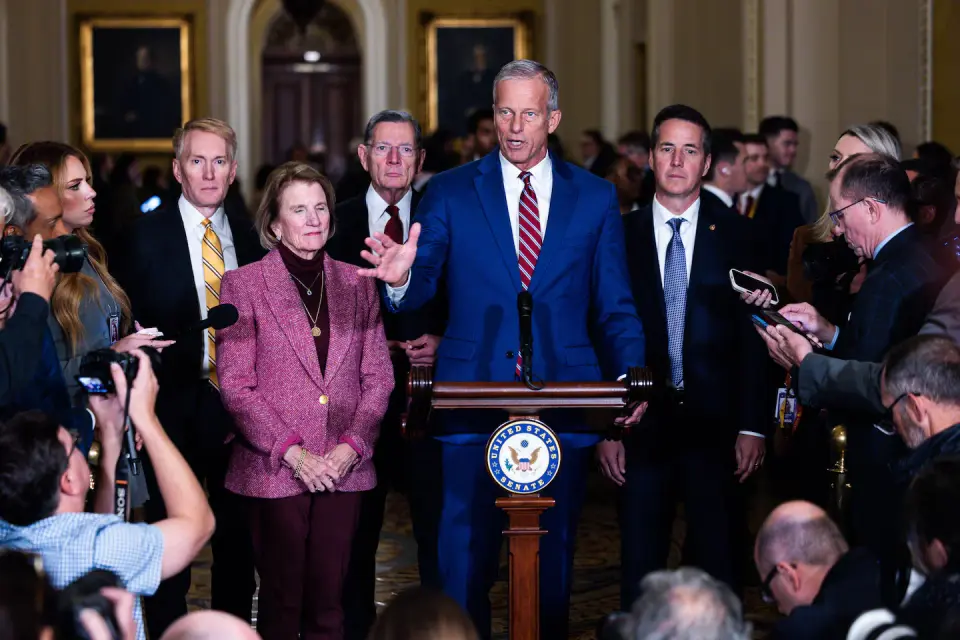
Senate Republicans have effectively abandoned their attempt to pass a $350 billion defense package via budget reconciliation due to a lack of votes and time. With Democrats set to take control of the Senate in January, GOP leaders are now exploring bipartisan appropriations deals, though the narrow window before the December 11 spending deadline remains a significant hurdle.
Key points
- Senate Majority Leader John Thune stated it is an 'open question' whether Republicans can pass the defense bill by party lines, noting they lack the 50 votes required.
- The push for $350 billion in new Pentagon funding has gained urgency due to concerns that Democrats will cut defense spending in retaliation for the Iran war.
- House Republicans, led by outgoing Budget Chair Jodey Arrington, argue the reconciliation bill is 'dead on arrival' without spending cuts to offset the new debt.
- The Senate is scheduled to recess in three weeks, leaving a narrow window before the December 11 spending deadline and the transfer of power to Democrats in January.
- Some GOP senators, including Ron Johnson and Kevin Cramer, express skepticism about the feasibility of passing the bill before the Thanksgiving recess.
Background
This development follows the Republican Party's historic loss of both chambers of Congress in the 2026 midterm elections, which Vice President JD Vance blamed on the Iran war. The current funding push is the third attempt to use the budget reconciliation process under the second Trump administration, following the 'One Big, Beautiful Bill' in 2025 and a $70 billion immigration enforcement package in 2026.
How outlets are covering it
The Washington Post and CBS News emphasize the Senate GOP's pivot to bipartisan negotiations, with Thune stating he wants to 'explore all possibilities' for funding the military. Semafor highlights the calendar crunch, noting that the midterms and the December 11 deadline are working against Republicans. Axios focuses on the House GOP's opposition, with members like Jodey Arrington and Andrew Clyde arguing that the bill is unviable without spending offsets to avoid increasing the national debt. While Thune keeps reconciliation as an 'option,' most GOP leaders view it as a last resort due to the lack of votes and time.
Why it matters
The failure to pass a party-line defense bill signals a significant shift in power dynamics following the midterms, forcing Republicans to negotiate with a Democratic-led Senate. It also highlights the growing rift within the GOP over fiscal responsibility, with House members opposing the addition of new debt without corresponding cuts. The outcome will determine the level of funding for the Pentagon in the coming year and set the tone for future budget negotiations between the two parties.
What to watch
Senate Republicans will continue to explore bipartisan appropriations deals in the coming weeks, with the December 11 spending deadline serving as a key milestone. If a deal cannot be reached, the Senate may recess for the winter holidays without passing the defense package, leaving the issue for the new Democratic leadership to address in January.
- Senate Republicans resist Trump’s bid to bypass Democrats on defense funding The Washington Post
- Top Republican says $350 billion defense reconciliation topline is ‘not gonna happen’ The Hill
- Thune says it's still an "open question" whether Senate GOP can pass massive defense bill CBS News
- Republicans turn to Democrats for Pentagon money Semafor
- Republicans lose hope in Reconciliation 3.0 Axios
Want the full story? Read the original reporting
Read on The Washington Post