
Nor'easter threatens East Coast travel and Macy's Parade with heavy rain and high winds
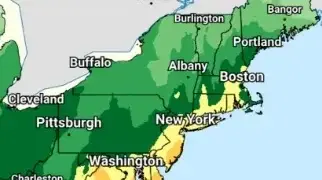
A powerful nor'easter is expected to impact the East Coast from November 24 to 28, 2026, bringing heavy rain, strong winds, and coastal flooding. The storm may intensify into a 'bomb cyclone' as it moves north, potentially disrupting Thanksgiving travel and the 100th Macy's Thanksgiving Day Parade in New York City. While snow is unlikely due to warm temperatures, flash flooding and power outages are possible in urban areas.
Key points
- The storm is forecast to bring 1-4 inches of rain to the Carolinas and Mid-Atlantic, and 1-2 inches to the Northeast, with a low risk of widespread flooding due to rapid movement.
- Wind gusts of 50+ mph are expected along the coast, with 40+ mph gusts inland, potentially causing power outages and tree damage.
- Coastal flooding and beach erosion are possible from Georgia to the Northeast, with moderate to major severity expected in Charleston, South Carolina, and Tybee Island, Georgia.
- Airline delays are expected to expand from Orlando and Miami to Atlanta, Charlotte, and major Northeast cities by Thanksgiving Day.
- The storm may qualify as a 'bomb cyclone' if its barometric pressure drops by 24 millibars in 24 hours, though the National Weather Service has not yet confirmed this.
Background
This storm follows a previous nor'easter in early November that brought the season's first measurable snow to high elevations and severe thunderstorms to New Jersey. The current system is distinct, with warmer temperatures reducing snow accumulation but increasing rain and wind impacts. The 100th Macy's Thanksgiving Day Parade is particularly vulnerable, as sustained winds of 23 mph or gusts of 34 mph can ground the iconic balloons, a threshold not exceeded since 1971.
How outlets are covering it
USA Today emphasizes the potential for a 'bomb cyclone' and the heavy rain threat, while CNN highlights the dual storm threat on both coasts and the specific risks to the Macy's Parade and Bay Area infrastructure. The New York Times focuses on the broader national impact, noting that most impactful weather will be concentrated along the East and West Coasts. All sources agree on the storm's potential to disrupt travel and cause coastal flooding, but they differ in emphasis: USA Today and CNN focus on the East Coast, while CNN and The New York Times also highlight West Coast king tides and Pacific storm impacts.
Why it matters
The storm's timing during peak holiday travel could cause significant disruptions, including flight delays, road flooding, and the potential grounding of the Macy's Parade. Coastal communities from Georgia to the Northeast face risks of flooding and erosion, while urban areas may experience flash flooding and power outages. The potential for a 'bomb cyclone' adds uncertainty, as rapid intensification could lead to more severe impacts than currently forecast.
What to watch
Forecasters will monitor the storm's intensification over the next 48 hours to determine if it qualifies as a 'bomb cyclone.' Updates on wind speeds and rainfall totals will be critical for assessing the risk to the Macy's Parade and travel disruptions. A separate storm may form off the East Coast over the weekend, potentially affecting Sunday travel.
- Bomb cyclone? Storm to wallop East Coast USA Today
- Storms to hit both coasts, threatening Thanksgiving travel for millions and Macy’s 100th parade CNN
- News Wrap: Storms threaten Thanksgiving travel as airlines rebound from tech failures PBS
- Thanksgiving Weather: Storm Maps and Forecast The New York Times
- Powerful East Coast storm to unleash heavy rain, damaging winds to millions as holiday travel rush begins FOX Weather
Want the full story? Read the original reporting
Read on USA Today