
Supreme Court allows White House ballroom construction to continue, with Roberts dissenting
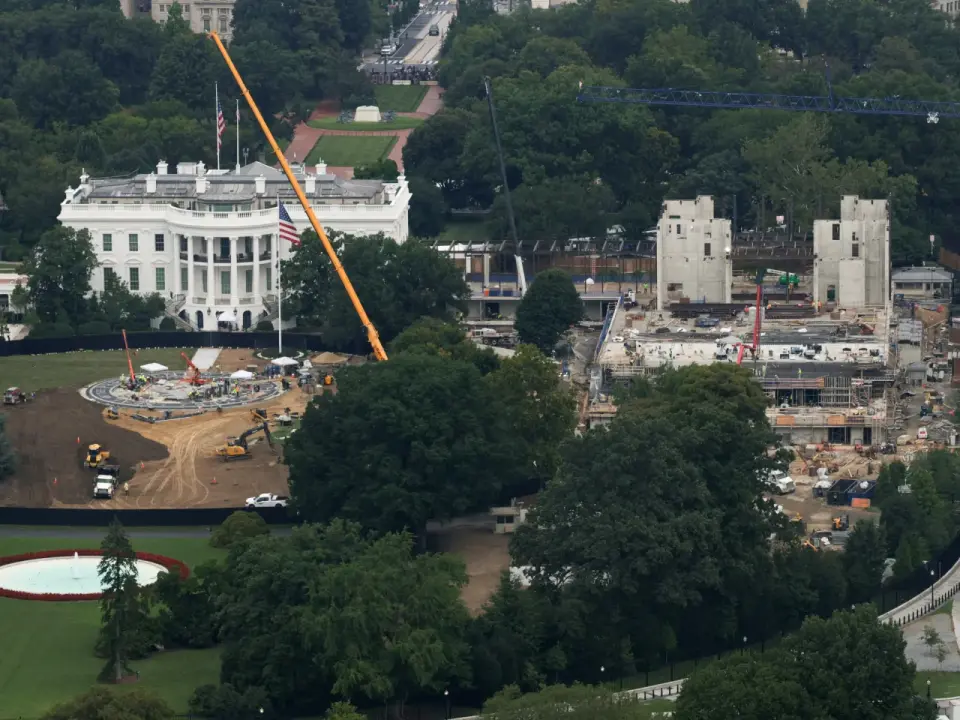
The US Supreme Court ruled 5-4 to allow construction of a $400 million White House ballroom to continue, finding the National Trust for Historic Preservation lacked standing to challenge the project. Chief Justice John Roberts dissented, calling the project likely unlawful without congressional approval.
Key points
- The Supreme Court issued a 5-4 decision allowing the White House to continue construction on a $400 million ballroom project, replacing a temporary order.
- The majority ruled that the National Trust for Historic Preservation lacked standing to sue, but did not decide the legality of the project itself.
- Chief Justice John Roberts dissented, calling the project 'likely unlawful' because it has not been approved by Congress, and stating 'Today’s decision is no victory for the separation of powers.'
- The project, which includes demolishing the East Wing, is expected to be substantially finished by November and fully completed by August 2028.
- The Trump administration argued the project was necessary for national security, while the National Trust for Historic Preservation argued the president lacked unilateral authority to undertake the work.
Background
The White House ballroom project, announced by President Trump, has been a subject of legal challenges since its announcement. The project, funded by private donors, has been estimated at $400 million, with some reports suggesting it could reach $600 million. The National Trust for Historic Preservation has challenged the project, arguing that the president lacks unilateral authority to undertake the work without congressional approval. The Supreme Court has previously issued temporary orders allowing construction to continue while the legal battle plays out.
How outlets are covering it
Al Jazeera and BBC report on the Supreme Court's 5-4 decision to allow construction to continue, with Al Jazeera emphasizing the win for President Trump and BBC focusing on the ruling's implications for the project's timeline. CNN highlights Chief Justice John Roberts' dissent, noting his rare break with the president and fellow conservatives, and his emphasis on the historical and architectural significance of the White House. All three sources agree on the basic facts of the decision but differ in their emphasis, with Al Jazeera and BBC focusing on the project's progress and CNN focusing on Roberts' dissent and the broader implications for presidential power.
Why it matters
The Supreme Court's decision allows the White House to continue construction on a $400 million ballroom project, which has been a subject of legal challenges since its announcement. The ruling has implications for presidential power and the role of Congress in approving major construction projects on federal property. The decision also highlights the ongoing tension between the executive and judicial branches of government, with Chief Justice John Roberts' dissent emphasizing the importance of separation of powers and the need to follow rules when altering historic buildings.
What to watch
The lawsuit will return to lower courts, but key portions of the project could be complete within months. The National Trust for Historic Preservation has said it will continue pursuing the case and seeks swift Supreme Court review. The project is expected to be substantially finished by November and fully completed by August 2028.
- White House construction on $400m ballroom can go on, says US Supreme Court Al Jazeera
- Supreme Court clears way for Trump to keep building White House ballroom BBC
- John Roberts often defers to Trump but not for the White House ballroom project CNN
- Supreme Court Allows Trump’s White House Ballroom Construction The New York Times
- Chief justice dissents on ballroom construction: ‘No victory for separation of powers’ The Hill
Want the full story? Read the original reporting
Read on Al Jazeera