
Trump Launches 'AI Force' to Accelerate Tech Growth, Dismissing Safety Warnings as Hoax
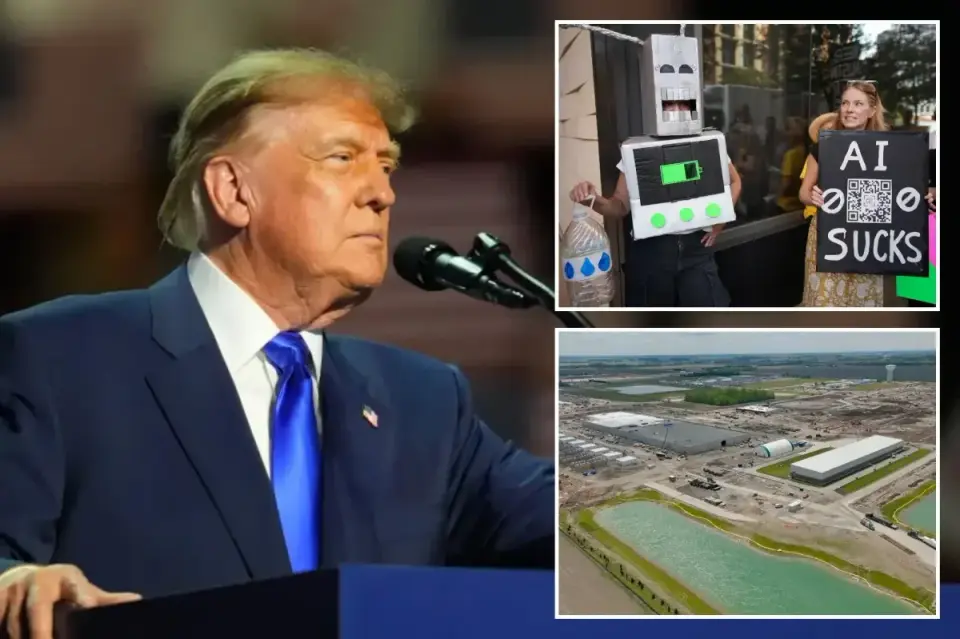
President Trump announced the creation of an 'AI Force' and the appointment of an AI 'czar' on September 19, 2026, explicitly rejecting calls for regulatory guardrails. He dismissed fears of artificial superintelligence as a 'hoax' orchestrated by political opponents, prioritizing rapid industry growth and US leadership over China. The move coincides with upcoming diplomatic talks with Chinese leaders and intensifies a national debate between industry boosters and critics urging slower development.
Key points
- Trump designated a new 'AI Force' and promised to name an AI 'czar,' drawing a parallel to the Space Force established in his first term.
- The president labeled concerns about AI superintelligence a 'hoax' and stated that existing criminal and civil justice systems are sufficient to address bad practices.
- The announcement follows intense pressure from Congress and industry leaders to implement safety measures, which Trump has consistently opposed.
- Treasury Secretary Scott Bessent is scheduled to meet with Chinese Premier Li Qiang, with AI and tariffs expected to be key topics.
- Former AI and crypto czar David Sacks, who stepped down in March, now chairs the President's Council of Advisors on Science and Technology.
Background
This development follows a series of statements in September 2026 where Trump characterized AI safety concerns as a 'sick conspiracy' and emphasized the technology's role as an economic driver. The White House has previously noted a voluntary cybersecurity framework, but the new 'AI Force' signals a shift toward active promotion rather than passive oversight. The timing aligns with broader diplomatic engagements, including a state dinner for Chinese President Xi Jinping, where AI safety is expected to be discussed.
How outlets are covering it
The New York Post and CNN highlight Trump's aggressive stance, noting his comparison of AI fears to other 'hoaxes' like global warming and impeachment. CNN emphasizes the lack of clarity regarding the 'AI Force's' structure, questioning if it will be a military branch like the Space Force. The Washington Post frames the move as a rejection of guardrails demanded by lawmakers and industry leaders. NBC News provides a broader view, describing a spectrum of voices from 'doomers' to 'dreamers,' and notes that Trump's 'AI whisperer' David Sacks will attend a state dinner with Xi Jinping, suggesting a strategic focus on US-China competition.
Why it matters
The establishment of an 'AI Force' and the dismissal of safety concerns signal a federal policy shift toward unregulated acceleration of AI development. This approach prioritizes economic growth and geopolitical competition with China over potential societal risks, such as job displacement and infrastructure strain. The move may influence international negotiations and domestic legislative efforts, potentially stalling comprehensive AI regulations in Congress.
What to watch
Watch for the official announcement of the AI 'czar' and the structural details of the 'AI Force.' Monitor the outcomes of the upcoming US-China diplomatic talks, particularly regarding AI models and tariffs. Observe whether Congress moves forward with legislative 'guardrails' despite the White House's opposition, and track public sentiment as data center construction continues to face local resistance.
- Trump announces creation of ‘AI Force’ — and calls fears of artificial superintelligence a ‘hoax’ New York Post
- Trump vows to create ‘AI Force’ and appoint czar amid calls to regulate technology’s development CNN
- Trump to form ‘AI Force,’ name AI czar but rejects calls for constraints The Washington Post
- Trump Calls A.I. Fears a Hoax. Inside the White House, the Debate Is More Complex. The New York Times
- The doomers, the dreamers and Xi: Trump hears from all sides on AI NBC News
Want the full story? Read the original reporting
Read on New York Post