
Trump Names Jay Clayton to Lead New 'Super Intelligence Force' Amid AI Safety Debates
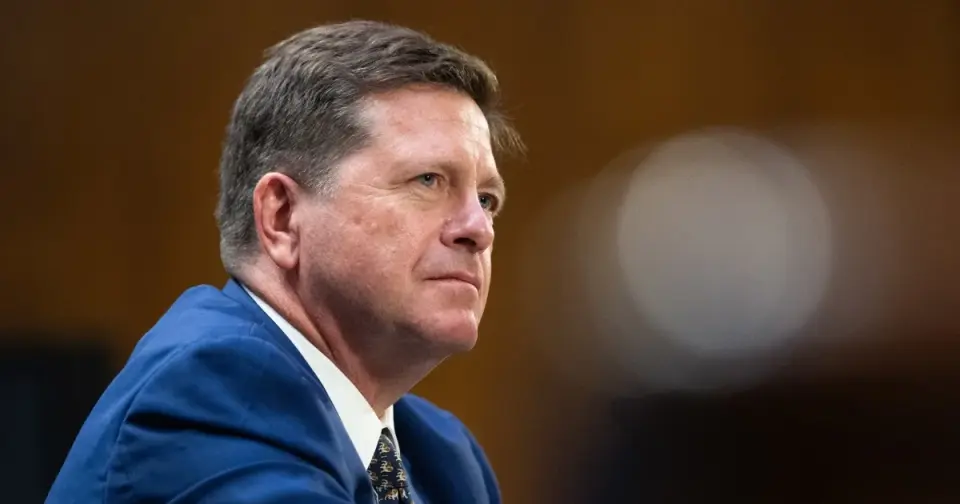
President Donald Trump has officially established the 'Super Intelligence Force,' a new government task force designed to coordinate federal engagement with artificial intelligence companies and other stakeholders. The group is led by National Intelligence Director Jay Clayton, who is also expected to serve as the administration's AI czar. Other members include Federal Trade Commission Chair Andrew Ferguson, Undersecretary of Defense for Research and Engineering Emil Michael, and Office of Personnel Management Director Scott Kupor. The task force reports directly to Trump and White House chief of staff Susie Wiles. This move follows a recent White House summit with major tech executives, where leaders agreed to a nonbinding framework of 'self-regulation' rather than accepting new federal mandates.
Key points
- The 'Super Intelligence Force' was announced by President Trump on October 4, 2026, via Truth Social.
- National Intelligence Director Jay Clayton was appointed to lead the task force and is expected to be named AI czar.
- The group includes Andrew Ferguson (FTC Chair), Emil Michael (Defense Undersecretary), and Scott Kupor (OPM Director).
- The task force will coordinate government interactions with consumers, public interest groups, religious organizations, and AI companies.
- The formation follows a White House meeting with tech leaders, including Elon Musk and Mark Zuckerberg, who agreed to a nonbinding 'self-policing' commitment.
- Trump has previously dismissed AI safety warnings as a 'hoax' and prioritized outpacing China over regulatory guardrails.
Background
In September 2026, Trump announced plans to create an 'AI Force' and appoint an AI czar to accelerate U.S. AI development, framing the technology as an industrial revolution. He dismissed safety concerns as a hoax and rejected Treasury Secretary Scott Bessent for the czar role, opting instead for a rebrand to 'super intelligence.' The new task force formalizes these earlier announcements into a structured government body.
How outlets are covering it
NBC News and CNN both report on the formation of the task force and its leadership, but they emphasize different aspects. NBC News highlights the coordination with 'Super Intelligence Companies' and the reporting structure to the White House. CNN focuses on the 'self-policing' agreement reached with tech executives and the administration's prioritization of economic gains and competition with China over public safety concerns. Both outlets note the contrast between the administration's light-touch approach and growing calls from lawmakers and experts for stricter regulation.
Why it matters
The creation of the 'Super Intelligence Force' signals a shift in U.S. AI policy toward a self-regulatory model led by a single government task force. This could influence how AI is developed and deployed in the U.S., potentially impacting innovation, safety, and international competition with China. The appointment of Jay Clayton, a former SEC chair and U.S. attorney, suggests a focus on legal and regulatory oversight, but the nonbinding nature of the tech industry's commitments raises questions about the effectiveness of this approach in addressing AI risks.
What to watch
The 'Super Intelligence Force' will begin coordinating federal engagement with AI companies and other stakeholders. Jay Clayton is expected to be formally named AI czar. The administration will likely continue to promote the 'self-policing' framework agreed upon by tech leaders, while lawmakers and public interest groups may push for more stringent regulations. The task force's actions could influence future AI policy debates in Congress and state-level regulations, such as those proposed by California Governor Gavin Newsom.
- Trump announces members of ‘Super Intelligence Force’ to coordinate AI policy NBC News
- Trump names national intelligence chief Jay Clayton as new AI czar NPR
- President Donald Trump announces creation of 'Super Intelligence Force' AI task force ABC News - Breaking News, Latest News and Videos
- Trump announces leadership of AI task force CNN
- Live updates: Trump taps Jay Clayton for AI force; Cornell victim's attorney alleges more involved The Hill
Want the full story? Read the original reporting
Read on NBC News