Trump’s Nuclear Revival Hype Outpaces Real Commitments
Despite bold announcements of a nuclear renaissance, few binding deals exist to actually produce power, and experts doubt the plan’s feasibility and economics.
All articles tagged with #us government

Despite bold announcements of a nuclear renaissance, few binding deals exist to actually produce power, and experts doubt the plan’s feasibility and economics.

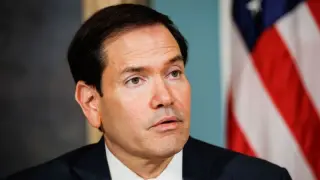
A Washington lawsuit accuses the Trump administration of sharing confidential information about Iranian asylum applications with Tehran, potentially endangering pro‑democracy protesters, religious minorities and LGBTQ people; Secretary of State Marco Rubio and other officials are named as defendants.

The Trump administration announced it will not seek new bids to repair the Lincoln Memorial Reflecting Pool, signaling no fresh procurement for the restoration project and potentially delaying repairs by relying on existing arrangements rather than reopening bidding.

OpenAI is reportedly in talks to give the Trump administration a 5% stake, with early discussions also touching on other U.S. AI firms. Proponents say public ownership could let taxpayers share in AI’s upside and help address regulatory concerns, but the move would likely require Congress approval and responses from OpenAI and the White House.

The White House is accelerating plans to establish voluntary standards for released AI models, setting benchmarks and release timelines for frontier systems and clarifying who can access advanced models domestically and abroad, following government interventions in Anthropic and OpenAI and aligned with a broader push for a global regulatory framework.

The U.S. Department of Commerce removed export controls on Anthropic’s Claude-based Fable 5 and Mythos 5, allowing access for U.S. organizations that operate and defend critical infrastructure and paving the way for general public access after Anthropic agreed to enhanced security measures and ongoing government collaboration on standards and monitoring for malicious activity.

Anthropic says the US government has authorized redeploying Mythos 5 to a set of US organizations that defend critical infrastructure, after a directive earlier this month banned foreign nationals from using the firm’s Mythos 5 and Fable 5 models. The company will restore access to Mythos 5 quickly for these groups and continues working with the government to expand access and bring Fable 5 back for general use, as EU officials express concern about dependence on foreign technologies.

The Trump administration is close to restoring access to Anthropic's Fable 5 after a 15‑day outage over security concerns, with limited Mythos 5 access already permitted by the Commerce Department; final approvals from the Pentagon and NSA are still pending, but the move signals a thaw in a months‑long dispute and underscores a push for a formal, transparent process to vet and regulate powerful AI models.

The Trump administration is expanding its oversight of AI by requiring OpenAI and Anthropic to obtain government approval for each new customer of their most powerful AI models, effectively restricting access to government-approved companies and signaling increased federal control over AI technology.

The Trump administration asked OpenAI to limit the release of GPT-5.6 to a small set of government-approved partners before broader deployment, as part of building a security-testing framework for new models. OpenAI has discussed a limited rollout with the government, and CEO Sam Altman said this is not the long-term model they want to pursue.

Quantum computing is racing forward, with tech giants pursuing machines that could surpass today’s supercomputers and transform fields like materials science and drug design. But the same power could break current encryption, threatening global security; the US has fast-tracked quantum development via executive orders and is pushing quantum-safe security updates, while standards for quantum-resistant encryption have already been published. With heavy investment from rivals like China and Russia and timelines that remain uncertain (potential breakthroughs by 2029), the article frames quantum tech as a sea change with significant national-security implications.

US and Qatar warn ahead of an EU energy ministers meeting that the proposed methane monitoring rules could trigger a Europe-wide gas crunch and higher prices, arguing exporters cannot meet the standards, even as Brussels signals a potential watering down of the rules; independent modelling has suggested there may be enough compliant gas, keeping the debate on energy security and prices ongoing.

The Justice Department sought to force Washington Post and Wall Street Journal reporters to testify before a federal grand jury in a rare leaks-related move, but withdrew the subpoenas after challenges from the outlets; none of the reporters have testified, underscoring tensions between national-security investigations and press freedom.

U.S. officials pressed ASML about a potential European UnionV lithography tool or related gear ending up in China in possible breach of export rules; ASML denies shipping EUV machines or components to China and says it complies with all controls. Washington says it has evidence of shipments that could support EUV systems, but details are sensitive. The dispute heightens tensions with the EU over semiconductor exports and comes as Congress weighs tighter restrictions on chip-making tools, potentially affecting ASML’s China business and broader transatlantic relations.

FT editors argue that the White House’s sudden 90‑minute order restricting Anthropic’s new AI models signals an opaque, capricious policy that could dampen frontier AI development; they call for a transparent, coherent regulatory framework—ideally an arm’s-length body—to balance security with innovation and global competitiveness.