
Vance Blames Iran War for GOP Midterm Losses in Sharp Break From Trump
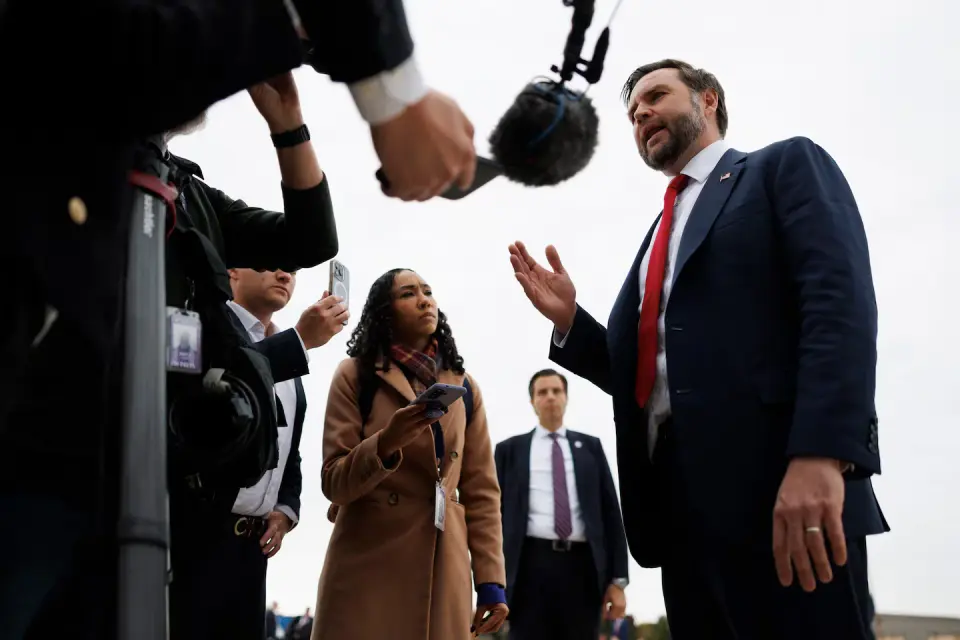
Vice President JD Vance publicly blamed the US war with Iran for the Republican Party’s sweeping losses in the 2026 midterm elections, marking a significant departure from President Donald Trump’s defense of the conflict. In a 600-word social media post, Vance stated that the war was the primary reason voters rejected the party, arguing that losing control of the Senate for six years was not a worthwhile cost. While Trump acknowledged the war impacted the election results, he maintained that the strikes were necessary to prevent Iran from acquiring nuclear weapons and said he would make the same decision again. Vance’s statement, which he reportedly shared with Trump before posting, included a four-point strategy for future Republican success: ending the war, addressing inflation, prioritizing American interests, and altering the relationship with Israel. Analysts view this as a calculated move by Vance to distance himself from the president ahead of a potential 2028 presidential bid, though Trump has not yet indicated whether he will support or oppose Vance’s future candidacy.
Key points
- Vance stated that the war with Iran was the primary reason for the Republican defeat in the 2026 midterms, a view he attributed to the president’s own late-night admissions.
- The US and Israel attacked Iran in February 2026; Vance had previously supported the conflict publicly but reportedly opposed it in private meetings with administration officials.
- Vance proposed a four-point plan for Republicans: end the war, focus on cost of living, put America first, and change the relationship with Israel.
- Trump defended the war as necessary to prevent Iran from obtaining nuclear weapons, stating he would 'do it again' despite the political cost.
- Vance is a potential 2028 presidential candidate; his statement was interpreted by experts as an effort to separate his brand from Trump’s foreign policy.
Background
This development follows earlier tensions between Vance and the administration regarding Israel. In October 2026, Vance declined to endorse Israeli Prime Minister Benjamin Netanyahu for an upcoming election, contrasting with Trump’s public support. This occurred amidst strained US-Israel relations and a broader political environment where Vance had been positioning himself as a potential successor to Trump. The current statement represents a public escalation of these private disagreements, moving from foreign policy nuances to a direct critique of the administration’s most significant military action.
How outlets are covering it
The New York Times characterized Vance’s statement as a 'remarkable break' from the president, emphasizing his effort to separate himself from Trump’s agenda. The BBC described the move as a 'carefully calibrated' attempt to walk a tightrope, noting that Vance showed the message to Trump before posting it, suggesting a degree of coordination or at least awareness. The Washington Post highlighted the specific policy shifts Vance advocated, particularly regarding Israel, framing it as a potential 2028 campaign platform. While all outlets agree on the content of the statement, they differ on the interpretation of the relationship between Vance and Trump: some view it as a definitive split, while others see it as a tentative test of boundaries within the Republican party.
Why it matters
Vance’s public criticism of a signature foreign policy initiative by the sitting president is unprecedented in recent US history and signals a potential fracture within the Republican Party. It sets the stage for a contentious 2028 presidential race, where the legacy of the Iran war and US-Israel relations will be central issues. The statement also highlights the immediate political consequences of military action, as the administration faces a Congress controlled by the opposing party, which may limit Trump’s ability to pursue further aggressive foreign policies or enact his domestic agenda.
What to watch
Vance is expected to continue mulling over a 2028 presidential run, with this statement potentially serving as a preview of his campaign platform. Trump has not yet decided whether to endorse Vance or Secretary of State Marco Rubio for the 2028 nomination, and his reaction to Vance’s public criticism will be a key indicator of the future power dynamics within the Republican Party. The new Democratic-controlled Congress may attempt to constrain the administration’s foreign policy options, particularly regarding the ongoing conflict with Iran.
- Vance says voters want to ‘end the war,’ change Israel relationship The Washington Post
- Vance, in Break With Trump, Blames Iran War for Republicans’ 2026 Midterm Losses The New York Times
- Analysis: Vance walks Trump tightrope with scathing election critique blaming Iran war BBC
- The Republican missteps that laid the groundwork for a historic midterm rebuke The Washington Post
- How Vance’s midterms aftermath post came together Politico
Want the full story? Read the original reporting
Read on The Washington Post