
Purdue-led expedition confirms Nikumaroro 'plane' is washed-up trees, not Earhart wreckage
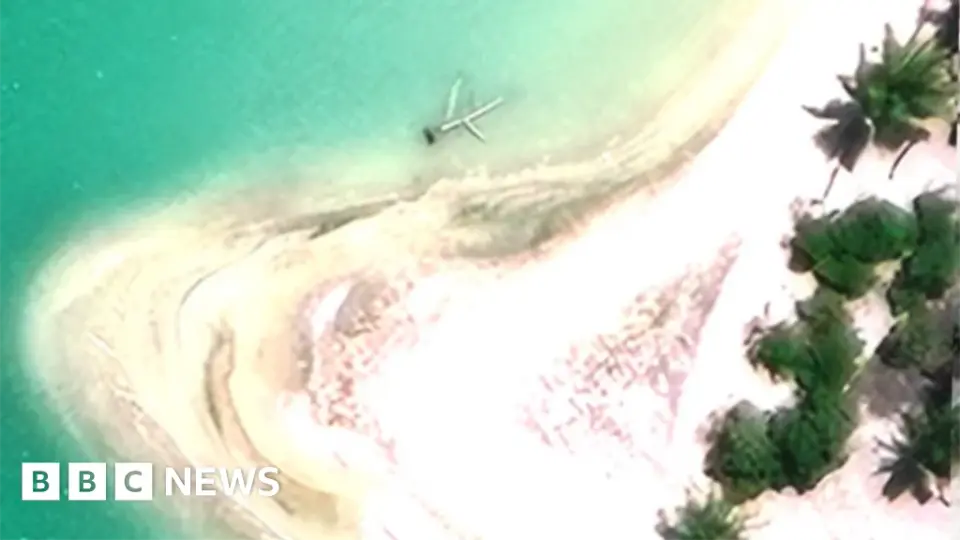
A 17-person expedition to Nikumaroro Island in Kiribati has concluded that the 'Taraia Object,' a satellite anomaly previously hypothesized to be Amelia Earhart’s missing plane, is actually a cluster of washed-up trees. Researchers from Purdue University and the Archaeological Legacy Institute found no conclusive evidence of the 1937 aircraft, though they maintain the castaway theory remains strong.
Key points
- The Taraia Object, first spotted in 2020 satellite imagery, was identified as large trees deposited along a sandspit, not metallic wreckage.
- The expedition, led by Rick Pettigrew of the Archaeological Legacy Institute and Steve Schultz of Purdue University, faced severe weather and logistical delays, including rough seas and giant coconut crabs.
- Researchers used magnetometers and sonar to search the lagoon but found no iron signatures or aircraft debris; the 'glint' seen in photos was attributed to a carbonate veneer on the trees.
- Despite the negative result for the specific object, Pettigrew stated the 'castaway hypothesis' remains strong, suggesting Earhart and navigator Fred Noonan likely ended up on the island.
- The search was the 20th major attempt to locate Earhart’s plane, which vanished in 1937 during her attempt to circumnavigate the globe.
Background
Amelia Earhart and Fred Noonan disappeared in July 1937 while attempting to fly around the world. Their Lockheed Electra 10-E was last seen near Lae, Papua New Guinea, en route to Howland Island. Nikumaroro, an uninhabited atoll in Kiribati about 400 miles south of Howland, has been a leading candidate for a crash site since the 1980s. Previous searches, including one by oceanographer Robert Ballard in 2019, failed to find the aircraft. The Purdue-led expedition was notable for its use of hydraulic dredging and advanced sonar, aiming to resolve the mystery of the Taraia Object, which had been visible in imagery dating back to 1938.
How outlets are covering it
BBC and CNN reported the expedition as a failure to find the plane, emphasizing the disappointment of the 'smoking gun' not being found. The Guardian highlighted the logistical challenges, including the team sleeping offshore due to coconut crabs, and noted that the 'glint' was a natural carbonate process. Purdue University’s official statement, as cited by CNN, framed the result as a 'new chapter' in the quest, maintaining that the castaway theory is still compelling. Critics, including the TIGHAR group mentioned in archive context, had previously argued the object was a tree, a view now confirmed by the expedition’s findings. All sources agree that while the Taraia Object is not the plane, the broader mystery of Earhart’s fate remains unsolved.
Why it matters
The resolution of the Taraia Object hypothesis removes a major lead in the 90-year search for Amelia Earhart. While it does not solve the mystery of her disappearance, it refines the search parameters and reinforces the scientific consensus that the castaway theory, rather than a crash in deep water, is the most plausible explanation. The expedition’s use of advanced technology, such as magnetometers and sonar, sets a new standard for future archaeological investigations in remote Pacific locations.
What to watch
Nauticos, a deep-sea exploration company, is raising $8 million to $10 million for a final expedition to the ocean around Howland Island, using new data from radio system experiments. The Purdue-led team may continue to search other areas of Nikumaroro, though the primary focus on the Taraia Object has concluded. Further analysis of the artifacts recovered, including the 1930s-era shoe and cosmetics jar mentioned in previous searches, may provide additional context for the castaway hypothesis.
- Possible wreckage of Amelia Earhart's plane likely to be trees, say researchers BBC
- Expedition to a remote Pacific island fails to find fresh clues in hunt for Amelia Earhart’s plane CNN
- ‘The Mystery Continues’: Latest Hunt for Amelia Earhart’s Plane Comes Up Empty The New York Times
- Amelia Earhart researchers leave remote atoll empty-handed after ‘plane debris’ found to be a clump of trees The Guardian
- Search for Amelia Earhart’s plane continues after Taraia Object expedition on Nikumaroro rules out latest hypothesis Purdue University
Want the full story? Read the original reporting
Read on BBC