After a recent failed search on Nikumaroro Island, Nauticos is raising funds for a new expedition to find Amelia Earhart's 1937 aircraft. The company plans to use new radio transmission data to narrow the search area near Howland Island, aiming to launch the mission within a year.
A 17-person team from Purdue University and the Archaeological Legacy Institute has concluded that the 'Taraia Object' on Nikumaroro Island is not the wreckage of Amelia Earhart's 1937 aircraft. The team found no conclusive evidence linking the object to Earhart's plane, identifying it instead as a collection of large trees and debris. Despite this setback, researchers maintain their belief in the 'castaway hypothesis' that Earhart and her navigator Fred Noonan landed on the island.
A 17-person expedition to Nikumaroro Island in Kiribati has concluded that the 'Taraia Object,' a satellite anomaly previously hypothesized to be Amelia Earhart’s missing plane, is actually a cluster of washed-up trees. Researchers from Purdue University and the Archaeological Legacy Institute found no conclusive evidence of the 1937 aircraft, though they recovered other artifacts supporting the castaway theory.
A 17-person expedition to Nikumaroro Island in Kiribati has concluded that the 'Taraia Object,' a satellite anomaly previously hypothesized to be Amelia Earhart’s missing plane, is actually a cluster of washed-up trees. Researchers from Purdue University and the Archaeological Legacy Institute found no conclusive evidence of the 1937 aircraft, though they maintain the castaway theory remains strong.
A 17-person expedition to Nikumaroro Island in Kiribati has concluded that the 'Taraia Object,' a satellite anomaly previously hypothesized to be Amelia Earhart’s missing plane, is actually a cluster of washed-up trees. Researchers from Purdue University and the Archaeological Legacy Institute found no conclusive evidence of the 1937 aircraft, though they recovered other artifacts supporting the castaway theory.
A 17-person team from Purdue University and the Archaeological Legacy Institute concluded that the 'Taraia Object' on Nikumaroro Island is a cluster of trees, not Amelia Earhart's plane. The expedition, which faced severe weather and logistical hurdles, found no conclusive evidence of the 1937 aircraft, though researchers maintain the castaway theory remains strong.
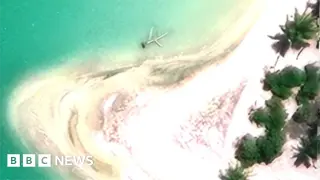
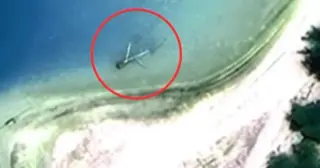
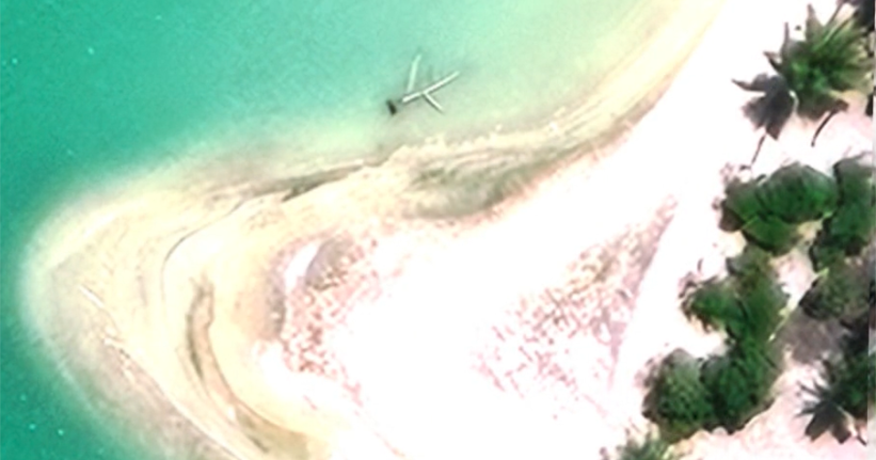
A 17-member team from Purdue University and the Archaeological Legacy Institute has arrived at Nikumaroro Island in Kiribati to investigate the 'Taraia Object,' a submerged shape in a lagoon that researchers believe may be the wreckage of Amelia Earhart's 1937 Lockheed Electra. The team plans to use hydraulic dredging to remove sediment and identify the object, which was first spotted in satellite imagery in 2020 but appears in photos dating back to 1938. While the expedition faces logistical hurdles, including giant coconut crabs and strong El Niño weather conditions, it represents the 20th major search for the aviator's plane. Critics, including the TIGHAR group, argue the object is likely a fallen tree, maintaining that the aircraft lies in deep water off the island's western end.
A 17-person expedition from Purdue University and the Archaeological Legacy Institute has arrived at Nikumaroro Island in Kiribati to investigate the 'Taraia Object,' a submerged shape in a lagoon that researchers believe may be the wreckage of Amelia Earhart's 1937 Lockheed Electra. The team plans to use hydraulic dredging to remove sediment and identify the object, which was first spotted in satellite imagery in 2020 but appears in photos dating back to 1938. While the expedition faces logistical hurdles, including giant coconut crabs and strong El Niño weather conditions, it represents the 20th major search for the aviator's plane. Critics, including the TIGHAR group, argue the object is likely a fallen tree, maintaining that the aircraft lies in deep water off the island's western end.
A research team from Purdue University and the Archaeological Legacy Institute has arrived at Nikumaroro Island in Kiribati to investigate the 'Taraia Object,' a potential wreckage site of Amelia Earhart's 1937 plane. While the expedition faces logistical challenges, including giant coconut crabs, experts remain divided on whether Earhart died as a castaway on the island or perished in the ocean near Howland Island.
A 16-person expedition led by archaeologist Richard Pettigrew is set to reach Nikumaroro Island in October to investigate a satellite-detected anomaly known as the 'Taraia object.' The mission, a joint effort between the Purdue Research Foundation and the Archaeological Legacy Institute, aims to determine if the object is the wreckage of Amelia Earhart’s Lockheed Electra 10-E. If confirmed, a full excavation and recovery of the aircraft to the United States may follow.
An Archaeological Legacy Institute–Purdue University team will launch Oct. 7 from Tarawa to Nikumaroro Island, Kiribati, to search for Amelia Earhart’s Lockheed Electra 10-E, inspecting a satellite-identified anomaly known as the Taraia Object and testing the Nikumaroro Hypothesis that Earhart and Noonan landed there after disappearing in 1937; the 16-member team will conduct fieldwork, review bones and artifacts, and push for evidence after years of permitting delays.
Smithsonian Castle on the National Mall reopens May 22–Sept 7 after years of renovation, housing the new 'American Aspirations' exhibit with artifacts like Thomas Jefferson's writing desk and Amelia Earhart's flight suit. A new Summer Shack café serves New England fare, including lobster rolls, with indoor seating and grab‑and‑go options. The broader reopening includes the Arts and Industries Building (reopening June 16) for public programming through Sept 7 as part of the Smithsonian’s push for the 250th anniversary.
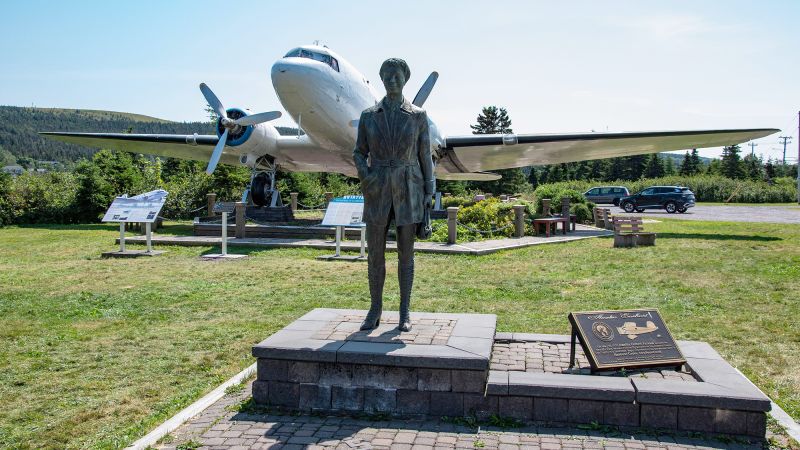
Elaine Traverse found and reported a stolen Amelia Earhart statue in Newfoundland, which led to her being suspected of involvement, damaging her reputation despite her innocence; the case remains unsolved.
A satellite image showing an unusual object in Nikumaroro lagoon has sparked a new expedition to investigate whether it could be Earhart's plane, potentially solving one of aviation's greatest mysteries, with competing theories about her fate and ongoing searches both on land and underwater.
Researchers from Purdue University are planning an expedition to Nikumaroro in the South Pacific to investigate a visual anomaly believed to be the wreck of Amelia Earhart's lost plane, citing strong evidence and historical satellite imagery, aiming to potentially confirm the aircraft's identity and solve a long-standing mystery.