
SpaceX Starship Achieves First Orbital Insertion, Deploys 26 Starlink V3 Satellites
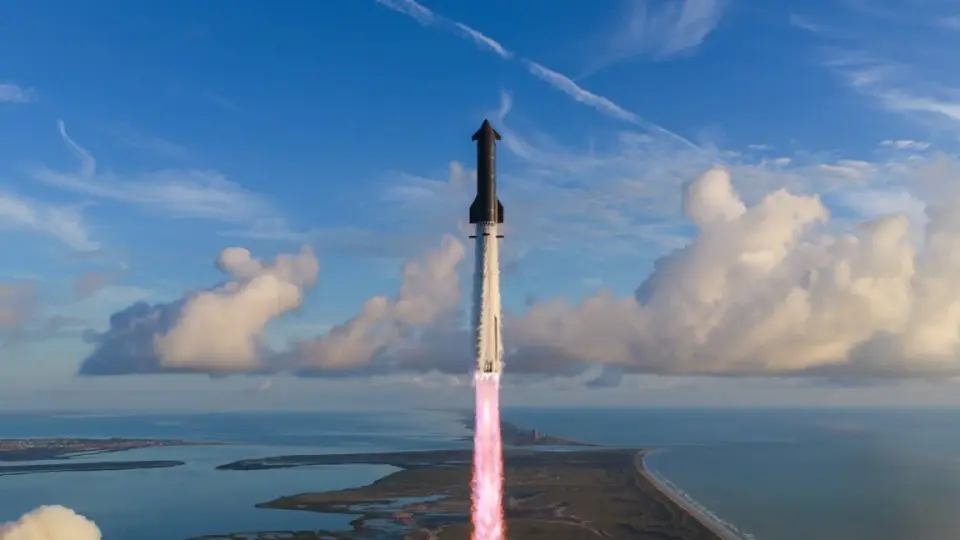
SpaceX’s 14th Starship test flight successfully reached low-Earth orbit on September 28, 2026, marking the first time the vehicle has completed an orbital insertion. The mission deployed 26 next-generation Starlink V3 satellites, each offering 10 times the capacity of previous models. Despite engine anomalies, the rocket achieved a stable orbit at 171 miles altitude before an early de-orbit and splashdown north of Hawaii.
Key points
- Starship Flight 14 launched from Starbase, Texas, at 8:49 am EDT, achieving orbital velocity for the first time in the vehicle's history.
- The mission deployed 26 Starlink V3 satellites, which are too large for Falcon 9 rockets and promise 1 Tbps of network capacity each.
- One Raptor engine on the upper stage shut down prematurely, but SpaceX proceeded with the orbital insertion burn using a different engine.
- The flight ended early after three hours, with a splashdown north of Hawaii, instead of the planned six orbits over ten hours.
- The FAA determined the flight events were within planned scope and did not require a formal mishap investigation.
Background
This milestone follows 13 suborbital test flights and precedes potential human spaceflight missions. SpaceX has been phasing out Falcon 9 launches for Starlink in favor of Starship, with new launch pads under construction in Florida and Louisiana. The success supports NASA's Artemis program, which aims to use Starship variants for lunar landings by 2028.
How outlets are covering it
Ars Technica emphasized the technical challenges, noting that SpaceX was 'extremely conservative' in proceeding with the orbital burn despite engine issues. Spaceflight Now highlighted the significance for NASA's Artemis program, with Administrator Jared Isaacman praising the mission as 'inspirational.' Quilty Space's Caleb Henry noted that while the satellites are in orbit, it will take many more launches for users to notice a difference in service. All sources agreed on the successful deployment of 26 Starlink V3 satellites and the early de-orbit decision.
Why it matters
This flight validates Starship's capability to reach orbit and deploy large satellites, a prerequisite for commercial and government missions. It also demonstrates progress toward reusability and reliability, which are critical for NASA's Artemis moon missions and SpaceX's long-term plans for orbital data centers and lunar exploration.
What to watch
SpaceX is expected to launch more Starship flights in October, potentially from a new pad in Florida. Future missions will focus on longer-duration orbital flights, in-orbit refueling, and eventually a catch of the Starship upper stage at the launch pad. The company also plans to integrate the newly deployed Starlink V3 satellites into the broader constellation within a few weeks.
- SpaceX’s Starship goes orbital, deploying first next-gen Starlinks Ars Technica
- SpaceX Starship test reaches Earth orbit, 26 Starlink satellites deployed Yahoo Finance
- Wow! Watch SpaceX's Starship megarocket deploy satellites into orbit for 1st time ever (photos, video) Space
- Starship returns to Earth; rocket splashes down north of Hawaii after three-hour flight Spaceflight Now
- SpaceX Preparing for Most Important Launch in Company History on Monday futurism.com
Want the full story? Read the original reporting
Read on Ars Technica