
NASA commits $359M to Boeing Starliner, targeting 2028 crewed return as SpaceX Dragon winds down
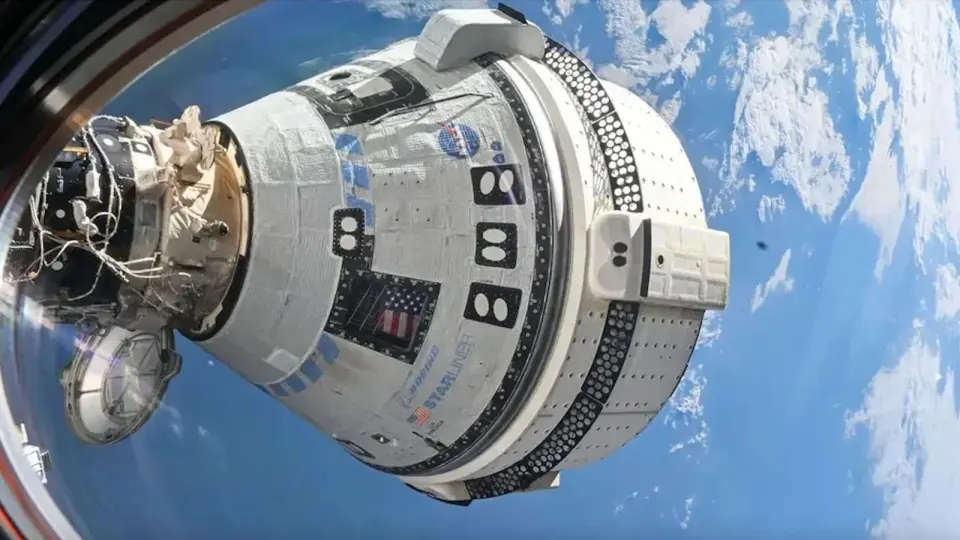
NASA has announced a new roadmap for Boeing's Starliner, committing an additional $359 million to fix thruster issues and certify the Vulcan Centaur rocket. The agency plans an uncrewed test flight in late 2026 or early 2027, with the first crewed mission targeted for mid-2028. This move secures Boeing as the primary US provider for low-Earth orbit access after SpaceX plans to retire its Crew Dragon capsule by the early 2030s.
Key points
- NASA Administrator Jared Isaacman confirmed that Starliner will conduct an uncrewed demonstration flight no earlier than December 2026 or January 2027.
- The first crewed mission, Starliner-2, is targeted for mid-2028 and will be commanded by astronaut Woody Hoburg.
- NASA will pay $359 million to Boeing to redesign overheating reaction control system thrusters and certify the Vulcan Centaur rocket for human missions.
- NASA is exercising options to purchase two additional crewed flights, bringing the total contracted Starliner missions to six.
- The decision comes as SpaceX prepares to retire its Crew Dragon capsule to focus on Starship, leaving Boeing as the sole US provider for astronaut transport to low Earth orbit.
Background
Boeing's Starliner has faced significant setbacks, including a 2024 crewed test flight where astronauts Suni Williams and Butch Wilmore were stranded in orbit for over nine months due to helium leaks and thruster failures. NASA Administrator Jared Isaacman recently classified this incident as a 'Type A mishap,' comparable to the Columbia and Challenger disasters. Previous archive coverage from September 2026 indicated NASA was already moving to secure Boeing as the primary alternative to SpaceX's Crew Dragon, which is expected to be retired by the early 2030s as SpaceX shifts focus to its next-generation Starship vehicle.
How outlets are covering it
Space.com emphasizes the technical hurdles, noting that Starliner may need a new rocket and that human-rating certification remains uncertain. CNN highlights the severity of the 2024 mishap, quoting Isaacman's classification of the event as a 'Type A mishap' and noting that astronaut Woody Hoburg cited 'inadequate systems engineering' as a root cause. Ars Technica focuses on the economic and competitive implications, noting that Boeing is 'incredibly excited' to become the nation's sole astronaut transportation provider but that pricing for future commercial LEO destinations remains uncertain due to the lack of Vulcan certification. All sources agree on the $359 million funding commitment and the 2028 timeline for crewed flights.
Why it matters
This decision ensures the US maintains independent access to low Earth orbit after SpaceX's Crew Dragon is retired. It also impacts the future of the International Space Station, which is slated for decommissioning in the early 2030s, and the development of commercial LEO destinations, which will rely on Starliner for crew transport. The move also raises concerns about Boeing's monopoly on crew transportation and the potential for higher costs in the 2030s.
What to watch
NASA and Boeing will monitor the uncrewed Starliner-1 test flight in late 2026 or early 2027. If successful, the agency will proceed with the mid-2028 crewed mission. Boeing will also work to certify the Vulcan Centaur rocket and finalize pricing for commercial LEO destinations in the 2030s.
- Boeing's Starliner won't launch astronauts until 2028 (and may need a new rocket), NASA says Space
- NASA, Boeing to Provide Update on Starliner Development NASA (.gov)
- Boeing “incredibly excited” to serve as nation’s only astronaut transportation Ars Technica
- NASA reveals new plan for Boeing’s troubled Starliner spacecraft and commander of future mission CNN
- NASA plans unpiloted Starliner test flight after astronauts got stuck at space station in 2024 CBS News
Want the full story? Read the original reporting
Read on Space