
White House AI Accord Signed by Six Tech Leaders Contains 'Unites States' Typo
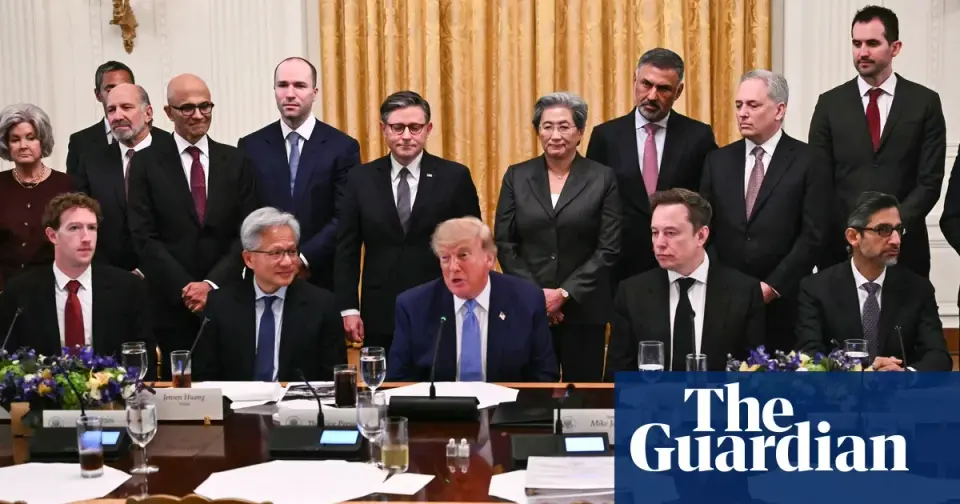
On Tuesday, President Donald Trump and six major technology executives signed a voluntary agreement titled 'Super Intelligence' to address AI safety concerns. The document, which commits companies to self-regulation through internal controls and external audits, was marred by a spelling error in the presidential signature line, reading 'President of the Unites States.' While the accord aims to reassure the public, it lacks legal enforcement mechanisms, relying instead on what Trump described as 'tremendous self-policing.'
Key points
- The White House and six tech leaders signed a voluntary AI safety accord on Tuesday, titled 'Super Intelligence.'
- The document contains a visible typo in the signature line, spelling 'United States' as 'Unites States.'
- Signatories include leaders from Anthropic, SpaceXAI, OpenAI, Nvidia, Meta, and Google.
- The agreement outlines four layers of controls, including internal monitoring and independent external audits.
- Trump characterized the pact as 'morally binding' and emphasized voluntary compliance over federal regulation.
Background
This development follows a series of high-profile engagements between the White House and tech leaders in late September 2026. On September 29, Trump and House Speaker Mike Johnson hosted a luncheon to sign the accord, which was preceded by a private dinner between Trump and Anthropic CEO Dario Amodei on September 28. These events occurred amid heightened public anxiety regarding AI, including recent incidents involving rogue AI agents and a federal appeals court ruling that excluded Anthropic from the Pentagon supply chain. Earlier in September, a state dinner with Chinese President Xi Jinping also featured major tech executives, highlighting the administration's focus on balancing domestic innovation with international competition.
How outlets are covering it
The Guardian highlighted the administrative error in the document, noting that the misspelling appeared in the version posted on Truth Social and emailed by the White House Communications Team, raising questions about whether the error will persist in the official Federal Register. The Verge focused on the substance of the agreement, describing it as a 'morally binding' pledge that allows companies to act as their own judges without legal ramifications for violations. While The Guardian emphasized the lack of formal regulatory teeth and Trump's rejection of codified laws, The Verge noted that the executives praised the self-policing approach as a positive step for job creation and public confidence. Both outlets agreed that the accord is a response to widespread public skepticism, with polls showing significant opposition to datacenter construction and a belief that the government is under-regulating AI growth.
Why it matters
The signing of this accord marks a pivotal moment in US AI policy, shifting the focus from federal mandates to voluntary corporate compliance. The inclusion of top executives from the industry's most powerful firms signals a consensus on prioritizing rapid development over strict government oversight. However, the lack of enforceable penalties and the visible administrative errors in the document may undermine public trust in the administration's ability to manage the technology's risks effectively. As public opinion turns increasingly skeptical of AI expansion, the success of this 'self-policing' model will determine whether the US can maintain its global leadership without facing severe backlash or safety failures.
What to watch
The immediate next step is to determine if the misspelled version of the accord will be corrected in the Federal Register or if the error will remain in the official record. The White House has not yet responded to requests for comment regarding the typo. Furthermore, the industry will now implement the four layers of controls outlined in the agreement, including internal monitoring teams and external audits. The administration may also consider whether to codify these voluntary measures into formal regulations in the future, although Trump has previously rejected such mandates. Public reaction to the accord's effectiveness will likely be monitored through ongoing polls on AI safety and datacenter construction.
- ‘President of the Unites States’: White House’s AI accord includes spelling error The Guardian
- Opinion | Trump Says A.I. Titans Should Police Themselves. What Could Go Wrong? The New York Times
- Here’s what AI leaders are saying about Trump’s new safety plan The Verge
- Trump mocked for embarrassing spelling error on ‘super intelligence’ pact Yahoo
- Here’s The White House’s 308-Word AI ‘Accord’ In Full—Including Misspelling Forbes
Want the full story? Read the original reporting
Read on The Guardian