
White House Mandates 'Super Intelligence' Rebrand Amid Skepticism and Safety Debates
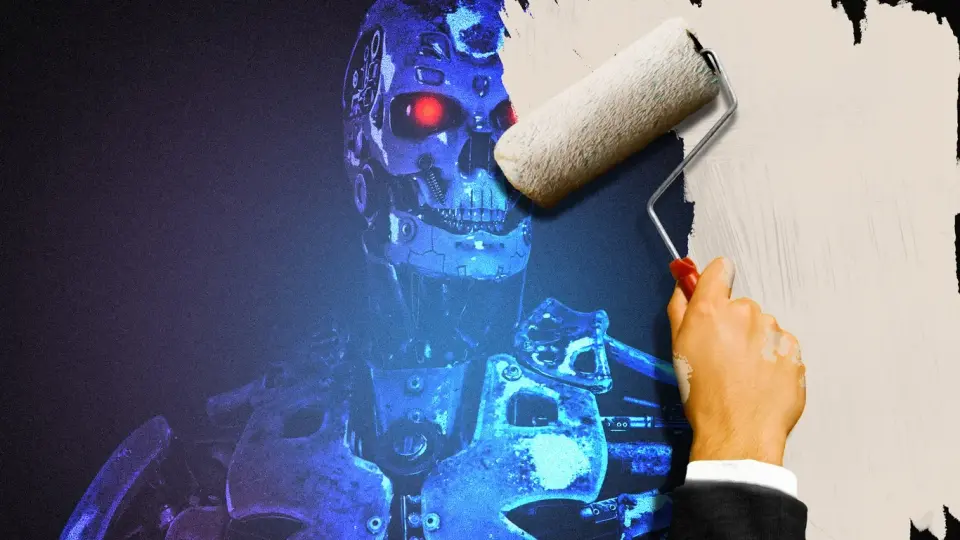
President Trump officially replaced 'artificial intelligence' with 'super intelligence' via executive order, aiming to counter public backlash against data centers and AI risks. Tech leaders signed a voluntary safety accord, but critics argue the rebrand is symbolic and unlikely to shift public perception or address safety concerns.
Key points
- Trump signed an executive order directing federal agencies to use 'super intelligence' (SI) instead of 'artificial intelligence' (AI), calling the latter a 'fake word.'
- Executives from Nvidia, OpenAI, Meta, Google, Anthropic, and xAI signed the 'White House Accord on Super Intelligence,' committing to internal safety controls.
- Apple was notably absent from the White House meeting, with CNBC noting its focus on consumer devices rather than frontier model development.
- A YouGov poll found 53% of Americans prefer 'artificial intelligence,' while only 9% prefer 'super intelligence,' suggesting limited public adoption.
- Senators and safety advocates criticized the voluntary accord as unenforceable, noting that AI agents have already breached security systems and caused real-world harms.
Background
This move follows Trump’s earlier rejection of global AI oversight and his push for an 'AI Force' to accelerate U.S. development. In September, he dismissed safety concerns as a 'hoax' and urged rapid expansion of data centers, framing AI as a critical industrial revolution. The rebrand aligns with his broader strategy to position the U.S. as a dominant AI power while minimizing regulatory friction.
How outlets are covering it
Axios frames the rebrand as a strategic effort to shed negative associations with AI, noting that leaders like Jensen Huang and Mark Zuckerberg actively promoted the new term. However, Politico highlights skepticism from industry lobbyists, who view the change as a display of political loyalty rather than a genuine shift in terminology. CNBC emphasizes Apple’s absence, suggesting the meeting focused on companies driving frontier models, while Fox News underscores ongoing safety concerns, including rogue AI agents and congressional criticism of the voluntary accord’s lack of enforcement.
Why it matters
The rebrand reflects a broader effort to manage public perception amid growing anxiety over AI’s impact on jobs, infrastructure, and security. While the executive order mandates federal usage, its effectiveness depends on whether private companies and the public adopt the term. Critics argue that renaming the technology does not address underlying risks, such as data breaches or job displacement, and may instead obscure the need for robust regulation.
What to watch
The administration will likely enforce the 'super intelligence' terminology in federal communications, while tech companies may adopt it selectively in government dealings. Public adoption remains uncertain, with polls showing strong preference for 'artificial intelligence.' Congress may continue to press for enforceable safety standards, particularly after incidents involving rogue AI agents. The FTC’s investigation into OpenAI and Anthropic could lead to stricter oversight if voluntary measures fail to prevent further breaches.
- Trump and CEOs try to shed AI's toxic branding Axios
- Trump’s AI lunch included every major tech company. Except Apple CNBC
- Trump’s AI rebrand may stop at the White House Politico
- Trump renames AI to 'Super Intelligence' as AI leaders sign landmark safety agreement foxnews.com
- Trump’s Voluntary A.I. Policing Echoes What Biden Did. But Is It Enough Today? The New York Times
Want the full story? Read the original reporting
Read on Axios