
Sperm Whale Pod Sinks Yacht Tai Tam in Remote Pacific; Four Crew Rescued After 18-Hour Ordeal
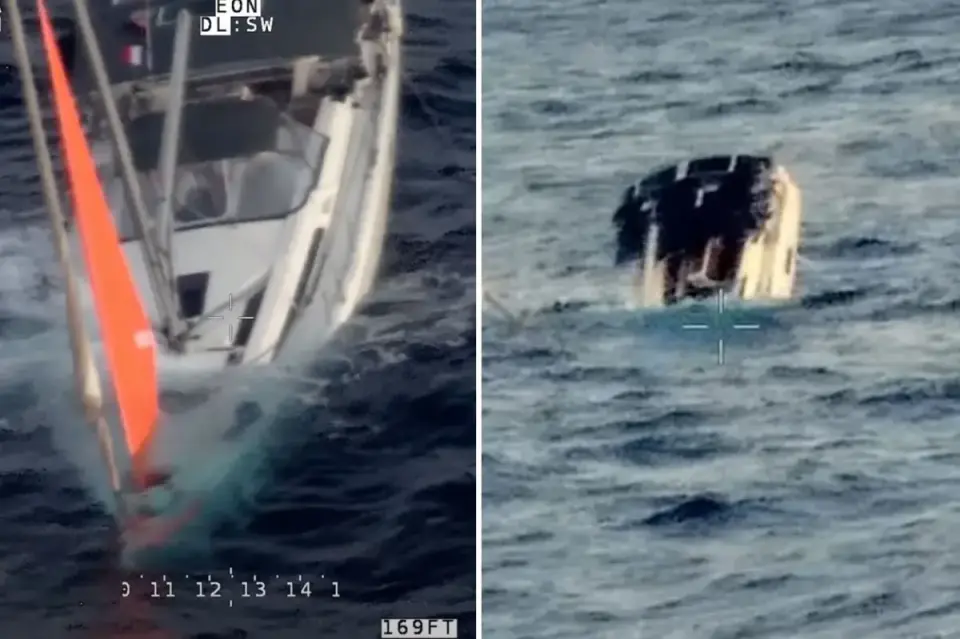
A pod of sperm whales struck and sank the 52-foot yacht Tai Tam in the remote South Pacific, forcing four crew members into a life raft. The vessel, traveling from New Zealand, was hit by six to eight whales, causing severe hull damage and steering failure. After an 18-hour survival effort, the crew was rescued by a container ship with no injuries.
Key points
- The yacht Tai Tam was struck by a pod of six to eight sperm whales approximately 250 nautical miles north of Norfolk Island.
- The impact caused a loud thud, smashed the starboard steering gear, and cracked the fiberglass hull, leading to rapid water intake.
- Crew members, including Australian Jemma Cooper and her husband Jeremy, declared a 'full mayday' and bailed water for hours before abandoning ship.
- The four sailors transferred to a life raft late Saturday night and cut their tether to the sinking yacht to avoid being dragged under.
- A 470-foot container ship, the MV Sofrana Surville, rescued the crew early Sunday morning, roughly 18 hours after the initial collision.
- No crew members sustained injuries; they were transported to the nearest port after the rescue operation.
Background
This incident is the second whale-sinking event in less than two months, following a July incident involving a New Jersey fire department boat. Recent research confirms that the spermaceti organ in sperm whales' heads functions as a battering ram capable of sinking ships, a theory historically proposed by 19th-century whalers. Sperm whales are classified as a 'vulnerable' species by the International Union for Conservation of Nature, facing threats from noise pollution and ship strikes.
How outlets are covering it
California Post and CBS News provide consistent details regarding the collision, the crew's survival efforts, and the rescue timeline. Both outlets emphasize the severity of the hull damage and the critical role of the Emergency Position-Indicating Radio Beacon (EPIRB) in coordinating the rescue. The Telegraph source was inaccessible due to a security block, so no additional perspective could be synthesized from that outlet. All available sources agree that the crew's preparedness and quick action were key to their survival.
Why it matters
The incident highlights the ongoing risks of marine wildlife interactions in remote ocean areas and underscores the importance of emergency preparedness for maritime vessels. It also serves as a reminder of the physical power of sperm whales, which are capable of sinking ships, and the vulnerability of these species in the face of human activity.
What to watch
The four crew members are currently being transported to the nearest port to disembark. Authorities are likely to investigate the specific circumstances of the collision to determine if any regulatory changes or safety recommendations are necessary for vessels operating in sperm whale habitats.
- Race against time to save crew after colossal, rarely seen deep sea beasts smash up yacht in Pacific New York Post
- Whale sinks yacht in South Pacific, sailors rescued alive 18 hours later CBS News
- Whale sinks yacht in South Pacific causing military rescue mission FOX 8 News
- Whale sinks yacht in Pacific The Telegraph
- Terrifying Whale Attack Sinks Yacht and Leaves Sailors Stranded The Daily Beast
Want the full story? Read the original reporting
Read on New York Post