
ICJ Rules Myanmar Committed Genocide Against Rohingya in Historic Verdict
The International Court of Justice (ICJ) has ruled that Myanmar committed acts of genocide against the Rohingya minority during 2016-2017 military operations. This marks the first time the UN’s highest court has found a state responsible for genocide under the 1948 Genocide Convention. The verdict, delivered in The Hague, concludes that Myanmar’s forces acted with the specific intent to destroy a substantial part of the Rohingya population, citing mass killings, gang rape, and village burnings. While the ruling is binding, the ICJ lacks enforcement mechanisms, and Myanmar has denied the allegations. The decision sets a critical legal precedent for future cases, including South Africa’s claim against Israel, and has drawn attention from the US, which threatened sanctions against judges if the legal threshold for genocide was lowered.
Key points
- The ICJ ruled that Myanmar committed acts of genocide against the Rohingya, marking the first time the court has held a state responsible for such a crime.
- The court found that Myanmar’s 2016-2017 military campaign was driven by the specific intent to destroy a substantial part of the Rohingya population, as required by the 1948 Genocide Convention.
- The Gambia, backed by the Organisation of Islamic Cooperation, brought the case in 2019, arguing that over 730,000 Rohingya were displaced into Bangladesh during the military offensive.
- Myanmar denied the allegations, claiming its forces were responding legitimately to armed attacks by Rohingya militant groups and that there was no direct evidence of genocidal intent.
- The ruling is binding but lacks enforcement mechanisms; The Gambia could appeal to the UN Security Council if Myanmar ignores the verdict.
- The decision sets a precedent for other genocide cases, including South Africa’s claim against Israel, and has drawn scrutiny from the US, which threatened sanctions against ICJ judges if the legal threshold for genocide was lowered.
Background
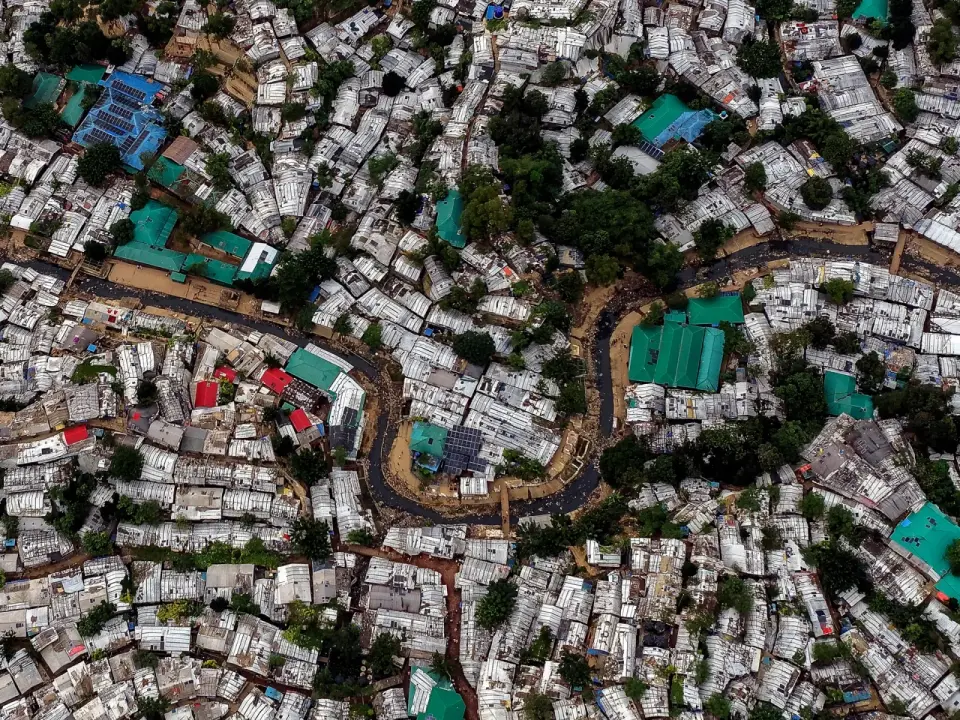
The ICJ has never previously found a state responsible for genocide, though it ruled in 2007 that Serbia failed to prevent the 1995 Srebrenica massacre. The 2017 military crackdown on the Rohingya, a mostly Muslim minority in Buddhist-majority Myanmar, displaced over 730,000 people into Bangladesh, where approximately 1.2 million Rohingya now live in the Cox’s Bazar refugee settlement. The case was brought by The Gambia in November 2019, with support from the Organisation of Islamic Cooperation. Myanmar’s leader, Min Aung Hlaing, who headed the military during the 2016-2017 attacks, has a pending arrest warrant from the International Criminal Court (ICC) on allegations of crimes against humanity. The ICJ’s ruling is expected to influence other high-profile genocide cases, including South Africa’s claim against Israel regarding Gaza.
How outlets are covering it
Al Jazeera and The Guardian both emphasize the historic nature of the ICJ’s ruling, noting that it is the first time the court has found a state responsible for genocide. The Guardian highlights the court’s focus on 'intent to destroy' and the role of sexual violence, such as gang rape, as evidence of genocidal intent. The New York Times provides a human-centric perspective, detailing the experiences of Rohingya survivors, including the burning of the village of Zammona and the mass displacement into Bangladesh. All three sources agree that Myanmar denies the allegations, claiming its military actions were legitimate responses to armed attacks. The Guardian and Al Jazeera note the lack of enforcement mechanisms for the ICJ’s ruling, while The Guardian also mentions the US threat to sanction ICJ judges if the ruling lowers the legal threshold for genocide. The New York Times focuses on the immediate impact on Rohingya refugees in Cox’s Bazar, who will closely follow the verdict.
Why it matters
The ICJ’s ruling sets a critical precedent for international law, as it is the first time the court has found a state responsible for genocide. This could influence future cases, including South Africa’s claim against Israel regarding Gaza. The verdict also highlights the limitations of the ICJ’s enforcement mechanisms, as Myanmar could ignore the ruling without immediate consequences. The case underscores the ongoing persecution of the Rohingya minority, with approximately 1.2 million Rohingya living in refugee camps in Bangladesh and roughly 550,000 remaining in Myanmar under severe restrictions. The ruling may also impact international relations, as the US has threatened sanctions against ICJ judges if the legal threshold for genocide is lowered, reflecting broader tensions between the US and international rights bodies.
What to watch
The Gambia may appeal to the UN Security Council if Myanmar ignores the ICJ’s ruling, as the court lacks direct enforcement mechanisms. The verdict could influence the outcome of South Africa’s genocide case against Israel, which is currently pending at the ICJ. The US may impose sanctions on ICJ judges if it believes the ruling lowers the legal threshold for proving genocidal intent. Myanmar’s government is expected to reject the ruling, as it has consistently denied the allegations of genocide. The ruling may also lead to increased international pressure on Myanmar to allow the return of Rohingya refugees and to provide reparations, though enforcement remains uncertain.
- ICJ to rule on Rohingya genocide case against Myanmar Al Jazeera
- UN top court finds Myanmar killed 10,000 Rohingya as it rules on ‘genocide’ Al Jazeera
- Myanmar committed acts of genocide against Rohingya minority, world’s top court rules The Guardian
- A Village Burned, Its People Killed or Exiled. Was It Genocide? The New York Times
- International Court of Justice to issue ruling on Myanmar genocide case NPR
Want the full story? Read the original reporting
Read on Al Jazeera