At Cannes, Javier Bardem defends his Gaza statements, says genocide is a fact, and asserts Hollywood’s political climate is shifting thanks to younger generations; he acknowledges fear of backlash but believes those drafting a blacklist will be exposed and face consequences.
Defector critic Jake Romm argues that Gaza must orient political thought, but Franco Berardi's Thinking Gaza fails to fully engage with the scale of violence or propose a concrete path to liberation, rendering the analysis insufficient as a political response.
UN Special Procedures urge the EU to immediately suspend the EU–Israel Association Agreement, arguing that ongoing Israeli violations of international humanitarian and human rights law—described as genocide, crimes against humanity, and war crimes—make the trade pact incompatible with legal obligations; they cite ICJ provisional measures and the 2024 advisory opinion, ICC warrants, and other UN findings to frame suspension as a legal minimum rather than a political choice ahead of EU foreign ministers’ discussions.
Sidney Blumenthal argues that Trump’s Iran campaign quickly spiraled from a victory fantasy into dangerous, law-violating threats—raising concerns of war crimes and incitement to genocide—amid counsel from military leaders and legal scholars. The piece traces how rhetoric escalated toward targeting civilian infrastructure, drawing on references to the Geneva Conventions and Genocide Convention, before a ceasefire abruptly ended the episode and exposed a misfit between Trump’s bravado and real-world consequences.
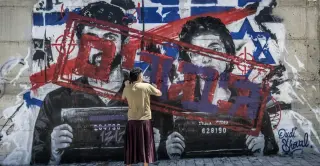
In this interview about Yes, Nadav Lapid argues that art must portray the perpetrators’ perspective to reveal the moral rot behind Israel’s violence, using Tel Aviv as a liberal bubble near Gaza. He outlines the film’s premise—Y, a musician, is hired to compose a national anthem after October 7 by a Russian billionaire and the government—as a vehicle to expose how so‑called “good Israelis” can enable genocide. Lapid also reflects on the responsibility of Israeli filmmakers, the danger of reductive anger, and the hope that art can illuminate truth amid crisis.
A UN Special Rapporteur warns that Israel’s detention system has become a state doctrine of torture and a core element of ongoing genocide against Palestinians, detailing abuses in prisons and across Gaza, the West Bank, and East Jerusalem. With more than 18,500 Palestinians detained since Oct 2023 (including about 1,500 children), thousands held without charge and hundreds killed, the report calls for an immediate halt to torture, access for international investigators, and accountability, including potential ICC action and warrants for senior officials.
UN-backed human rights experts say the RSF’s October siege of el-Fasher in Darfur shows hallmarks of genocide, citing ethnically targeted killings, sexual violence, and destruction aimed at non-Arab communities such as the Zaghawa and Fur. The report estimates thousands killed and many more displaced, and calls for accountability and civilian protection.
The Jerusalem Post quotes NGO Monitor founder Gerald Steinberg alleging that anti-Israel NGOs have long planned to brand Israel with genocide labels and used the Gaza war as a pretext, describing a coordinated bias that influences global narratives and UN discourse; he notes large groups like Oxfam wield significant influence and that some leaders have acknowledged preplanned campaigns, signaling a shift in how humanitarian claims are framed amid the Israel–Hamas conflict.
A Rutgers political scientist argues that Russia’s war in Ukraine aims to destroy Ukrainians as a people, citing the February maternity hospital strike in Zaporizhzhia, winter-time attacks on civilian infrastructure, and alleged mass abductions of Ukrainian children as evidence that the conflict meets the Genocide Convention’s criteria; the piece frames Putin and his inner circle as genocidal and urges policy recognition that talks with such leaders may be futile.
On the second anniversary of Hind Rajab’s death in Gaza, the Hind Rajab Foundation says it has identified 24 perpetrators (including senior Israeli officers) and is pursuing active legal cases across jurisdictions, building forensics, testimony, and arrests to achieve accountability; they frame the effort as a long-term process toward real courts and real consequences.
Kushner unveiled a “New Gaza” concept at Davos, proposing a free-market-led development with skyscrapers and tourist districts; however, analysts warn it would deny Palestinian agency and culture, resemble disaster-capitalism and colonial projects, and faces feasibility hurdles like Hamas disarmament, raising concerns that such plans profit from conflict rather than empower Palestinians.
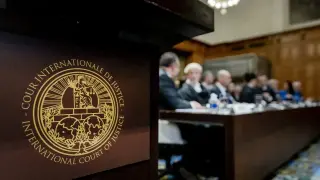
Myanmar defended itself at the International Court of Justice against The Gambia’s genocide allegations over the 2017 Rohingya crackdown, denying genocidal intent and arguing operations targeted militants; The Gambia, backed by the OIC, seeks accountability as witnesses are due to be heard behind closed doors, with a ruling expected by late 2026 and potential implications for international genocide jurisprudence.
The International Court of Justice in The Hague began three weeks of hearings on a landmark genocide case against Myanmar brought by Gambia, accusing the Myanmar military of genocidal crimes against the Rohingya. The case rests on universal jurisdiction to address genocide anywhere and could set a precedent for future actions, including potential cases against Israel, shaping how international law handles atrocity allegations.
A senior Gazan anaesthesiologist, Dr Ahmed Muhanna, returns to Gaza after 665 days in Israeli detention to find al-Awda hospital hollowed out of staff, equipment, and medicine, with 75 colleagues killed in custody and 1,200 Palestinian healthcare workers killed and 384 detained since Oct 2023. Gaza’s healthcare system is ravaged: no functional MRI machines and only one CT scanner, border closures and fuel shortages have forced the hospital to suspend services, and WHO says 77% of the population faces acute food insecurity. International NGOs face new license revocations, further hampering aid. Muhanna continues to treat patients while coping with trauma and a bleak outlook for his children’s future.
Turkey issued arrest warrants for Israeli Prime Minister Benjamin Netanyahu and 36 other Israeli officials on charges of genocide and crimes against humanity related to Gaza and the aid flotilla, prompting strong condemnations from Israel and support from Hamas, amid ongoing discussions about a multinational security force for Gaza.