
Nepal seeks UN climate aid for $5 billion flood recovery as death toll climbs
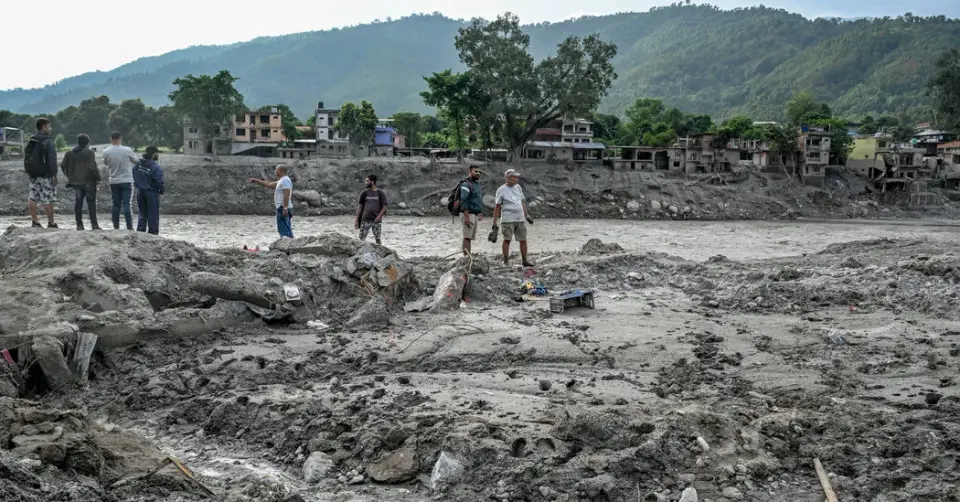
Nepal has estimated the cost of recent catastrophic floods at $5 billion and requested urgent funding from a UN climate disaster fund. The disaster, triggered by a glacial collapse, has killed over 1,100 people and left thousands missing. Officials blame climate change, noting that the UN fund lacks sufficient contributions from wealthy nations.
Key points
- Nepal’s Ministry of Agriculture, Forest and Environment estimates recovery costs at $5 billion.
- The government has requested emergency aid from a UN climate fund, which currently lacks sufficient funding due to low contributions from the US and other nations.
- The death toll has risen to 1,114 in Nepal, with at least 16 deaths reported on the Chinese side of the border.
- Approximately 4,500 people remain missing, including 75 Americans and 38 Australians, according to respective governments.
- A UN Development Programme estimate indicates the floods generated over 2.4 million tons of debris.
- A four-month Humanitarian Flash Appeal has been launched to address food, water, and shelter needs for 84,270 affected people.
Background
The current disaster follows a series of earlier Himalayan events, including an avalanche-triggered flood in late August that killed at least eight people. Previous coverage noted that rising temperatures in the Himalayas are increasing the frequency and severity of floods, which threaten the region’s hydropower infrastructure. The current event represents a significant escalation in scale, with a glacial collapse causing widespread destruction in the Rasuwa and Nuwakot districts.
How outlets are covering it
The New York Times emphasizes the financial aspect, highlighting that Nepal is seeking aid from a UN fund that is underfunded due to reluctance from major contributors like the United States. The outlet frames the disaster as an inequity where low-emission nations suffer the consequences of high-emission nations. CNN focuses on the humanitarian crisis, detailing the massive number of missing persons, including foreign nationals, and the immediate efforts to save lives and provide basic necessities. CNN also notes that a scientific report found visible warning signs of the glacial change days before the disaster. AP News highlights the technical challenges of the rescue, noting that hydropower tunnels are buried and inaccessible, and that experts warn of further instability in the surrounding glacier and slopes.
Why it matters
This event underscores the growing financial and humanitarian burden of climate-related disasters on vulnerable nations. The lack of funding for UN climate recovery mechanisms highlights a gap in global support for countries that contribute least to greenhouse gas emissions. The scale of the disaster, involving over 2.4 million tons of debris and thousands of missing persons, illustrates the severe infrastructure and human cost of glacial instability in the Himalayas.
What to watch
Rescue operations will continue to focus on the missing, particularly those in hydropower tunnels, though access remains difficult due to buried infrastructure. The UN and Nepal will monitor the stability of the remaining glacier and slopes to prevent further debris flows. International attention will focus on the outcome of the Humanitarian Flash Appeal and whether the UN climate fund can secure the necessary contributions to support the $5 billion recovery effort.
- Nepal Puts Cost of Disaster at $5 Billion, Blaming Climate Change The New York Times
- Live updates: Nepal-China flood disaster death toll tops 1,000 CNN
- 'No hollow or empty space': A drone operator reveals challenges in Nepal's tunnel rescue efforts AP News
- Nepal rescuers reach remote areas in search of thousands missing nearly a week after devastating floods Reuters
- Nepal's hesitance to accept foreign help for flood relief comes under scrutiny NPR
Want the full story? Read the original reporting
Read on The New York Times