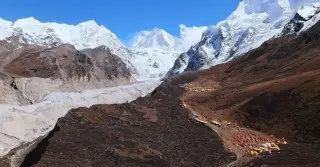
An avalanche struck the base camp of Himlung Himal in Nepal on Sunday, killing at least four people and leaving 12 others missing. All victims were Nepalese staff preparing the site for foreign climbers. Rescue efforts are hampered by severe weather, with helicopters grounded and ground teams unable to reach the remote location.
An avalanche struck the base camp of Himlung Himal in Nepal on Sunday, killing two people and leaving 14 others missing. The victims were Nepalese staff preparing the site for foreign climbers. Heavy snow and poor weather have severely hampered rescue efforts, with helicopters grounded and ground teams unable to reach the remote site.
Nepal plans to file a roughly $20 million claim with the UN Fund for Responding to Loss and Damage, supported by a World Weather Attribution study that links climate change to the Langtang Lirung rock-ice collapse and resulting floods, as the country seeks reconstruction funds after about 1,400 deaths and thousands missing; the fund has limited money and requires evidence of climate-linked losses, making the process uncertain.
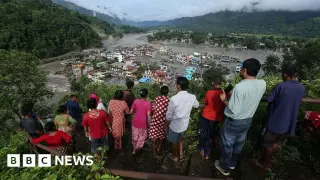
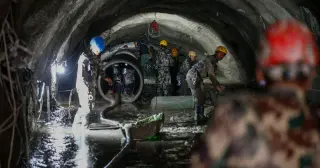
Nepal on Wednesday raised the number of people recorded as missing from the Aug 26 floods to 6,150 (up from 5,179) after district-wide verification, as rescuers recovered 10 bodies from two hydropower tunnels in Rasuwa (Chilime and Upper Trishuli-1), pushing the national toll to about 1,446 dead and 6,669 missing.
A first scientific assessment attributes the Aug. 26 Nepal–Tibet disaster to human-caused warming that thaws permafrost, thins glaciers, and brings more rainfall, preconditioning a Langtang Lirung slope collapse that triggered a 22-km debris flood. Nepal aims for about $20 million from the UN Loss and Damage fund, while researchers call for integrated monitoring of glaciers, permafrost, slopes, rivers and weather to better predict such cascading disasters and bolster climate-justice diplomacy at the UN General Assembly.
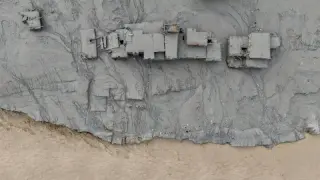
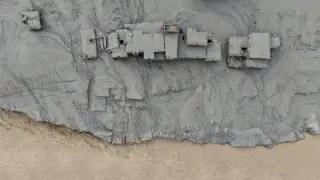
A World Weather Attribution team says Nepal’s devastating August flood was not caused by a single event but by a cascade of climate‑driven factors: a Langtang Lirung rock–ice collapse likely weakened by a 2015 earthquake, thawing permafrost and glacier melt that increased water and rock pressure, and unusually warm regional conditions that intensified slope destabilization. July–August temperatures are about 1.5°C warmer locally and annual temperatures around 2°C higher, with the zero-degree line rising in the Himalayas. The flood roared more than 20 miles downstream, killing at least 1,300 and leaving more than 5,000 missing. The scientists say human‑caused climate change preconditioned the disaster and warn that current early‑warning systems couldn’t have foreseen it; cutting fossil fuel pollution is needed to avert more such events.
A World Weather Attribution analysis found Nepal’s August flood was not caused by a single event but by a cascade of processes intensified by human-caused climate change: warming temperatures, thawing permafrost, glacier thinning around Langtang Lirung, and meltwater that fed a rapidly advancing flood after a monumental rock-ice avalanche. A 2015 earthquake may have preconditioned the slope, and record fall snow plus a very warm July–August period (regional temperatures ~1.5°C warmer in summer, ~2°C annually) amplified melt. The combined factors produced an unprecedented Himalayan disaster, with at least 1,300 dead and thousands missing, and scientists say even early warning systems would have limited lead time. They stress urgent fossil-fuel reductions to reduce future risk.
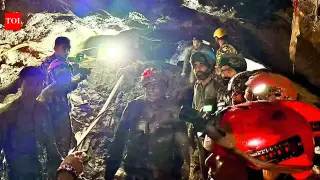
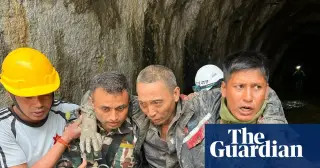
After days of searching for six men trapped underground by catastrophic floods, rescuers at Nepal’s Chilime Hydropower Station recovered five bodies; the sixth person remains missing as the Nepali Army, with help from Indian forces and an Australian tunnel expert, continues a challenging search through silt-filled tunnels that left the area around the powerhouse completely swamped.
Environmental historian Dan Haines argues that the Himalayan floods in Nepal are driven by a mix of climate trends and human choices—unregulated development, deforestation, riverbed disturbance, and vulnerable infrastructure—so disasters occur when people live in flood paths. He urges Nepal to shift from mass tourism to high-value, lower-impact models and to strengthen disaster preparedness, including evacuation training and trust in warnings, drawing on earthquake-response lessons to reduce future devastation.
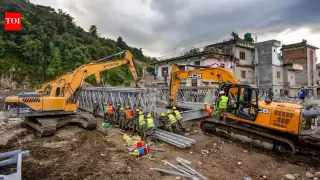
Nepal’s new government faces a daunting task as catastrophic floods and landslides kill more than 1,300 people and leave thousands missing; preliminary damage is about $2.56 billion—roughly a fifth of the national budget—with reconstruction estimated at $4–5 billion, threatening tourism and hydropower while sparking calls for broader international aid and climate-resilient infrastructure.
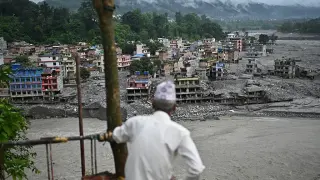
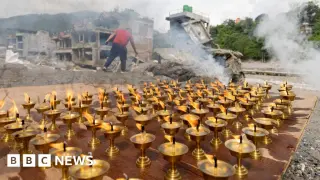
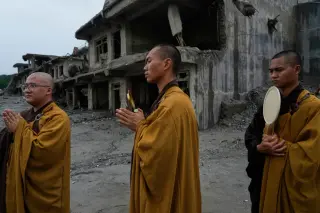
Nepal marked a national day of mourning for flash flood victims, with half-mast flags and candle vigils as rescue teams continued searching flood-hit valleys along the Nepal–Tibet border; the death toll stood at 1,287 with more than 5,000 missing, and government programs were paused while operations focused on ground, air, and tunnel rescues at hydropower sites, including a 64-year-old woman who was rescued after more than 10 days.
Nepal lowered flags to half-mast in mourning for about 1,300 flood victims, with rescue teams pulling two Nepalese workers from a plant on Friday and a Chinese national from the facility on Saturday as operations continued.
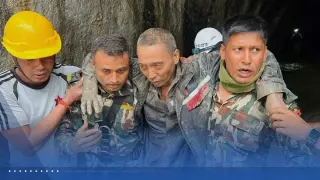
Nepalese rescue teams pulled a Chinese national and a woman alive 10 days after devastating floods, including a man rescued from a 225-meter tunnel at the Trishuli hydropower project, bringing the total rescued there to three. Authorities say about 900 workers remain missing across 12 hydropower sites, with around 500 believed trapped in tunnels, as the disaster leaves more than 1,300 dead and thousands still unaccounted for.
Nepal’s electricity largely comes from hydropower, but catastrophic floods damaged 12 plants in the Trishuli basin, wiping out over 10% of national capacity and killing more than 1,300 people. The disaster underscores climate risks facing mountain-based hydro projects and fuels calls to diversify with solar and wind, consider reservoir-based plants for storage, and strengthen resilience and early-warning systems while balancing imports from neighbors.
Rescuers in Nepal saved a Chinese man from a 225-meter tunnel at the Upper Trishuli-1 hydropower project and a 64-year-old Nepali woman from Nuwakot as thousands remain missing ten days after floods triggered by a glacial collapse; the disaster has killed at least 1,375 and left more than 5,000 unaccounted for amid widespread infrastructure damage, including hydro facilities and bridges.