
One Year After Ceasefire, Gaza Remains in Ruins as Israeli Strikes Continue
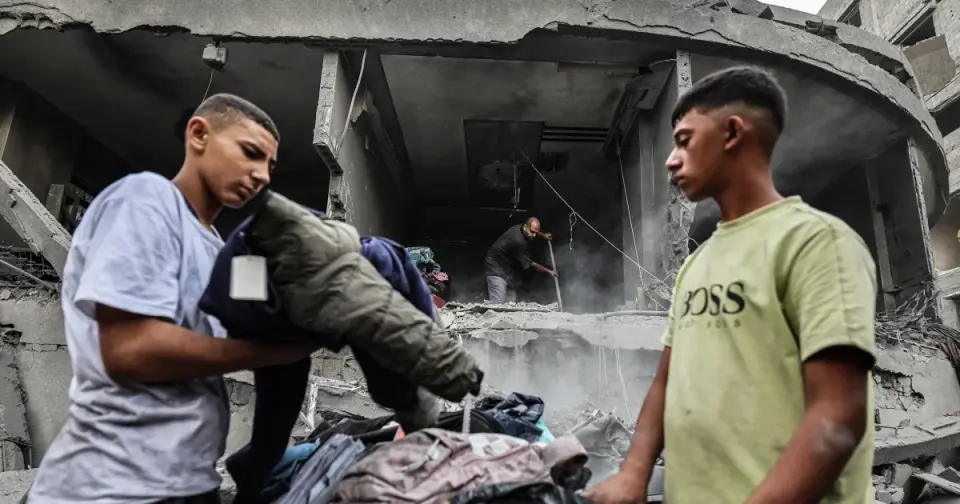
One year after the October 2025 ceasefire, aid groups and the UN describe the truce as existing 'in name only' due to near-daily Israeli strikes. While the conflict has slowed, over 1,400 Palestinians have died since the agreement took effect, and no international peacekeeping force has been deployed. Israel now controls approximately 70% of Gaza, forcing over 2 million people into a narrow coastal strip. Although famine has reversed with increased aid, reconstruction remains absent, and the UN warns that security and recovery paths are still missing.
Key points
- The ceasefire, brokered by President Trump and effective October 10, 2025, has not stopped violence, with over 1,400 Palestinians killed in the past year, including nearly 500 women and children.
- Israel has expanded military control to roughly 70% of Gaza, squeezing the population near the coast, while no international peacekeeping force has been established as promised.
- UN Secretary-General António Guterres stated the ceasefire has failed to deliver security, adequate humanitarian assistance, or a credible path to recovery.
- Aid groups report that while food access has improved, reversing a previously declared famine, reconstruction is absent and strikes continue near-daily.
- The broader regional context includes expanded Israeli military operations in Lebanon and Syria, and a wider conflict involving Iran and Gulf states.
Background
This situation follows the initial war that began in October 2023, which resulted in over 73,000 Palestinian deaths. Recent months have seen continued violations, including strikes on Christian families in October 2026 and double-tap drone attacks on medical responders. The current state reflects a shift from active total war to a persistent, low-intensity conflict that has not halted civilian casualties.
How outlets are covering it
NBC News and aid groups emphasize the failure of the ceasefire to provide security or recovery, citing near-daily strikes. NPR highlights the human toll, noting that while strikes have slowed, they have not stopped, and details the lack of reconstruction and peacekeeping forces. The Guardian provides a broader geopolitical perspective, arguing that the conflict has normalized the erosion of international law and expanded into a regional war involving multiple countries. All sources agree that the humanitarian situation remains dire, with millions displaced and living in tents, but they differ in emphasis: NBC and NPR focus on the immediate failure of the truce terms, while The Guardian frames the event as part of a global shift in the rules-based order.
Why it matters
The persistence of violence despite a formal ceasefire undermines international diplomatic efforts and highlights the fragility of peace agreements in the region. The continued death toll and lack of reconstruction indicate that the humanitarian crisis is far from resolved, with long-term implications for regional stability and international law.
What to watch
The UN and international bodies are likely to continue pressing for a credible path to recovery and peace, though no immediate changes in Israeli military operations are expected. Aid organizations will continue to monitor the flow of humanitarian assistance, while the lack of a peacekeeping force suggests that the status quo of limited Israeli control and ongoing strikes may persist.
- One year on, Gaza ceasefire exists ‘in name only,’ aid groups say amid near-daily Israeli strikes NBC News
- Photos: What a year of ceasefire in Gaza looks like NPR
- A US-brokered ceasefire was supposed to end the war in Gaza. A year later, progress has stalled AP News
- In three years, Israel's war on Gaza hasn't just changed the Middle East, it's changed the world | Steve Bloomfield The Guardian
- Child among eight killed by Israel on Gaza ‘ceasefire’ anniversary Al Jazeera
Want the full story? Read the original reporting
Read on NBC News