
Karahantepe Excavation Yields 11,000-Year-Old Statue of Human Riding Leopard
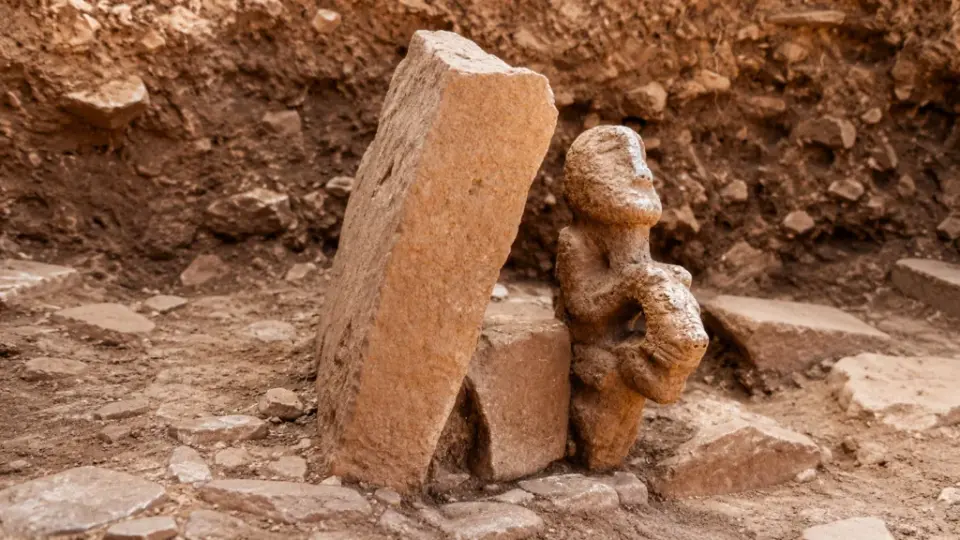
Archaeologists in southeastern Türkiye have uncovered an 11,000-year-old composite statue depicting a human figure seated on a leopard at the Karahantepe site. Announced by Culture and Tourism Minister Mehmet Nuri Ersoy on August 25, the 70-centimeter sculpture was found on a stone bench within a small, stone-floored structure. This discovery introduces a new visual dynamic to the site’s known human-animal imagery, reversing previous depictions where humans carried leopards. While no detailed academic publication has yet been released, the find adds to the growing body of evidence regarding Neolithic symbolic relationships with wild predators.
Key points
- The 70-centimeter statue was discovered during the 2026 excavation season at Karahantepe in southeastern Türkiye.
- It depicts a human figure sitting on the back of a leopard, a composition distinct from earlier finds where humans carried the animals.
- The sculpture was found resting on a stone bench inside a structure with a flat stone floor, approximately 3 meters in diameter.
- Culture and Tourism Minister Mehmet Nuri Ersoy announced the find on August 25, noting its unique stylistic characteristics.
- No detailed archaeological publication regarding the object’s chronology or manufacturing technique has been released yet.
Background
Karahantepe is a major Neolithic settlement in Şanlıurfa, covering roughly 14 hectares and featuring over 250 T-shaped standing stones. Systematic excavations began in 2019, revealing domestic areas and monumental structures. Previous discoveries include a 2.3-meter male statue from 2023 and various leopard motifs. The site is part of the broader Taş Tepeler project, which also includes the nearby Sayburç settlement, where nearly 70 structures were recently uncovered. These sites provide critical evidence for the emergence of settled life and architectural features like stairs and windows following the Ice Age.
How outlets are covering it
Arkeonews and HeritageDaily focus on the specific novelty of the new statue, emphasizing how it reverses the visual formula of earlier finds where humans carried leopards. Hürriyet Daily News provides a broader context, linking Karahantepe to the wider regional strategy of transforming sites like Sayburç into open-air museums to showcase Neolithic history. While Arkeonews notes the lack of detailed academic interpretation, Hürriyet highlights the ministry’s plans to use these findings to promote cultural heritage tourism and research. All sources agree on the significance of the leopard motif in Neolithic imagery but differ in their emphasis on immediate archaeological analysis versus long-term preservation and public engagement.
Why it matters
This discovery offers new insights into how Neolithic communities conceptualized the relationship between humans and powerful wild animals. By reversing the typical depiction of humans carrying leopards, the statue suggests a complex symbolic vocabulary that may reflect status, guardianship, or other social narratives. It contributes to understanding the cognitive and artistic developments of early settled societies in southeastern Türkiye.
What to watch
Researchers await a detailed archaeological publication to clarify the statue’s chronology, manufacturing techniques, and precise interpretation. The Ministry of Culture and Tourism plans to continue excavations under the Legacy for the Future and Taş Tepeler projects, with potential plans to transform nearby Sayburç into an open-air museum. Further analysis may reveal more about the symbolic roles of leopards in Neolithic culture.
- A Unique 11,000-Year-Old Statue of a Human Sitting on a Leopard Unearthed at Karahantepe Arkeonews
- 11,000-year-old sculpture unearthed at Türkiye's Karahantepe Daily Sabah
- Rare Neolithic sculpture unearthed at Türkiye’s Karahantepe HeritageDaily
- Karahantepe, Sayburç reveal major turning point in human history Hürriyet Daily News
- Türkiye unearths 11,000-year-old stone sculpture of human figure riding leopard Qazinform
Want the full story? Read the original reporting
Read on Arkeonews