archaeology126.735 min read
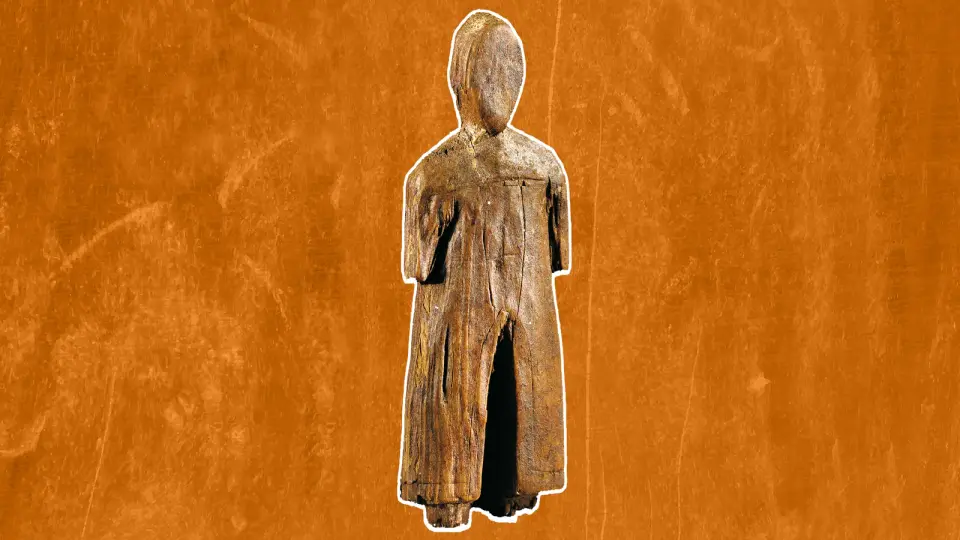
700-Year-Old Inuit Carving Depicts European Visitor Before Columbus
1 hour ago•Source: Live Science

The latest archaeology stories, each synthesized from multiple sources with added background and context.

A comprehensive study of 597 wooden remains and imprints from the Abric Romaní rock shelter in Spain reveals that Neanderthals possessed a sophisticated woodworking tradition spanning 62,000 to 40,000 years ago. Published in Science Advances, the research identifies 13 distinct artifacts, including spears, a unique club-like object, and structural elements, challenging the long-held view that Neanderthal technology was primarily defined by stone tools.
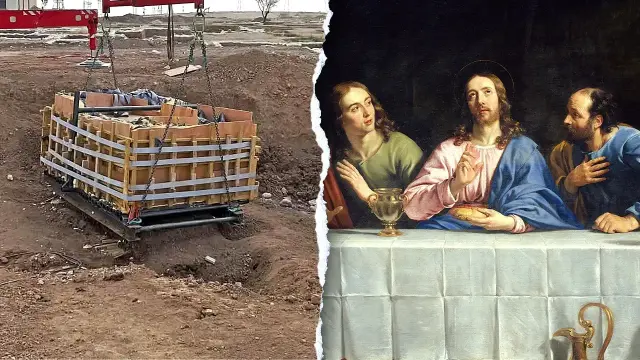
Archaeology News Online Magazine•4 days ago
Archaeology News Online Magazine•8 days ago
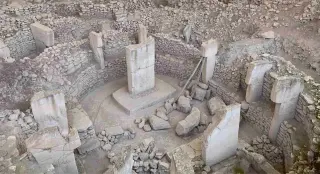
Archaeologists have discovered the first intact human burials at Göbekli Tepe, the 11,600-year-old site in southeastern Turkey previously known as the world's first temple. Published in PLOS One on September 22, 2026, the study by Lee Clare and Julia Gresky reveals two graves dating to 8,700–8,000 BCE. One grave contained an adult woman, a young man, and an adolescent girl; the other held a single middle-aged woman. These findings suggest the site was a permanent residential settlement rather than solely a ceremonial gathering place, offering a new explanation for the hundreds of scattered bone fragments found in earlier excavations.
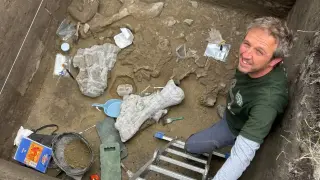
Archaeologists in central Chile have uncovered stone tools and butchered bones of extinct gomphotheres dating to 12,000–13,000 years ago. Found in the basin of ancient Lake Tagua Tagua, these remains provide new evidence of early human occupation in southern South America, predating many known sites but following the oldest confirmed site, Monte Verde.
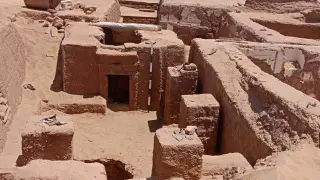
Archaeologists in Egypt’s Dakhla Oasis uncovered a 1,700-year-old pyramid-shaped tomb from the Roman period. The site features a rare 19-line Greek poem, traditional Egyptian protective spells, and artifacts from the reign of Emperor Constantine, illustrating the cultural synthesis of the era.
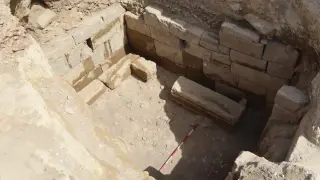
Archaeologists have uncovered a monumental 2,700-year-old Etruscan tomb at Vulci, Italy, containing rare grave goods including a woman's shoe, gold, and imported Greek pottery. The discovery, part of the Ritorno a Vulci project, offers new insights into elite burial practices and Mediterranean trade networks.
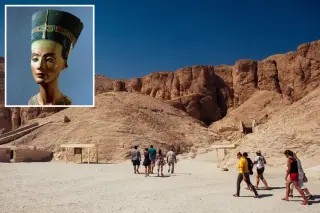
A new study suggests that hidden chambers may exist behind the walls of King Tutankhamun’s tomb, potentially containing the burial site of Queen Nefertiti. While previous searches failed to find definitive proof, recent geophysical surveys indicate the presence of a larger complex, though experts remain cautious about drawing final conclusions.
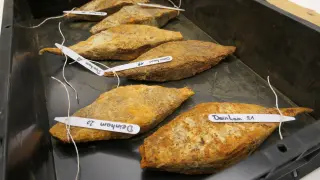
Archaeologists have identified 500 iron bars recovered from a gravel pit in the Danube River as the largest prehistoric iron find in Europe. Dating to the 3rd and 2nd centuries BCE, the semi-finished ingots could have produced 500 swords or 8,000 nails, suggesting massive trade networks in the La Tène period.
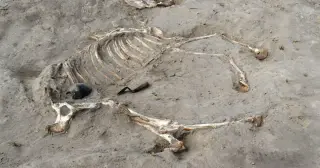
Excavations at Tell Al-Abqain in Egypt’s Nile Delta have revealed a complete residential district and the intact remains of a young male horse, likely given an honorific burial over 3,000 years ago. The site, a New Kingdom fortress built to defend against Libyan tribes, features planned streets, grain silos, and artifacts linking it to Ramesses II and Merneptah.
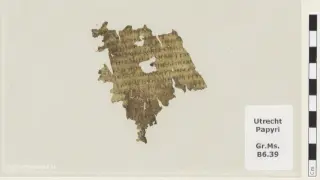
A Greek-literature fragment from Homer’s Odyssey, dated to about AD 300 and measuring roughly 2.6 by 3 inches, was found in Utrecht University Library among old Egyptian and Greco-Roman texts. Discovered by Mark de Kreij (Radboud University), the parchment likely originated from a pocket edition produced in Egypt’s Fayum and contains Book 12 lines describing Helios’ cattle incident. The fragment is one of about 30 similar pieces known and may have survived because it lay in the middle of the pocket edition, shielded by surrounding pages. The find will be documented in a forthcoming book on Utrecht’s collection; earlier this year, archaeologists also reported Iliad fragments from Egypt.
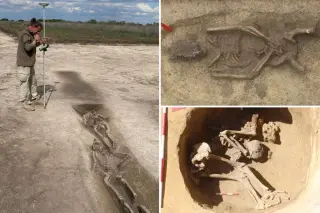
Archaeologists in western Slovakia uncovered a second‑century Roman marching camp dating to Marcus Aurelius’s reign, likely used during the Marcomannic Wars, complete with soldiers’ skeletal remains, weapons and armor, a clavicula-style gate, and an irregular but defensive layout. The site spans about 370 acres and is being excavated ahead of industrial development, with researchers continuing to study the finds and determine the identities of the dead.

Finland’s largest Viking Age silver hoard, weighing about 4.5 kg and containing thousands of coins and jewelry, was found by metal detectorist Kalle Lappinen near Sysmä, north of Helsinki. Buried in two birch-bark containers about 12 meters apart, the deposits likely date to AD 1000–1050 and include coins from regions now Germany, Sweden and Great Britain, plus Islamic dirhams and hack silver. Archaeologists from the Lahti Historical Museum will continue cleaning, counting, and identifying the coins, with a formal report to follow. The discovery highlights Finland’s Viking Era archaeology, alongside recent large hoards found in Norway and Denmark.