
Neolithic Sculpture of Human Riding Leopard Found in Turkey
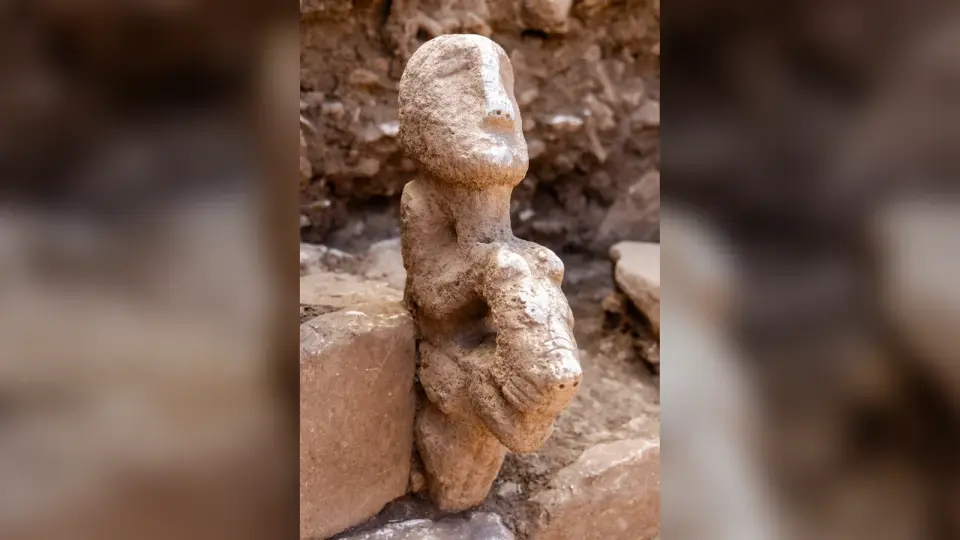
Archaeologists in southern Turkey have uncovered a unique 11,000-year-old stone statue depicting a human figure seated on the back of a leopard. The 70-centimeter sculpture was found at the Karahantepe site, one of the world's earliest settlements, and represents a new artistic style not previously seen at the location.
Key points
- The statue was discovered in 2026 at Karahantepe in Şanlıurfa province, Turkey, dating back approximately 11,000 years.
- The sculpture measures about 70 centimeters (28 inches) in height and was found on a stone bench along the wall of a circular structure roughly 3 meters in diameter.
- Turkish Culture and Tourism Minister Mehmet Nuri Ersoy described the piece as having a style 'unlike anything seen before' at the site.
- The discovery adds to a series of Neolithic finds in the region, including a 2023 statue of a man clutching his genitals and a 2022 carving at Sayburç depicting leopards and a bull.
- Experts suggest the artwork may reflect cultural themes related to virility or masculinity, though its exact meaning remains uncertain.
Background
Karahantepe is part of a cluster of early Neolithic settlements in southeastern Turkey, including Göbekli Tepe, which date back to around 9750 B.C. The region is known for enigmatic stone art depicting humans and wild animals. Previous discoveries at Karahantepe include a large statue of a man holding his penis, found in 2023, and a similar figure known as the Urfa Man found near Göbekli Tepe in 1993. These finds highlight the complex ritual and artistic practices of early settled communities before the advent of cities or writing.
How outlets are covering it
Live Science and The Times of India both emphasize the uniqueness of the sculpture's style and its potential significance for understanding Neolithic art. Live Science notes that the new piece appears to be a 'mirrored version' of a known motif where an animal mounts a human, according to archaeologist Jens Notroff. The Times of India cautions that the sculpture should not be interpreted as evidence that people rode or domesticated leopards, but rather as symbolic art. HeritageDaily focuses on the rarity of the find within the broader context of Neolithic sculpture. Daily Sabah highlights how such excavations boost tourism in Şanlıurfa, though it provides fewer specific details about the statue itself.
Why it matters
This discovery provides new insight into the symbolic language of some of the world's earliest settled societies. It demonstrates that Neolithic communities in Turkey were capable of sophisticated artistic expression and complex social or ritual practices thousands of years before the emergence of urban civilizations. The unique depiction of a human on a leopard challenges previous assumptions about how early humans represented their relationship with predators.
What to watch
Archaeologists will continue to analyze the sculpture and its context within the circular structure to determine its specific purpose. Further research may reveal more about the artistic traditions and social hierarchies of the Neolithic communities in the Şanlıurfa region. The find is expected to attract more attention to the Karahantepe site and the broader archaeological landscape of southeastern Turkey.
- Stone Age sculpture of a person riding a leopard discovered in Turkey may be 'a symbol of power' Live Science
- Rare Neolithic sculpture unearthed at Türkiye’s Karahantepe HeritageDaily
- Neolithic excavations boost tourism in Türkiye's Şanlıurfa Daily Sabah
- 11,000-year-old Karahantepe sculpture shows a human seated on a leopard The Times of India
- TRKIYE-SANLIURFA-STONE SCULPTURE-UNEARTHING Big News Network.com
Want the full story? Read the original reporting
Read on Live Science