
New Geophysical Data Suggests Hidden Chambers Behind Tutankhamun’s Tomb Walls
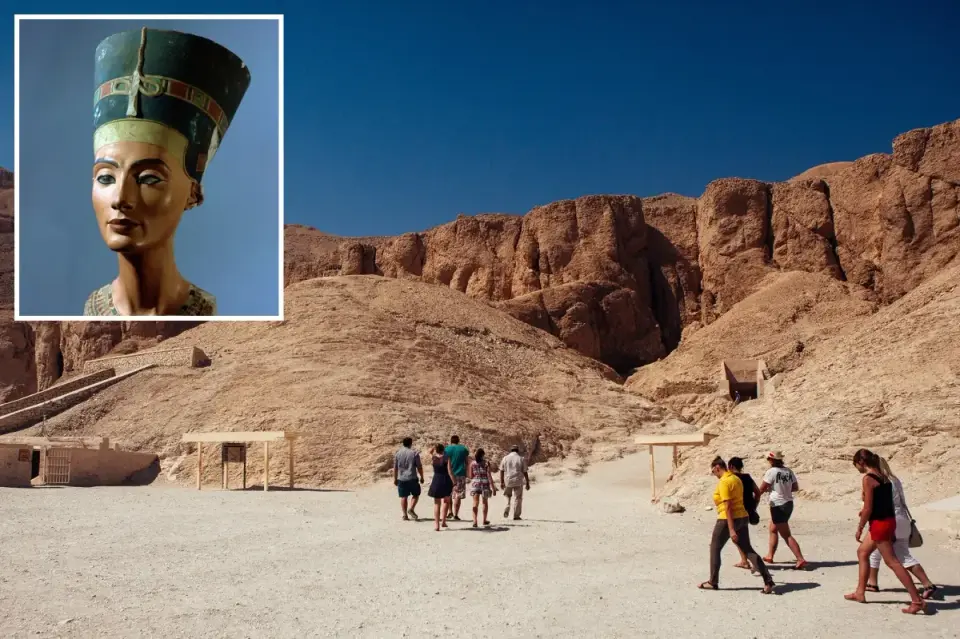
A new study suggests that hidden chambers may exist behind the walls of King Tutankhamun’s tomb, potentially containing the burial site of Queen Nefertiti. While previous searches failed to find definitive proof, recent geophysical surveys indicate the presence of a larger complex, though experts remain cautious about drawing final conclusions.
Key points
- A new study published in the Occasional Papers of the Amarna Royal Tombs Project suggests that hidden chambers may exist behind the walls of King Tutankhamun’s tomb, potentially containing the burial site of Queen Nefertiti.
- The study, led by Mamdouh Eldamaty and Nicholas Reeves, uses geophysical data to argue that the tomb’s layout aligns with that of an Eighteenth Dynasty queen, not a king, suggesting it was repurposed for Tutankhamun’s burial.
- Recent surveys using ground-penetrating radar and microgravity readings have identified anomalies that could indicate the presence of five to six chambers, though experts caution that these findings are not definitive.
- The next step involves boring small holes to allow miniature remote-controlled vehicles to explore the suspected areas, with permission from the Supreme Council of Antiquities of Egypt expected in November.
- The discovery of Nefertiti’s tomb could provide crucial insights into her life and reign, as well as the broader history of the Amarna period, but the search remains inconclusive.
Background
The search for Nefertiti’s tomb has been a long-standing mystery in Egyptology, with previous attempts to locate her burial site failing to yield definitive results. The current study builds on earlier hypotheses, particularly those proposed by Nicholas Reeves in 2015, which suggested that Tutankhamun’s tomb might have been repurposed from a larger, queenly burial. The new findings add to the ongoing debate about the tomb’s original purpose and the identity of its first occupant.
How outlets are covering it
The New York Post emphasizes the potential significance of the discovery, highlighting the anomalies in Tutankhamun’s tomb design and the possibility that it was originally intended for a queen. Gizmodo focuses on the geophysical evidence, noting the team’s confidence in the presence of hidden chambers but also acknowledging the limitations of the data. Ancient Origins provides a balanced view, acknowledging the promising findings but cautioning that the evidence is not conclusive and that further investigation is needed. The perspectives differ in their level of certainty, with the New York Post and Gizmodo leaning towards the possibility of a major discovery, while Ancient Origins remains more cautious.
Why it matters
The potential discovery of hidden chambers behind Tutankhamun’s tomb could provide crucial insights into the life and reign of Queen Nefertiti, as well as the broader history of the Amarna period. If confirmed, the discovery could rank among the most significant archaeological finds of the modern era, offering new perspectives on the political and cultural dynamics of ancient Egypt.
What to watch
The next step involves boring small holes to allow miniature remote-controlled vehicles to explore the suspected areas, with permission from the Supreme Council of Antiquities of Egypt expected in November. The results of this investigation will determine whether the hidden chambers are real and, if so, whether they contain the burial site of Nefertiti or other significant artifacts.
- Archaeologists close in on Queen Nefertiti tomb behind walls of King Tut burial site New York Post
- Tutankhamun’s Tomb May Contain Hidden Chambers Housing The Body Of His Predecessor, Queen Nefertiti IFLScience
- Could King Tut’s Tomb Be Hiding an Ancient Queen? Gizmodo
- King Tut theory could change everything News.com.au
- New Evidence Points to Hidden Chambers Beyond Tutankhamun’s Tomb Ancient Origins
Want the full story? Read the original reporting
Read on New York Post