
Pompeii Excavation Unearths 2,000-Year-Old Wardrobe Revealing Daily Life and Unresolved Fate
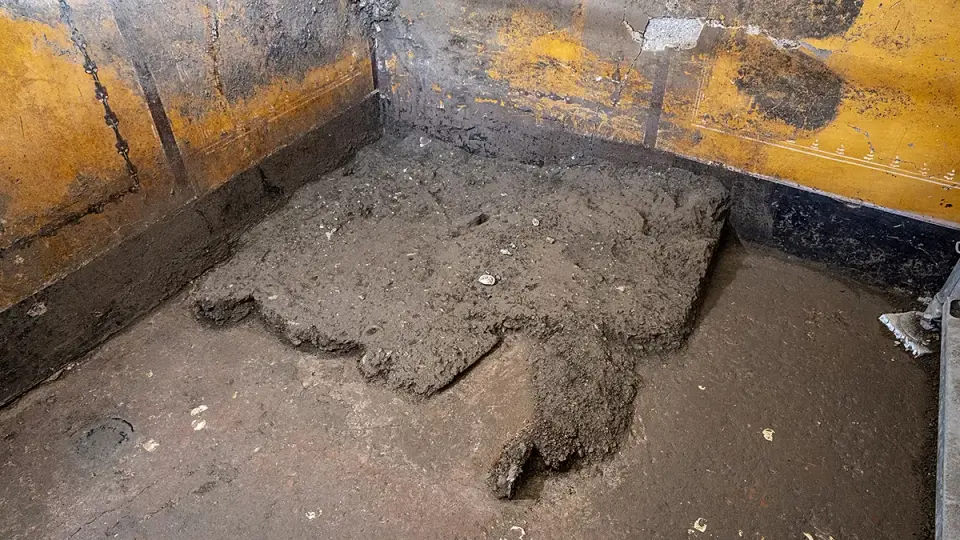
Archaeologists in Pompeii have reconstructed a wooden wardrobe from a house on Via dell'Abbondanza, revealing personal items, coins, and childhood amulets left behind during the AD 79 eruption. The find offers insight into the daily lives and potential fates of the residents, though their identities remain unknown.
Key points
- A wardrobe from the house of Cornelius Maximus (IX 11, 7) was reconstructed from ash-imprinted traces, containing cosmetics, tools, and a necklace of 24 amulets known as crepundia.
- The discovery includes 38 bronze coins in a woven basket, suggesting the owner had no time to retrieve valuables during the eruption.
- The house, located on a main thoroughfare, showed signs of ongoing renovation and contained Fourth Style wall paintings attributed to the Via di Castricio workshop.
- Two immature wood mouse skeletons were found in a storage loft, adding to evidence of rodent presence in Roman urban environments.
- The owner's fate remains uncertain: they may have fled and not returned, or died in the eruption, with their property potentially used for city reconstruction.
Background
Pompeii, buried by Mount Vesuvius in AD 79, has been a site of continuous archaeological study. Recent excavations, including this wardrobe discovery, are part of broader restoration projects, such as the Insula dei Casti Amanti. The house, first partially excavated in 1912, has now yielded new insights into domestic life. The find aligns with other recent discoveries, such as the Herculaneum scrolls and fresco reconstructions, highlighting advancements in archaeological methods.
How outlets are covering it
Euronews emphasizes the human dimension of the discovery, focusing on the wardrobe's contents as a window into daily life. La Brújula Verde provides detailed technical analysis, including the wardrobe's reconstruction, the coins' value, and the mice's species. The Independent highlights the emotional and historical significance of the crepundia necklace, linking it to childhood memories. BBC Science Focus Magazine, while not directly covering this find, contextualizes it within broader AI-driven archaeological breakthroughs, such as the Vesuvius Challenge and RePAIR project, suggesting a new era of discovery in Pompeii and Herculaneum.
Why it matters
This discovery offers a rare, intimate glimpse into the lives of ordinary Romans before the eruption, bridging the gap between historical records and personal artifacts. It underscores the ongoing value of archaeological research in understanding ancient societies and the potential for new findings to reshape our understanding of the past.
What to watch
Further analysis of the coins and amulets may provide more insights into the owner's identity and trade activities. Ongoing restoration projects in Pompeii may uncover additional artifacts, while AI-driven methods could enhance the reconstruction of other damaged structures and texts.
- In Pompeii, a woman's wardrobe resurfaces with beauty items and jewels Euronews.com
- Pompeii cupboard opens window onto life before Vesuvius erupted Reuters
- 'Thought to be lost forever': After 2,000 years, a library buried by Pompeii’s eruption is finally revealing its secrets BBC Science Focus Magazine
- A Pompeii Wardrobe Left Behind in the Eruption Held a Childhood Charm Necklace and 38 Coins La Brújula Verde
- A cupboard sealed for 2,000 years reveals the secrets of Pompeii before deadly volcano The Independent
Want the full story? Read the original reporting
Read on Euronews.com