
Pompeii Wardrobe Unearths Child’s Amulet Necklace and Trade Tools
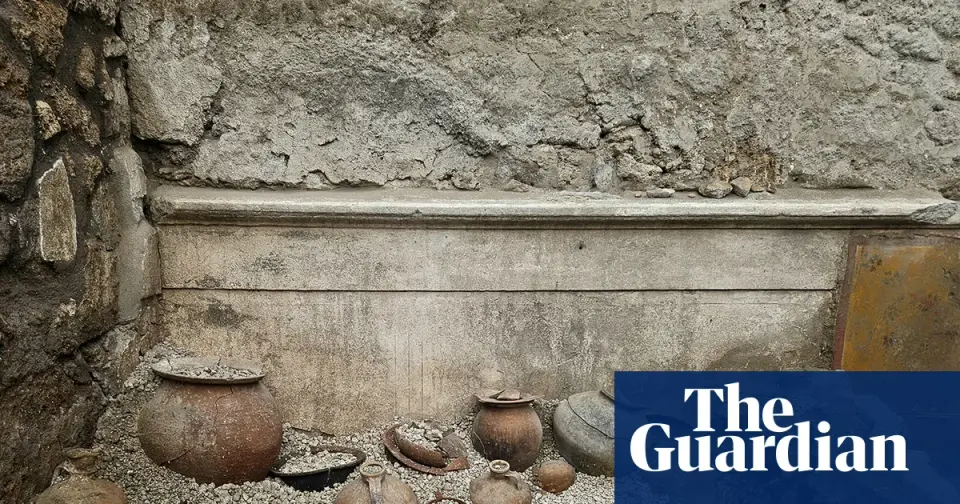
A sealed wooden wardrobe in Pompeii, buried for nearly 2,000 years, yielded a child’s protective necklace, 38 bronze coins, and trade weights, offering a rare glimpse into the daily lives and sudden departure of residents during the AD 79 eruption.
Key points
- A wooden wardrobe was excavated in a house on Via dell’Abbondanza, a busy street in Pompeii, previously associated with a resident named Cornelius Maximus.
- The wardrobe contained a crepundia, a child’s necklace with over 20 charms depicting gods like Bes and Mercury, which served as both protective amulets and tracking devices for caregivers.
- Other finds included tweezers, a glass perfume bottle, an incense burner, cooking pots, and lead weights in a wooden box, suggesting the owner was a tradesperson.
- The presence of 38 bronze coins and personal items implies the residents fled the eruption of Mount Vesuvius in AD 79 with little notice.
- Gabriel Zuchtriegel, director of the Pompeii Archaeological Park, noted that these ordinary objects help restore the human dimension of the past, even if the specific identities of the owners remain uncertain.
Background
This discovery is part of a broader restoration project in Pompeii, where experts are delving into rooms of homes first excavated in the early 20th century. Recent years have seen other significant finds, including a thermal bath complex in 2025 and a bakery in 2023, highlighting the ongoing value of re-examining previously explored sites.
How outlets are covering it
The Guardian and Archaeology Magazine both emphasize the intimate, human-scale details of the find, focusing on the child’s necklace and the implications for the residents’ lives. BBC Science Focus Magazine, while covering the same general archaeological context, shifts focus to the application of AI in decoding Herculaneum scrolls and reconstructing frescoes, highlighting a technological shift in how ancient sites are studied. The primary sources agree on the factual details of the wardrobe’s contents but differ in emphasis: The Guardian and Archaeology Magazine focus on the social and economic implications of the objects, while BBC Science Focus frames the discovery within a broader narrative of technological innovation in archaeology.
Why it matters
The discovery provides tangible evidence of the daily routines, economic activities, and family structures in Pompeii, challenging the notion that the city is only a site of artistic or monumental significance. It underscores the importance of re-examining previously excavated areas for new insights into ordinary life.
What to watch
Archaeologists will continue to analyze the artifacts and potentially use advanced imaging techniques to further study the wardrobe and its contents. Broader efforts, such as the RePAIR project, aim to use AI and robotics to reconstruct fragmented artworks, which may eventually inform the study of similar finds in Pompeii.
- Perfume bottle and child’s necklace among treasures found in Pompeii wardrobe The Guardian
- 'Thought to be lost forever': After 2,000 years, a library buried by Pompeii’s eruption is finally revealing its secrets BBC Science Focus Magazine
- Pompeii wardrobe found untouched since 79 CE holds a woman's keepsakes, coins, and charms Archaeology News Online Magazine
- Pompeii cupboard opens window onto life before Vesuvius erupted Reuters
- News - Household Cupboard Excavated in Pompeii Archaeology Magazine
Want the full story? Read the original reporting
Read on The Guardian