
China Reopens Critical Himalayan Trade Route One Week After Glacial Flood
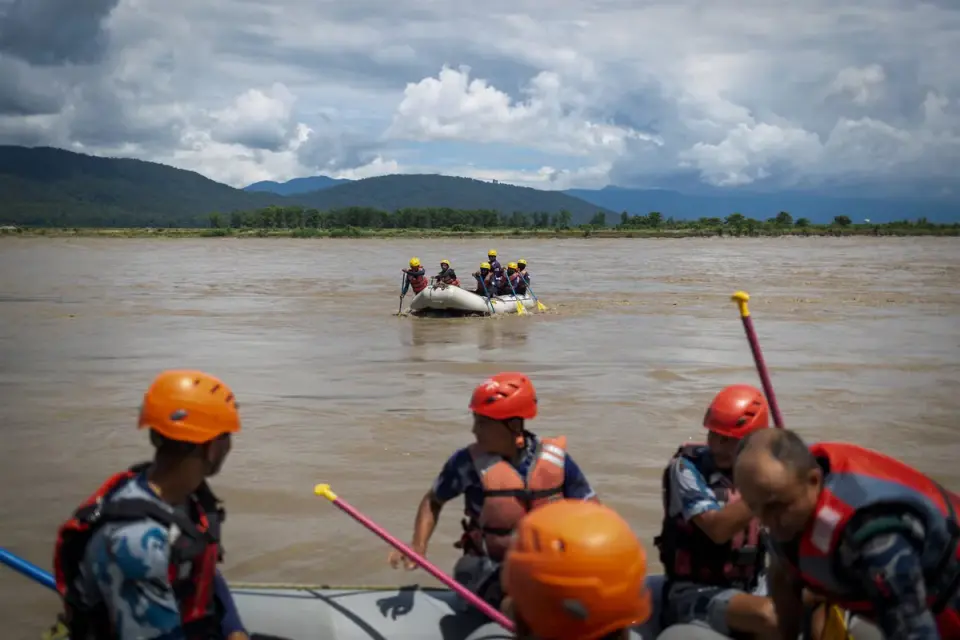
China has completed the reconstruction of the road to the Gyirong border crossing with Nepal less than a week after a glacial flash flood destroyed the site. The reopening allows heavy machinery to reach the disaster zone, facilitating rescue efforts. However, 546 people remain missing on the Chinese side, including 261 foreigners from 23 countries, while 16 deaths have been confirmed. The border post, a key node in China’s Belt and Road Initiative, handles 30% of bilateral trade and was previously damaged by floods in 2025.
Key points
- China finished rebuilding the road to the Gyirong border crossing less than one week after the August 26 flash flood, enabling heavy equipment access for rescue operations.
- Chinese authorities reported 16 deaths and 546 missing persons on the Chinese side, including 261 foreigners from 23 countries, with the largest groups being Nepalis, Indians, and Latvians.
- The Gyirong border post is a critical trade hub, handling 30% of China-Nepal commerce and serving as a key link in the Belt and Road Initiative, including a planned railway line.
- China’s Ministry of Water Resources warned that glaciers near the impact crater remain at risk of collapse, with satellite data showing 14 moraine-dammed lakes on the Chinese side, 10 classified as high-risk.
- The disaster follows a pattern of glacial lake outbursts; a similar flood in July 2025 destroyed the bridge to Rasuwa, cutting off trade until January 2026.
Background
The Gyirong border crossing has faced repeated glacial flood risks. In July 2025, a glacial lake outburst in the Donglin Zangbo basin destroyed the bridge linking the border post to Rasuwa, Nepal, halting trade until January 2026. The August 2026 flood, triggered by a glacial collapse, wiped out the crossing, which handles approximately $600 million in annual trade. Previous archive coverage noted that the border region is highly vulnerable to climate-driven disasters, with ongoing glacier retreat exacerbating risks.
How outlets are covering it
The Independent emphasized the rapid reconstruction of the road as a breakthrough for rescue logistics. The New York Times focused on the human toll, detailing the 261 missing foreigners and 16 confirmed deaths on the Chinese side. Le Monde highlighted the strategic implications, noting that the disaster undermines China’s Belt and Road ambitions in the Himalayas, as Gyirong is a key trade funnel. Global Times reported on ongoing geological risks, with China’s Ministry of Water Resources warning of potential glacier collapses and identifying 14 high-risk moraine-dammed lakes on the Chinese side. Outlets differed in emphasis: The Independent and Global Times focused on recovery and risk assessment, while The New York Times and Le Monde highlighted human impact and geopolitical consequences, respectively.
Why it matters
The rapid reopening of the Gyirong border road is critical for rescue operations and trade recovery in a region vulnerable to climate-driven disasters. The high number of missing persons, including foreigners, underscores the human cost of glacial floods in the Himalayas. The incident also raises questions about the resilience of China’s Belt and Road infrastructure in climate-fragile areas, potentially affecting future investment and policy decisions in the region.
What to watch
China will continue monitoring 14 moraine-dammed lakes on its side of the border, with 10 classified as high-risk. Rescue operations will expand as heavy machinery reaches the Gyirong site. Diplomatic efforts between China and Nepal may intensify to establish better flood risk-sharing mechanisms, as seen in the post-2025 flood cooperation. Long-term, the disaster may prompt reassessments of infrastructure resilience in the Himalayas, particularly for Belt and Road projects.
- China finishes rebuilding road to Nepal border just one week after devastating flash floods The Independent
- Chinese rescue work in Tibet flood disaster zone still trudging along days later Reuters
- Glacier collapse risk remains around Nepal’s Cuojian River impact crater: China’s Ministry of Water Resources globaltimes.cn
- China Says 261 Foreigners From 23 Countries Are Missing in Tibet Flood The New York Times
- Tibet landslide undermines Xi Jinping's gamble on the Himalayas Le Monde.fr
Want the full story? Read the original reporting
Read on The Independent