
Hong Kong activist Joshua Wong receives 10-year sentence for second national security conviction
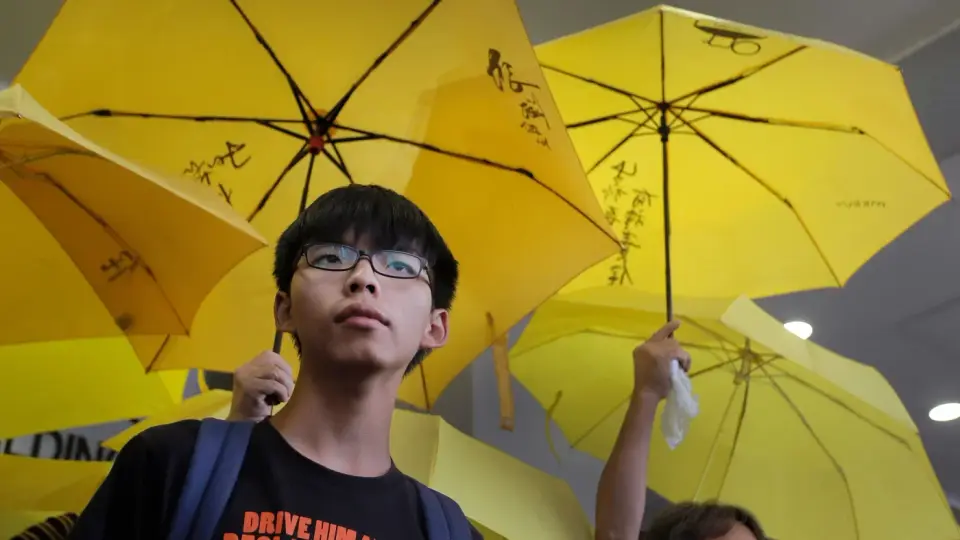
Hong Kong activist Joshua Wong was sentenced to 10 years in prison on November 5 for his second conviction under Beijing's national security law. He pleaded guilty in September to conspiracy to collude with foreign forces. The sentence runs concurrently with his existing term for subversion, extending his incarceration well beyond his previous expected release in January 2027. Critics describe the ruling as part of a broader crackdown on dissent, while authorities maintain the law is necessary for stability.
Key points
- Joshua Wong, 30, was sentenced to 10 years in prison on November 5 for conspiracy to collude with foreign forces to endanger national security, a charge under the 2020 National Security Law.
- Wong pleaded guilty to the charge in September 2026, a move that typically reduces the sentence; Judge William Tam stated he considered a 13-year sentence but reduced it due to the guilty plea.
- The new sentence runs concurrently with Wong's existing four-year, eight-month term for subversion, which he was expected to complete in January 2027; he now has only about two months left on that previous sentence.
- Prosecutors alleged that Wong and fellow activist Nathan Law conspired from 2016 onward to lobby foreign governments, including the United States, for sanctions against China and Hong Kong, using social media and meetings with politicians like Nancy Pelosi and Marco Rubio.
- Wong has been in prison since 2020, having previously pleaded guilty to charges related to the 2019 protests and the '47 case' subversion trial in 2024; he is now serving multiple overlapping terms.
- Supporters, including former Scholarism member Tiffany Chin, expressed distress at the sentencing, while Wong appeared calm and thanked them before leaving the court.
Background
Joshua Wong rose to prominence as a teenage leader of the 2014 Umbrella Movement and co-founded the pro-democracy party Demosisto in 2016 with Nathan Law. After the 2019 anti-government protests, Beijing imposed the National Security Law in 2020, leading to a crackdown on dissent, the dissolution of civil society groups, and the arrest of many activists. Wong was previously convicted in the '47 case,' the largest prosecution under the law, and has been incarcerated since 2020. His activism began in 2011 when he co-founded Scholarism, leading protests against mandatory patriotic education in schools.
How outlets are covering it
Critics, including Human Rights Watch and legal scholars like Eric Lai of Georgetown University, argue that the National Security Law is being weaponized to keep prominent activists in prison indefinitely and that the sentencing reflects a broader crackdown on dissent. They describe the ruling as 'cruel and unjust' and part of a tactic to silence opposition. Conversely, Hong Kong and Chinese authorities, including Chief Executive John Lee, maintain that the law is necessary for stability and that Wong's actions 'severely undermined national sovereignty' and 'prejudiced the well-being of the general public.' Beijing's foreign ministry called on 'relevant parties' to respect China's sovereignty and Hong Kong's legal system. Some supporters, like ET Wong, view Wong as a political prisoner who should not have been imprisoned at all, while others, like Frances Hui, describe the verdict as part of an effort to 'rewrite a chapter of Hong Kong's history.'
Why it matters
The sentencing of Joshua Wong, a prominent figure in Hong Kong's pro-democracy movement, underscores the ongoing impact of Beijing's National Security Law on civil society and political dissent in the city. It highlights the government's strategy of using the law to keep key activists incarcerated, potentially chilling further opposition. The case also reflects the tension between Beijing's view of Hong Kong as a territory requiring stability and the international community's concerns about human rights and freedom of expression. Wong's continued imprisonment, despite his guilty plea, signals the severity of the crackdown and the long-term consequences for activists who challenge Beijing's authority.
What to watch
Wong will serve his 10-year sentence concurrently with his existing term, meaning he will remain in prison well beyond his previous expected release in January 2027. His lawyer, Derek Chan, has urged for a sentence that gives Wong hope, noting his wish to care for his aging parents after release. Supporters and international observers will likely continue to monitor the case as part of broader concerns about human rights in Hong Kong. The government may take further action against media or documentaries that portray Wong favorably, as seen with the Netflix documentary in 2025. The case may also influence future prosecutions under the National Security Law, as authorities seek to deter dissent.
- Hong Kong activist Joshua Wong sentenced to 10 years in prison NPR
- Hong Kong democracy campaigner Joshua Wong handed another 10 years in jail CNN
- Joshua Wong, Hong Kong Democracy Activist, Is Sentenced to 10 Years in Prison The New York Times
- Joshua Wong, face of Hong Kong's pro-democracy protests, jailed for 10 years BBC
- Hong Kong activist Joshua Wong sentenced to 10 years in prison in 2nd national security case NBC News
Want the full story? Read the original reporting
Read on NPR