
Ukraine’s Multi-Stage Strikes Sever Crimea Bridge, Prompting Russian Retaliation in Kyiv
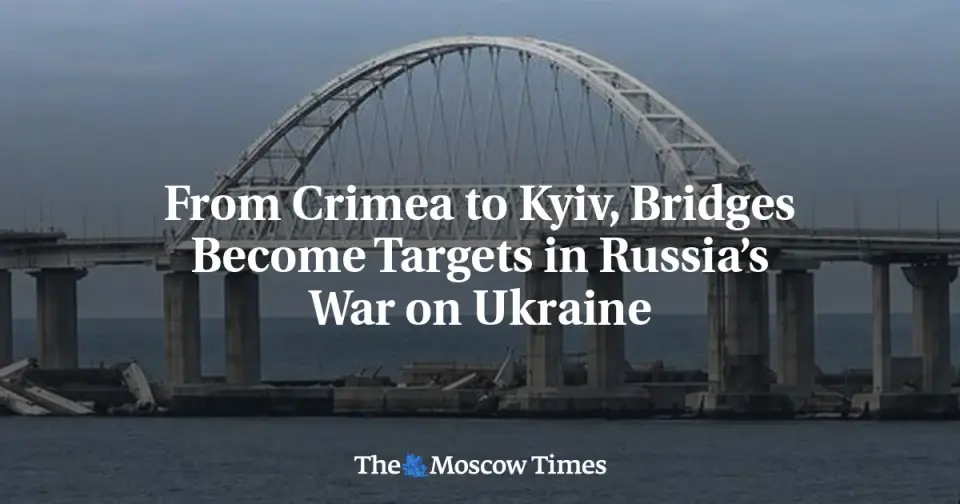
Ukraine’s sustained strikes have collapsed the road span of the Kerch Bridge, severing Russia’s primary land link to Crimea and forcing Moscow to rely on vulnerable overland routes. In retaliation, Russia launched massive missile barrages against bridges and infrastructure in Kyiv, killing civilians and disrupting daily life. While Ukraine claims the bridge was a critical military supply line, Russia insists it was exclusively civilian. The conflict coincides with a trilateral summit in China involving Putin, Trump, and Xi, where diplomatic divisions over Ukraine’s security guarantees remain unresolved.
Key points
- Ukraine’s SBU and military executed a multi-stage operation using FP-1 drones and Flamingo cruise missiles to collapse the road span of the Kerch Bridge, with rail traffic also suspended.
- The destruction of the bridge forces Russia to divert military and civilian supplies to the M-14 highway through occupied southern Ukraine, a route already under frequent Ukrainian attack.
- Russia retaliated with ballistic missiles targeting bridges in Kyiv, killing three people and wounding 15, while also damaging the Podilsko-Voskresensky, Darnytskyi, and Southern bridges.
- Ukrainian Defense Minister Yevheniy Khmara estimates that clearing debris and repairing the Kerch Bridge will take Russia at least several months.
- Zelensky justified the strikes as a 'fair response' to 109 Russian attacks on Ukrainian bridges, rejecting Putin’s claim that the Kerch Bridge was exclusively civilian.
- The conflict occurred alongside a trilateral summit in Shenzhen, China, where Putin, Trump, and Xi discussed security architectures, while European leaders in Berlin reaffirmed support for Ukraine.
Background
The Kerch Bridge, opened in 2018, was a flagship project for President Putin following the 2014 annexation of Crimea. Before Russia’s 2022 invasion, it was the only direct link between mainland Russia and the peninsula. After occupying parts of southern Ukraine in 2022, Russia gained a secondary route via the M-14 highway through Mariupol and Melitopol, which reduced but did not eliminate the bridge’s importance. Analysts estimate that military supplies accounted for at least 30% of freight crossing the bridge. Recent strikes on Ukrainian power grids and bridges have been part of a broader Russian strategy of attrition, aiming to exhaust civilian populations and state infrastructure.
How outlets are covering it
The Moscow Times and Al Jazeera emphasize the strategic impact on Russian logistics, noting that the bridge’s destruction forces Moscow to rely on ferries and a highway that is itself a target. The BBC highlights Zelensky’s justification of the strikes as a proportional response to Russian aggression and the diplomatic fallout, including UK Defence Secretary Wes Streeting’s visit to Kyiv. Bloomberg focuses on the technical difficulty of the repair, with Ukrainian officials estimating months of work to clear debris. While Ukraine and its allies view the bridge as a critical military supply line, Russia maintains it was exclusively civilian, a claim Zelensky rejected by citing images of military hardware using the route. The sources also note a divergence in diplomatic approaches, with Europe pushing for security guarantees while the US and Russia discussed a different security architecture in China.
Why it matters
The destruction of the Kerch Bridge represents a significant blow to Russia’s logistical network, potentially slowing the resupply of troops in the Zaporizhzhia and Kherson regions. The retaliatory strikes on Kyiv’s bridges highlight the escalating cycle of infrastructure attacks, which aims to disrupt civilian life and military logistics simultaneously. The incident also underscores the growing diplomatic divide, with Europe and the US pursuing different strategies for ending the war, while Russia and China attempt to shape a new international security order that excludes European participation.
What to watch
Russia is expected to take months to repair the Kerch Bridge, during which time it will rely on the M-14 highway and ferries, both of which remain vulnerable to Ukrainian strikes. Analysts predict that both sides may continue targeting bridges in the near term, though the focus of long-range attacks could shift to other infrastructure such as border customs checkpoints or airport control towers. Diplomatic efforts remain stalled, with Europe pushing for security guarantees and the US and Russia discussing a different framework in China. The conflict is likely to continue as both sides seek to degrade each other’s logistical and civilian infrastructure.
- From Crimea to Kyiv, Bridges Become Targets in Russia’s War on Ukraine The Moscow Times
- Zelensky says Crimean Bridge strikes 'fair response' as he meets UK's Streeting BBC
- The Russian Exile Behind the Missiles That Helped Destroy the Crimea Bridge WSJ
- Clean-up of Downed Crimea Bridge to Take Russia Months, Ukraine Says Bloomberg.com
- Ukraine strikes Kerch Bridge as Putin ally declares ‘no one needs Europe’ Al Jazeera
Want the full story? Read the original reporting
Read on The Moscow Times